
MEDIA RELEASE
Australian Charities Unite in Joint Appeal
Amid Escalating Middle East Emergency
Appeal launched as humanitarian crisis escalates in Lebanon, Syria, Gaza and the West Bank
17 March, 2026
Australia’s leading charities this morning held a major press conference to launch a joint Middle East Appeal aimed at raising millions of dollars in aid for people in Lebanon, Syria, Gaza and the West Bank who are facing an escalating humanitarian crisis in the wake of the military action launched in the region in early March.
According to the latest numbers from The International Organisation for Migration, in Lebanon alone almost one million people have been forced to flee their homes as a result of the conflict. There are also significant people movements in neighbouring countries such as war-torn Syria, which now has growing strain on its limited resources. And the situation remains dire in Gaza, with aid cut off at the outset of the renewed conflict, severing access to food, clean water, fuel and medical supplies.
Australians wishing to donate to the Middle East Appeal are being asked to go to https://emergencyaction.org.au/middle-east-appeal/ or call 1300-939-000.
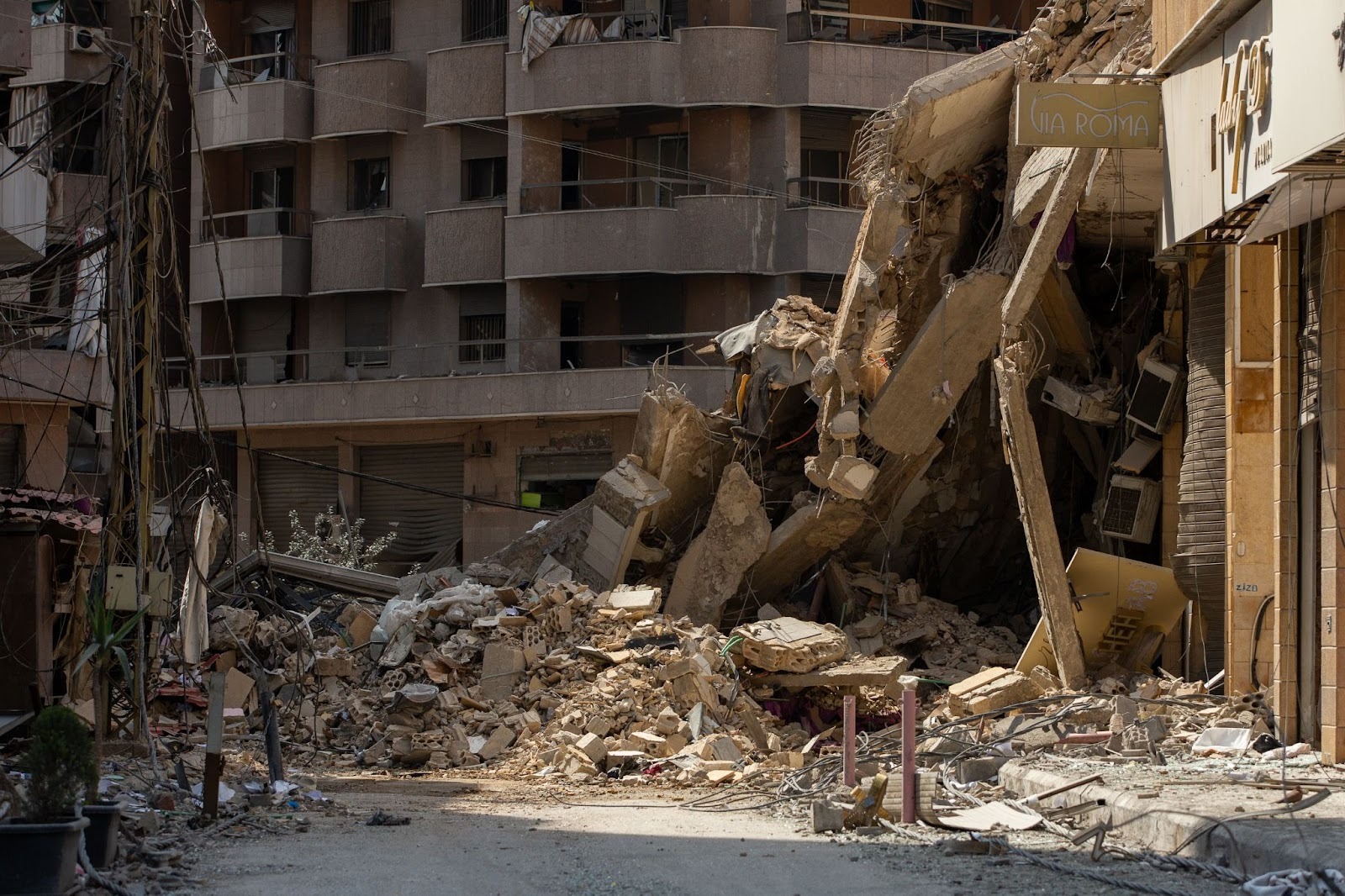
Destroyed buildings, from recent airstrikes, line the streets in the Southern Suburbs, Beirut, Lebanon on the 13th March 2026. Source: CAFE France
The 15 charities behind the joint Middle East Appeal are: Save the Children Australia, Plan International Australia, Oxfam Australia, Australia for UNHCR, ActionAid, CARE Australia, Caritas Australia, ADRA, Act for Peace, Anglican Overseas Aid, Australian Lutheran World Service, Baptist World Aid, CBM, ChildFund Australia and Tearfund.
EAA members stand ready to expand the number of countries involved in this Joint Appeal as the humanitarian needs and responding members become clearer.
The appeal is also endorsed by the Australian Council for International Development, the peak body for Australian non-government organisations (NGOs) involved in international development and humanitarian action.
Executive Director of the Emergency Action Alliance (EAA), Kerren Morris, says many Australians watching the humanitarian crisis escalate in the Middle East want to find ways to help.
“This appeal gives us a way to help provide real aid on the ground in the Middle East,” Ms Morris said. “Australians have watched the images of the escalating crisis in Lebanon, Syria, Gaza and elsewhere and desperately want to find ways to help. This appeal brings together many of Australia’s leading charities and gives people a tangible and trustworthy way to provide aid on the ground.”
"In recent weeks we've all learned where the Strait of Hormuz is. We’ve seen how connected our economies and supply chains are to what happens in the Middle East. But we are not just connected by trade routes and shipping lanes — we’re connected as families and communities too,” said Susanne Legena, CEO of Plan International Australia and Chair of the Emergency Action Alliance.
“I know Australians are dealing with a lot right now — concerns at home, floods, the rising cost of living. I understand that. But if there’s one thing I’ve learned about this country, it’s that when things get tough, we don’t turn inward. We look out for each other. We lend a hand. We donate what we can. We take in or look after a stranger, just as many of our friends in the region have done for Australians stranded by world events.
“What’s missing from so much of the current discourse is the human story. Behind every headline, behind every military escalation, there are families — mothers, fathers, children — who are scared and scarred by what they’ve lived through. Nearly a million people in Lebanon alone have been forced from their homes. In Gaza, people are cut off from food, water and medical care. In Syria, communities already shattered by years of war are being pushed to breaking point.
“War is devastating. It doesn’t discriminate. And the people caught in it need our help now.”
“ACFID welcomes the launch of this Emergency Action Alliance appeal. As needs escalate across the region, coordinated humanitarian action is more important than ever. This appeal offers Australians a trusted way to support communities in crisis," said Matthew Maury CEO of ACFID.
Contact Nic Christensen | 0404 460 607 | [email protected]
About Emergency Action Alliance (EAA): EAA brings together 15 leading Australian NGOs to raise funds quickly and efficiently to respond to humanitarian emergencies as they unfold. Members include ActionAid Australia, Act For Peace, ADRA, Anglican Overseas Aid, Australia for UNHCR, Australian Lutheran World Service, Baptist World Aid Australia, CARE Australia, Caritas Australia, CBM Australia, ChildFund Australia, Oxfam Australia, Plan International Australia, Save the Children Australia and Tearfund Australia.
Note for editors: Here is a summary of the evolving humanitarian crisis occurring across the region:
-
In Iran, more than 3.2 million people have been temporarily displaced. National authorities report approximately 1,300 deaths and over 9,000 injuries since the conflict began in late February.
-
In Lebanon, heavy airstrikes and Israeli forces’ mass displacement orders are forcing hundreds of thousands of people to flee southern Lebanon, the Bekaa Valley and parts of Beirut. In the early days of the Lebanese conflict the UN estimated some 700,000 people, including 200,000 children had been displaced. This has now grown to almost one million people, according to The International Organisation for Migration. Around 128,000 people are sheltering in nearly 600 government-run collective centres, many already full or close to capacity. Humanitarian needs are rising quickly. Many families fled with nothing and shelters are overcrowded. Immediate needs include food, water, hygiene supplies, medical care and emergency shelter support.
-
In Syria, more than 100,000 people have crossed the border from Lebanon into Syria since the start of the recent conflict.
-
In Jordan, debris from missile interceptions has caused damage and injuries, including around areas hosting large refugee populations, such as the Azraq camp where about 35,000 refugees live in shelters not designed for emergency situations.
-
In Türkiye, preparations are ongoing for possible refugee movements from Iran, with hundreds of families already gathering near border crossings. Humanitarian organisations are contingency planning for the possible arrival of 5,000 to 100,000 people.
-
In Iraq, ongoing drone attacks and heightened regional tensions are contributing to an unstable security environment. Aid organisations are now monitoring possible internal population movements and potential cross-border arrivals along Iraq’s borders. Any new displacement could place additional pressure on areas already hosting over 100,000 people who are internally displaced.
-
In Gaza, aid was abruptly cut off at the outset of the renewed conflict, severing access to food, clean water, fuel and medical supplies, and has since resumed only in very limited amounts despite overwhelming need. Medical evacuations remain suspended, leaving thousands of critically ill and wounded patients without access to specialised care. To meet the scale of needs, all crossings must be opened and humanitarian and commercial supplies allowed to enter without delay, at sustained scale, and with predictable access for humanitarian actors to deliver assistance across the Strip
-
In the West Bank, widespread closures of crossings, checkpoints and road gates have severely disrupted movement between Palestinian cities and governorates, preventing Palestinians from travelling to work, accessing healthcare, and obstructing humanitarian access. Ambulances and emergency services are delayed, and some hospitals have postponed surgeries because staff cannot reach their workplaces. The closures have also worsened fuel shortages, impacting bakeries and hospitals and forcing gas stations to operate limited hours. At the same time, settler violence and Israeli military activity have intensified across the West Bank, exposing Palestinian communities to escalating attacks and harm.