Highlights
- Continuous Graphene layer deposited using industrial Atomic Layer Deposition (ALD) system
- Interconnect Dilemma – copper interconnects are a critical bottleneck for advanced chip development and AI1 is a crucial step closer to the solution
- Characterization tests confirm continuous graphene films on a 1cm2 coupon
- Deposition process operates at temperatures well below semiconductor industry thermal limits (~450°C)
- AI1 can now enter the industry collaboration and commercial engagement phase targeting Tier 1 global semiconductor giants
- Transitions the program to film optimization, repeatability testing and scale-up to wafer level formats
Adisyn Ltd (ASX: AI1) (“Adisyn” or “the Company”) is excited to announce the successful demonstration of full coverage graphene on a 1cmx1cm coupon using an industrial Atomic Layer Deposition (ALD) system. The company notes that the deposition process was well below 450°C.
Shares in Adisyn hit an intraday high of 8.5c on the news, up 25%, and was last trading at 8.2c as at 1:40pm AEST with 33.5 million shares changing hands.
The result represents a key step toward addressing one of the semiconductor industry's most persistent and widely recognised challenges - the performance limitations of copper interconnects in advanced chips.
In the most advanced semiconductor chips, the interconnect - the wiring that connects billions of transistors - has emerged as a critical bottleneck. As device geometries shrink, copper interconnects suffer from increasing resistance, heat generation and power loss, constraining performance, energy efficiency and further scaling. In an industry already producing over 1 trillion chips annually AI1 is targeting the high-performance segments of AI, GPU's, CPU's, advanced mobile and networking.
Graphene has long been identified as a potential solution due to its superior electrical and thermal properties. However, the industry has been unable to establish a manufacturing process capable of producing graphene within the constraints of semiconductor fabrication, particularly using standard equipment and temperature limits.
This result demonstrates graphene formation within an industrial ALD system under semiconductor compatible conditions, providing a pathway toward integration into semiconductor manufacturing. If this solution is deployed it will empower those who adopt it to win the sub 2nm scale down race and allow the industry to continue Moore’s Law.
Industrial Process, Not Lab-Scale
Through its wholly owned subsidiary 2D Generation, the Company has produced graphene using a standard industrial ALD system, rather than laboratory-scale techniques or transfer-based methods.
The semiconductor industry does not adopt materials that require entirely new manufacturing approaches. Demonstrating graphene formation within equipment already used in fabrication environments is a necessary step toward real-world adoption.
The process is based on Adisyn’s patented ALD methodology and proprietary precursor chemistry, developed specifically to enable graphene growth within semiconductor manufacturing constraints.
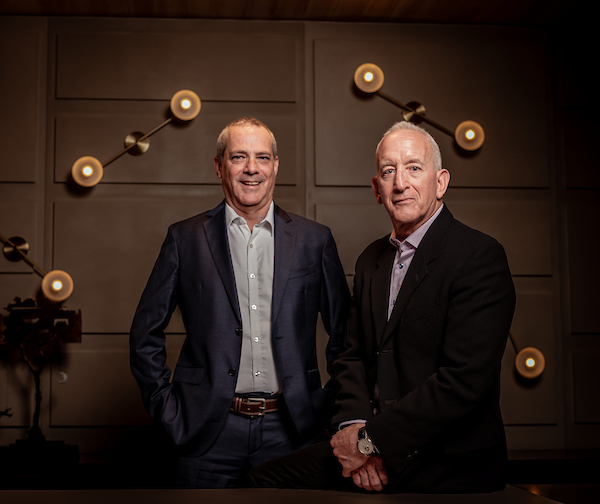
Adisyn Chairman Kevin Crofton commented:
“This is an important step - not just for Adisyn, but in the context of what the semiconductor industry has been trying to achieve. Producing graphene on an industrial ALD system, rather than a lab environment and at low temperature, is what starts to make this relevant from a manufacturing perspective.” He added:
“The interconnect is now one of the key constraints in semiconductor performance. If you can solve that, you’re solving a problem the entire industry is focused on.”
About us:
About Adisyn
Adisyn Ltd (ASX: AI1) is an Australian technology company developing advanced graphene materials for high-value applications in the semiconductor and advanced materials sectors. The Company’s core focus is the development of a patented low-temperature Atomic Layer Deposition (ALD) process designed to enable direct graphene growth on semiconductor wafers. This technology aims to address the performance limitations of copper interconnects and support faster, more energy-efficient next-generation semiconductor devices.
Adisyn is also exploring additional commercial applications of its graphene expertise, including advanced composite materials designed to reduce radar signatures in UAV and defence platforms. Adisyn’s broader business includes Adisyn Services, which provides managed IT services, cloud, cybersecurity and artificial intelligence solutions to Australian small and medium-sized enterprises.
Contact details:
David Tasker
Chapter One Advisors
E: [email protected]
T: +61 433 112 936