- Federal government accused of ignoring barriers limiting access to voluntary assisted dying (VAD) in Australia, particularly regarding telehealth restrictions
- Over 100 stakeholders attended the 2026 State of VAD Report release, which found Commonwealth policies are hindering fair access
- Federal end-of-life policies exclude VAD from strategies and definitions, contributing to stigma and silence around the practice
- Australia is the only country where VAD is legal that prohibits telehealth consultations, forcing ill patients to travel for in-person assessments
- Some faith-based aged care providers are blocking residents' access to VAD, sometimes requiring transfers to different facilities
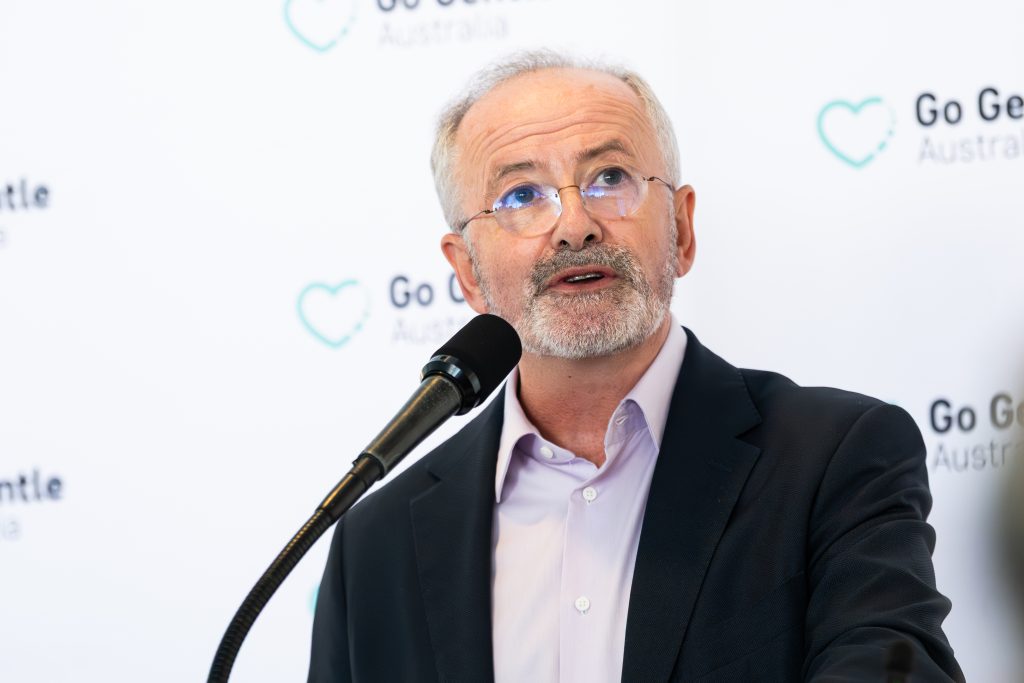
Go Gentle Australia founder Andrew Denton has accused the federal government of “turning a blind eye to avoidable suffering” by its inaction to remove barriers that are limiting equitable access to voluntary assisted dying (VAD) for terminally ill Australians.
“Its time for the federal government to step up, so states can get on with delivering compassionate VAD care,” he said.
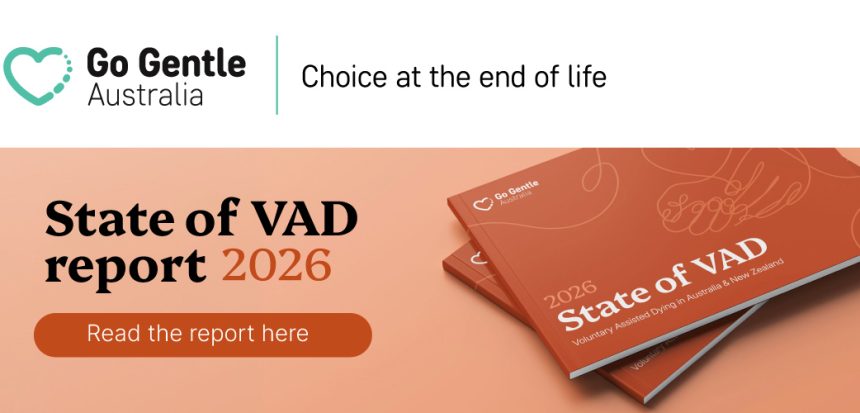
Mr Denton made the comments as more than 100 people, including leading health, legal and patient rights organisations, attended yesterday's release of the 2026 State of VAD Report at Parliament House. The report found that while VAD laws are working as intended, Commonwealth policies have become a major roadblock to fair and timely access.
Mr Denton said, in particular, the federal government’s inaction on amending the Commonwealth Criminal Code to allow the use of electronic communications in VAD (such as telehealth), and its failure to recognise VAD as part of high‑quality end‑of‑life care, are having widespread repercussions.
Mr Denton said federal end-of-life policies, definitions and strategies exclude VAD.
“This reinforces an unacceptable silence and stigma around VAD, as something that can’t be spoken about and is somehow wrong. This cannot continue.”
These include:
• The Department of Health, Disability and Ageing has a national Palliative Care Strategy which does not reference VAD. There is no alternative strategy that does.
• The Aged Care Quality and Safety Commission’s guidance that VAD is “different from” palliative care and end-of-life care, despite its acceptance as exactly that by many health practitioners.
• The federal Aged Care Act which references palliative care and end-of-life care repeatedly, but not VAD.
Mr Denton called on the government, particularly Attorney-General Michelle Rowland, to “step up, so states can get on with delivering compassionate VAD care”.
“These are easy fixes. Instead dying Australians continue to suffer needlessly while we wait for the Government to act.”
Mr Denton described the Criminal Code’s ban on telehealth in VAD as a “cruel anomaly” that forces dying people to travel for in‑person assessments, even when they are too unwell to do so.
“Australia is the only country in the world, where VAD is legal, that does not allow Telehealth. No cogent reason has ever been given why this problem should not be fixed. Turning a blind eye to avoidable suffering is not good enough.”
The report also found that some residential aged care providers – many of them faith‑based – continue to block residents’ access to VAD. Some residents have been forced to transfer facilities for assessments or even to die in an unfamiliar environment.
“The emotional and physical damage this causes is very real. We call on the federal government, along with their state counterparts, to investigate this abuse and enforce compliance with legislative and regulatory obligations.”
“At Go Gentle, our mission statement is clear: We march for those who can’t. The dying, the bedbound, the aged, and the terminally ill.
“Today, we call on the federal government to step up and do the same."
Read the 2026 State of VAD report.
About us:
Go Gentle Australia was founded in 2016 by broadcaster Andrew Denton. It is a national charity that promotes and enables choice at the end of life, including the option of voluntary assisted dying.
Contact details:
Media enquiries: 0426 283 865 |[email protected]