
Family First National Director and NSW Legislative Council candidate Lyle Shelton has welcomed the Coalition’s renewed focus on mass immigration and Australian values, but warned the failure to explicitly identify radical and political Islam as a key threat risks undermining community confidence and misdiagnosing the problem.
Mr Shelton said Angus Taylor was right to highlight the pressures of record migration and the importance of integration, but echoed concerns raised by commentators such as Rowan Dean and David Pearl that the speech ultimately lacked clarity.
“Family First welcomes the Coalition’s recognition that immigration levels are too high and that Australian values must be at the centre of policy,” Mr Shelton said.
“Family First would go further and say the Judeo-Christian values which built Australia must remain at the centre of public policy because radical secularism and Islamic values are not viable alternatives.
“Unless our leaders are prepared to name the specific ideology that is driving much of the community concern — radical and political Islam — they risk unfairly casting suspicion on all migrants while failing to deal with the real issue.”
Mr Shelton said Australians were increasingly frustrated by what they saw as politically correct evasiveness from both major parties.
“People can see what is happening. They know the overwhelming majority of migrants come here to contribute and build a better life. But they also know there is a small but dangerous ideological movement that rejects Western values and seeks to undermine them.”
Drawing on insights from a recent podcast discussion between John Anderson and Dr Michael Youssef, Mr Shelton said the issue was not immigration per se, but the exploitation of Western freedoms by Islamic leaders with a fundamentally different worldview.
“In that interview, Dr Youssef warned of a strategy where extremists can ‘literally… use democracy to destroy democracy’,” Mr Shelton said.
“That is the heart of the problem. It is not about race or ethnicity. It is about an ideology of political Islam that, in some cases, uses the freedoms of the West to weaken and ultimately replace them with Sharia law, as is occurring in the UK.”
Mr Shelton said the distinction between ordinary Muslims and political Islam was critical, but too often ignored in public debate.
“Even in that same discussion it was acknowledged that ‘80 per cent of Muslims are not Islamists’ — yet governments continue to avoid naming the ideology that sits behind the extremism Australians are seeing on their streets.”
He said failing to draw this distinction risked both injustice towards those Muslims who simply wanted to integrate and policy failure.
“If you refuse to name the problem, you end up with blunt policies that either target everyone or no one. Neither approach works.”
Mr Shelton said recent events, including the Bondi massacre and the surge in antisemitism, had “galvanised the nation” and were being reflected in rising support for minor parties.
“Australians are turning to parties like One Nation because they are tired of the major parties dancing around the issue,” he said.
“The Coalition is right to talk about ‘values’ and ‘subversive intent’, but unless it is prepared to clearly identify radical Islam and the networks that sustain it — including those operating under the guise of moderation — it will not regain the trust it has lost.”
Mr Shelton said tackling the problem required a deeper understanding of belief systems, not just policy settings.
“As John Anderson rightly observed, ‘we are in a ferment over belief systems’ — and secular leaders who pretend religion has nothing to do with these challenges are ‘dead wrong’.”
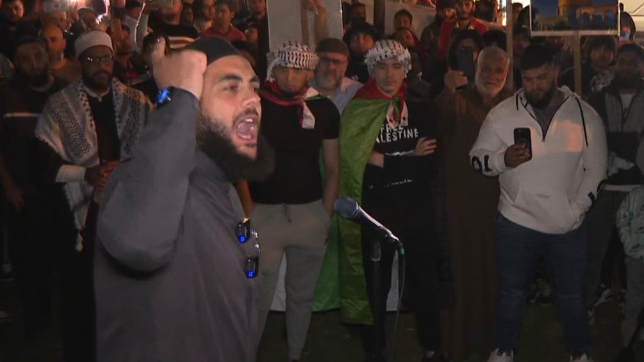
“Until we confront the ideological roots of extremism — including the foothold it has gained in some mosques, institutions and community structures — we are not dealing with the cause, only the symptoms.”
Mr Shelton said Family First would continue to advocate for lower migration, stronger integration, and a clear-eyed approach to national security.
“Australia is a generous nation, but it must also be a confident one,” he said.
“That means defending the Judeo Christian values that made this country strong — and having the courage to name the threats to them.”
Contact details: