
- Cancer Council ACT awarded $200,000 in research grants to two Canberra-based projects, announced at their Biggest Morning Tea event
- Dr Vijay Bhoopalan received funding to study how platelets affect stem cell health in cancer patients at The Canberra Hospital
- Professor Nicole Freene's project will examine whether measuring physical activity during chemotherapy can increase patient activity levels
- Both projects aim to improve cancer treatment outcomes through locally-driven research initiatives
- The research funding is made possible through community fundraising efforts, including Australia's Biggest Morning Tea
Cancer Council ACT is proud to announce its most recent investment into world-class local cancer research, reinforcing its commitment to improving cancer outcomes through locally driven innovation. Grants, totalling $200,000, have been awarded through the organisation’s annual Cancer Research Grants program, to fund two cutting-edge Canberra based research projects.
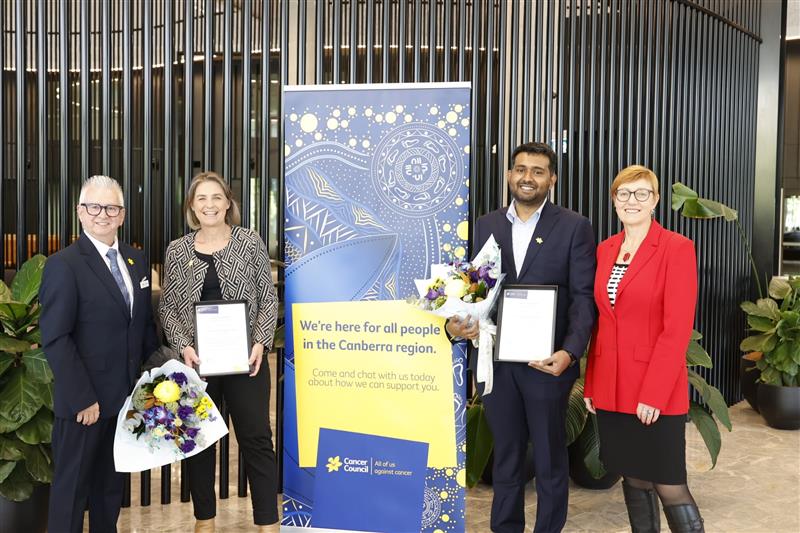
The grant recipients were formally announced at Cancer Council ACT’s Biggest Morning Tea event hosted at the Legislative Assembly on Tuesday, 21 April. The event was attended by the ACT Minister for Health, Rachel Stephen-Smith MLA, along with some of Cancer Council ACT's wonderful community who make this work possible – our supporters, donors, volunteers, and community fundraisers.
This year’s grant recipients are Dr Vijay Bhoopalan, a postdoctoral fellow at the John Curtin School of Medical Research at the Australian National University, and Professor Nicole Freene, from the Faculty of Health at the University of Canberra.
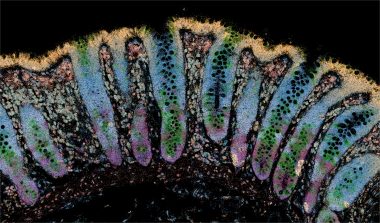
Dr Bhoopalan, was awarded funding for his project, “Defining how platelets impair autologous stem cell engraftment outcomes in cancer patients at The Canberra Hospital”. His research aims to understand how platelets and inflammation affect stem cell health, and to develop strategies to prevent a reduction in the quality of stem cells used to treat lymphoma and myeloma, ultimately improving transplant outcomes and patient recovery.
“Support from the Cancer Council ACT will allow me to build on early results and better understand how stem cells are affected during collection, and this recognition has been incredibly encouraging at this stage of my research career”, Dr Bhoopalan expressed.
Professor Freene received funding for her project. “A very brief intervention for physical activity change (Measure It!) during chemotherapy cancer care: a pilot randomised controlled trial.” This study will assess whether regular measurement of physical activity during chemotherapy can encourage increased patient activity levels, and whether this can be effectively delivered by any cancer care clinician, including nurses, allied health professionals and medical staff.
Professor Freene said, ”Our team is extremely grateful for the Cancer Council ACT funding to support our pilot project. This will allow us, along with consumers, patients and clinicians, to explore this novel very brief physical activity intervention that can be further tested in a larger trial to promote physical activity within chemotherapy cancer care.”
"We are incredibly proud to support Dr Bhoopalan and Professor Freene’s research, driving progress toward better outcomes for people affected by cancer," said Ms Verity Hawkins, CEO of Cancer Council ACT.
Highlighting the importance of community support, she said “Our investment in this research is only possible thanks to the community support we receive through fundraising campaigns like Australia’s Biggest Morning Tea, and our dedicated donors, bequestors and volunteers.”
Register or Learn More
Register for Australia’s Biggest Morning Tea via www.biggestmorningtea.com.au
Learn more about Cancer Council ACT via www.actcancer.org
About us:
Cancer Council ACT has been advocating for Canberrans living with cancer for nearly 50 years across every aspect of cancer prevention, support and research to alleviate the impact of cancer in the community. Learn more about what we do here.
Contact details:
Media & Communications Coordinator
Ph: 02 6257 9999