Mother’s Day tends to focus on gratitude. What it rarely speaks to is autonomy. The ability for women, particularly mothers, to shape how they earn, how they spend their time, and how connected they feel to the communities around them.
Most women are already balancing multiple roles, often combining paid work with the ongoing responsibility of running a household. What has shifted in recent years is the pressure within that balance. The cost of living has risen, food has become one of the largest and least flexible weekly expenses, and the mental load of planning, shopping and feeding a household has only intensified.
In response, some women are not stepping away from work, but rethinking how it fits into their lives. There is growing interest in models that offer flexibility, local connection and the ability to contribute financially without adding another rigid layer to an already full schedule.
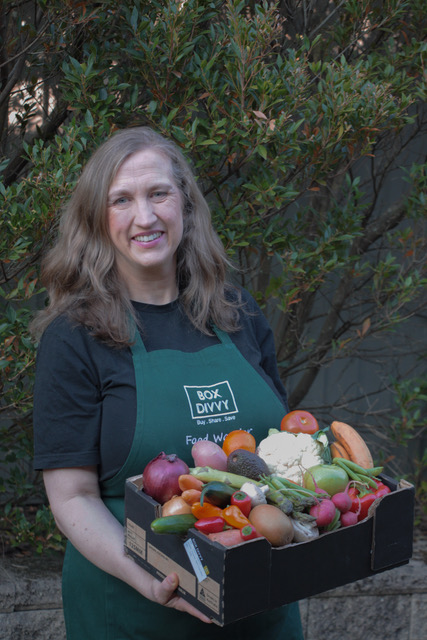
Box Divvy is one example. A social enterprise built around neighbourhood food Hubs, it allows individuals to coordinate weekly grocery distribution for their local area, earning an income from home while also accessing lower-cost food for their own household. The model has resonated with a wide range of women, including those working part-time, running small businesses, homeschooling or managing care responsibilities.
For Lucy Barnham, who runs a Hub in the Blue Mountains, the appeal was initially practical. With three children aged 17, 20 and 23 still living at home, food is a constant and significant part of the household budget.
“Young men in particular can eat you out of house and home! You want to make sure there is always good food there, but it is not always easy to keep that affordable,” she says.
What began as a way to manage that pressure has evolved into something more layered. Around 80% of her household’s food now comes through the network, reducing costs while also changing how the family eats. At the same time, running the food Hub provides an additional income stream that fits alongside her other work.
“It works both ways. You are saving money on food, and you are earning something as well. That makes a real difference,” she says.
The structure of the model is part of its appeal. Work is concentrated into specific windows each week and can be organised around existing commitments, rather than competing with them. For many women, that flexibility is not a bonus, but a requirement.
There is also a social dimension that is harder to quantify but no less important. For those spending more time at home, whether temporarily or long-term, opportunities for regular, low-pressure connection can be limited. The Hub creates a consistent point of contact within the community, built into an existing routine.
“Pick-up day has a really nice feel to it. Parents come with their kids, everyone connects with others in the neighbourhood, and the kids love looking through the boxes. It becomes part of the week,” Barham says.
According to Jayne Travers-Drapes, Co-founder of Box Divvy, that combination of income, flexibility and connection is central to why the model has grown.
“We are really proud that many of our Hubsters are women who are looking for flexible ways to contribute financially while staying connected to their families and their communities,” she says. “For some, it is extra income. For others, it is about having something of their own, while still being present for everything else. Often it is both.”
In some households, the model also becomes a shared activity. Barham’s children help at different times, and her eldest son now regularly assists with weekly distributions.
“It has turned into this really nice time we spend together each week. He is really getting into it, learning about enterprise and perhaps he might end up running his own Hub one day,” she says.
There is a tendency to frame work, care and community as competing demands. What is emerging instead are models that sit somewhere in between, offering a way to integrate those elements rather than separate them.
As Mother’s Day approaches, the gestures of appreciation will remain front of mind. Less visible is the ongoing work that sits underneath, and the ways women are adapting to make that work more sustainable, on their own terms.
Issued by Lanham Media on behalf of Box Divvy
Media Contacts
Fleur Townley | [email protected] | 0405 278 758
Greg Townley | [email protected] | 0414 195 908
Available for interview:
• Lucy Barnham, Box Divvy Hubster in Lawson
• Jayne Travers-Drapes, Co-founder, Box Divvy
• Box Divvy members and local Hub leaders available on request. Check locations here
Photos of Lucy available here
General media assets available here
About Box Divvy
Box Divvy is a free, community-driven food co-op that connects households with fresh, seasonal produce and healthy pantry staples. With over 360 local Hubs across NSW and the ACT, and expansion into VIC, it’s a simple and affordable way to shop - no membership fees, just a regular commitment to order. Each Hub is run by a neighbour, and members collaborate to reduce waste, share deliveries, and keep costs low. By supporting mostly Australian and local suppliers, Box Divvy helps families eat well, live more sustainably, and make food choices they can feel good about. Find out more at boxdivvy.com