
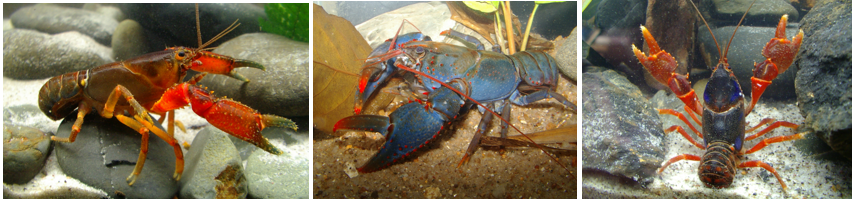

36 species are now on the EPBC threatened species list
Still shots here: https://dams.wwf.org.au/resourcespace?c=6601&k=018ca90f63
To the scientists and ecologists working to save them, Australia’s Euastacus crayfish species are fascinating, living relics from a time long ago.
But after existing for millions of years, climate change is now “a critical and escalating threat”.
Like coral reefs and emperor penguins, these lesser-known cool water specialists are on a path towards extinction without climate action.
Our freshwater spiny crayfish – or spinys for short – go from dwarf species right up to the giants like the 2.5kg Murray cray, the second largest freshwater crayfish species in the world.
They live in ecosystems ranging from the alpine bogs of Kosciuszko National Park to the rainforests of Far North Queensland helping to keep waterways clean by eating almost anything including rotting vegetation and carrion.
“What amazes me is that they occur in habitats from South Australia all the way up to up to the Daintree in Queensland and have such a diverse range of colours,” said Dr Nick Whiterod from the CLLMM Research Centre.
Before the 2019-2020 megafires there were only three species of spiny crayfish on Australia’s EPBC threatened species list. After the fires, in the space of just two years, 33 more Euastacus species were added – a 12-fold increase – and a further three are still being assessed.
Of the 36 endangered spiny crayfish, scientists predict some are more than likely to become extinct within as little as 10 years without urgent action.
Funding from the World Wide Fund for Nature-Australia helped to get eight species listed including Euastacus angustus, Euastacus fleckeri, and Euastacus guruhgi – all critically endangered.
The other new listings were largely due to the Saving the Spinys Project, funded by the Australian Government’s Wildlife and Habitat Bushfire Recovery Program.
Saving the Spinys, delivered by the not-for-profit organisation Nature Glenelg Trust, assessed the health and wellbeing of priority spiny crayfish species after the fires and recommended urgent actions to conserve them.
In a dramatically short period, the Euastacus genus was recognised as one of the most threatened groups of freshwater crayfish in the world.
“Concern about the impacts of the bushfires lead to the recent listings and brought the plight of these crayfish species to light after being at risk for many years,” said Dr Whiterod.
Rob McCormack, Director of Australian Aquatic Biological Pty Ltd and founder of the Australian Crayfish Project, said substantial knowledge gaps remain.
“Many of the most threatened species are climate refugia specialists, relicts from a time long past when Australia was cooler and wetter; now they are restricted to permanently flowing, clear, cool, high-altitude streams with intact riparian vegetation providing shade and food.
“Climate change is a critical and escalating threat, increasing the frequency and intensity of droughts, heatwaves, and bushfires.
“There are currently 56 recognised Euastacus species, with many additional species known but not yet formally described, and likely many more still to be discovered.
“Undescribed species are effectively invisible in environmental planning and assessment processes, and may decline or become extinct without ever being recognised.
“We know so little about numerous species, except that many have extremely restricted distributions, often confined to a single river catchment, or in some cases, a single mountain. Such a limited range makes them highly vulnerable to a single extreme weather event,” Mr McCormack said.
Recent megafires alone impacted more than 40,000 km of waterways. Post-fire erosion introduces sediment that clogs gills and infills critical refuge pools, while decomposing organic matter reduces dissolved oxygen. Loss of riparian canopy cover further elevates water temperatures leading to behavioural impairment and, in many cold-water species, rapid mortality.
For more widespread species, the dominant threat is habitat degradation, particularly riparian clearing associated with poor forestry and agricultural practices.
Over the past 50 years, this has driven substantial range contractions, with increased solar exposure elevating water temperatures and rendering many streams thermally unsuitable, leading to total local population loss.
For more highly restricted species, climate-driven impacts, particularly rising temperatures and drought, pose the greatest threat. In species such as Euastacus girurmulayn, which is confined to the upper 2 km of headwater streams of two catchments in Northern NSW, drought conditions that dry these reaches can result in the complete loss of entire local populations.
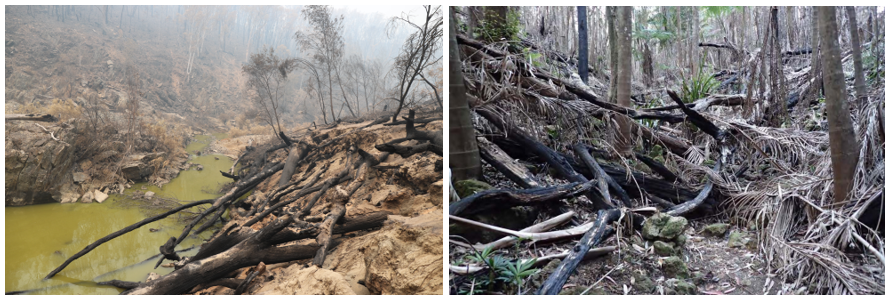
Left: Fire damage and sediment-laden water at Mannus Creek in southern NSW © Luke Pearce. Right: A stretch of creek once occupied by Euastacus girurmulayn in Whian Whian State Forest NSW has dried up following drought and bushfires © Rob McCormack
Additional pressures include invasive species and illegal collection for the pet trade and human consumption. Spiny crayfish are slow-growing and long-lived, typically taking 7–9 years to reach maturity, with adults often 20–40 years old.
This makes them highly vulnerable to overharvesting, as removal of mature individuals has long-term consequences for recruitment and population stability.
In one documented case, a person was found with 15 threatened Lamington spiny crayfish intended for consumption; an act likely to impact that stream ecosystem for a decade or more.
Spiny crayfish are keystone species, underpinning aquatic ecosystem function. Although females produce large numbers of juveniles annually, perhaps only one in a thousand survives to adulthood. The remainder form a critical food resource for fish, turtles, platypus, birds, and reptiles. As such, the health and abundance of spiny crayfish populations directly reflect the condition and productivity of the broader riverine ecosystem.
“Our spinys are the canaries in the coal mine for many species living in the delicate ecosystems of our mountain streams,” said WWF-Australia conservation scientist Dr Stuart Blanch.
“Like greater gliders, coral reefs and emperor penguins, the survival of spinys depends on transitioning away from fossil fuels and stabilising global temperature increases to no more than 1.5ºC
“Spiny crayfish have been around for millions of years. We can’t let these overlooked and underappreciated creatures disappear on our watch. Formal recognition on the EPBC threatened species list in an important step to drive recovery actions,” Dr Blanch said.
Recommendations to save spinys include full protection for all Euastacus species (except the Murray cray) in Victoria and NSW (they’re already protected in Qld), signs in National Parks and State Forests informing people about their endangered status and the prohibition on fishing or collection, expanded authority for Park Rangers to enforce protection regulations, restoration and protection of their habitats, and exploring ways to actively manage them such as rescuing individuals ahead of disturbances and returning them once favourable conditions return, or translocation to establish new sites.
“The listing of so many of these species is a wakeup call, and now is the time for serious action to avoid their extinction,” said Dr Whiterod.
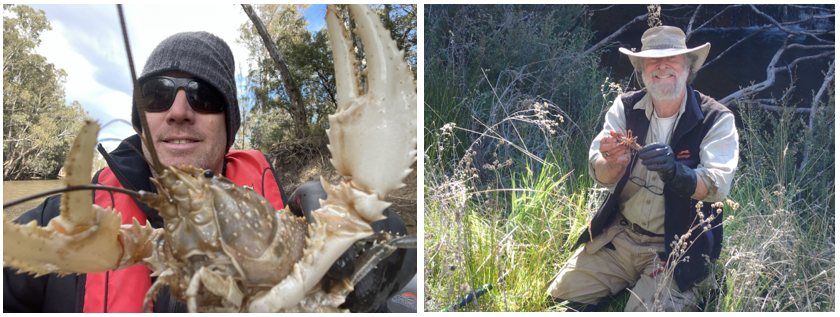
Left: Dr Nick Whiterod with a Murray cray © Nick Whiterod. Right: Rob McCormack with the endangered Euastacus simplex © Rob McCormack
Contact details:
Paul Fahy
Media Relations Manager, WWF-Australia
m: 0455 528 161
