
Australia passes the 28 million population level, with massive and ongoing negative impacts on the environment and the economy, while adding pressure on social cohesion.
31 May 2026
- Australia’s population surpassing 28 million is not a cause for celebration but a development with profound and harmful consequences for the climate, environment, biodiversity, and the quality of life of existing residents.
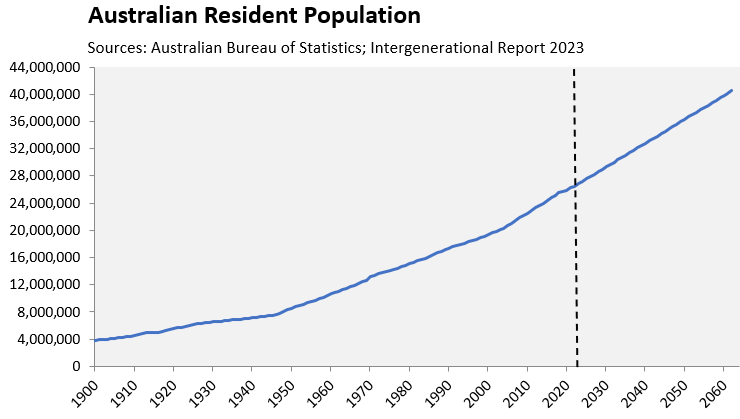
- Sustainable Population Australia (SPA) expresses deep concern as Australia’s population passes 28 million in early June 2026. Rapid expansion by 9 million since the year 2000 intensifies pressure on the environment and the quality of life for existing residents.
- Every additional person drives more agricultural activity, water consumption, demand for medical and educational services, industrial estates, roads, transport, and housing and raises vulnerability to drought.
- Human activity across food systems, industry, employment, supply chains, energy, and construction depends on fossil fuels, thereby increasing climate-altering emissions.
Quotes attributable to Mr Strachan:
“Australia is bursting at the seams.
“This tragic milestone coincides with World Environment Day on the 5th of June, which seeks to rally global action on rising temperatures and planetary health,” said Peter Strachan, National President of Sustainable Population Australia. “Yet the United Nations appears unaware that 8.3 billion humans—through population growth, forest clearing, consumption, and emissions—drive climate change. More people mean more emissions, more loss of carbon uptake and natural ecosystem climate regulation, and less capacity to adapt.”
“If Australia had shortages of labour and skills, real wages would be rising, but they are falling, showing no net growth since 2010.”
Australia’s total population was 9 million in 1954, but has now added that amount in just 26 years, leading to:
- Environmental damage, including unchecked urban expansion, loss of carbon sinks, and habitat fragmentation, reduces resilience to climate events such as droughts.
- Lower real wages as costs of living rise
- Productivity-reducing congestion and economic hollowing.
- Overburdened schools, hospitals and infrastructure, with a staggering taxpayer-funded bill of hundreds of billions of dollars.
- Added competition for housing, eroding social cohesion and splitting families.
After two generations of below-replacement total fertility rates, the only reason Australia’s population expands is because of the primary and secondary effects of its immigration intake.
Recent surveys reveal that most Australians are opposed to further population expansion. Australia’s federal government must explain why it orchestrates this unsustainable and irreversibly detrimental change to Australia, and for whose benefit? It certainly does not benefit most Australians, and certainly does not benefit its fragile environment and wildlife.
About us:
Sustainable Population Australia is an independent, not-for-profit organisation advocating for an ecologically sustainable population to protect Australia’s environment and quality of life.
Contact details:
SPA experts are available for further comment
Peter Strachan – Sustainable Population Australia, National President
Ph. 0412 400 952 [email protected]
Available for further comment from 06:30 am AWST