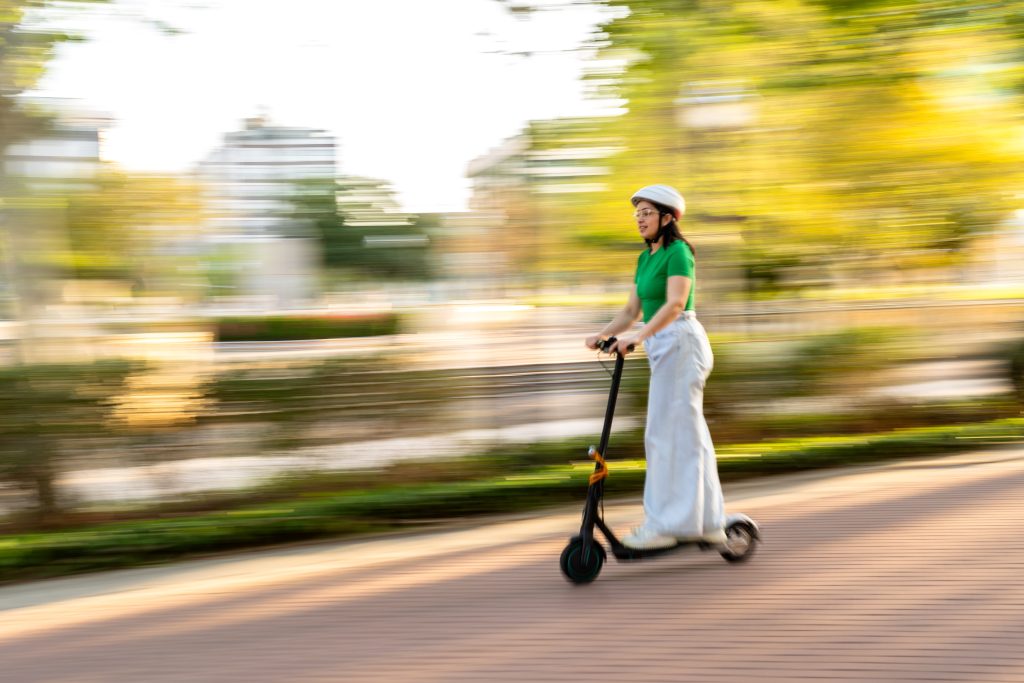
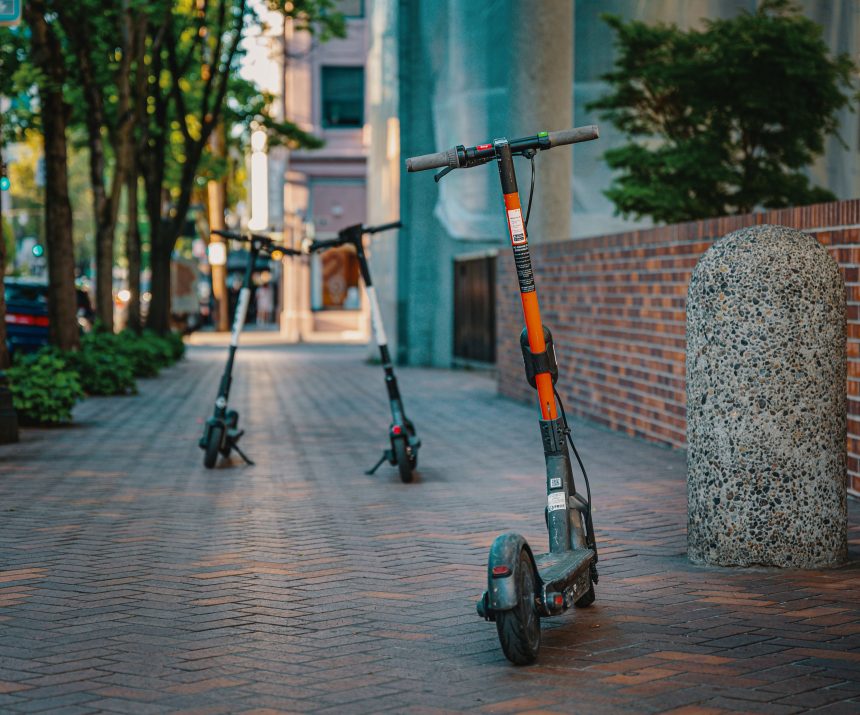
A four-fold increase in injuries among children across four years is one of the most troubling consequences of Australia's e-scooter boom, as UNSW researchers warn parents not to underestimate the risks of privately owned devices to young riders.
New research examining almost 4700 e-scooter-related emergency department presentations in the state of Victoria found injuries among children aged two to 14 rose from 64 cases in 2022 to 263 in 2025, even though children under 16 are prohibited from riding e-scooters on roads.
Lead author Dr Lisa Sharwood is an injury epidemiologist at UNSW Sydney. She says the findings are indicative of a growing challenge not only in Australia, but around the world.
“The increase in injuries among children appears to be linked to the growing availability of privately owned e-scooters,” Dr Sharwood says.
“Share-hire schemes have age-verification systems and do not allow children under 16 to ride – but privately owned devices are much easier for children to access.”
She says many parents still view e-scooters as recreational devices rather than vehicles capable of causing serious harm.
“What parents need to understand is that e-scooters are not toys. They can travel at speeds capable of causing serious injuries, including fractures and head injuries.
“Access to more powerful devices should be matched to experience, maturity and the ability to manage risk.”
Dr Sharwood says restrictions exist on high-powered vehicles for inexperienced drivers because “we recognise that skill develops over time. Yet children can still access private e-scooters capable of speeds and acceleration that exceed their ability to safely control them.”
A growing emergency
While children represented one of the fastest-growing groups, the study also found young men remained the demographic most likely to be injured, accounting for 71.4% of hospital presentations.
There were 4694 emergency department presentations linked to e-scooters between 2022 and 2025, including 79 pedestrians struck by riders. Young adults aged 15–24 and 25–34 accounted for almost half of all presentations.
More than one-third of injured riders required hospital admission, while around one-third arrived by ambulance – and most were classified as urgent or emergency cases.
“Emergency clinicians are not simply treating scrapes and bruises due to e-scooter injuries,” Dr Sharwood says.
“They are seeing fractures, head injuries and injuries affecting multiple parts of the body.”
The head was the most likely body region to be injured, ahead of injuries to the wrist, hand and forearm.
Co-author UNSW Professor Alexandra Martiniuk says the findings show e-scooter injuries represent a genuine and growing burden on the healthcare system.
“These cases require significant hospital resources and place additional pressure on already busy emergency departments,” Prof. Martiniuk says.
The study was published amid a growing focus from governments across Australia on how best to regulate e-scooters. The 2026–27 Australian Federal Budget allocated $6.6 million to strengthen product safety frameworks and compliance standards for e-bikes and e-micromobility devices – including e-scooters – alongside a broader $500 million investment in active transport infrastructure.
While attention is often on share-hire schemes operating in cities such as Brisbane, Canberra, Adelaide and Perth, the findings suggest privately owned devices may be contributing substantially to the growing injury burden, particularly among children.
Nearly half of all child injuries occurred on roads despite riding being illegal for under-16s.
“It’s likely the solution will require a combination of enforcement, parental awareness and retailer responsibility,” Dr Sharwood says.
“Currently there is a disconnect between the rules and what is happening in practice.”
Falls, not collisions
The study found almost three-quarters of emergency presentations were because of falls or loss of control, while collisions with motor vehicles formed only a small fraction of emergency presentations.
These results challenge a common assumption that traffic is the primary danger facing riders.
“One of the most important findings from this study is that most injuries were not caused by collisions with cars or other vehicles,” Prof. Martiniuk says.
The authors say this means prevention efforts need to focus on helping riders stay upright and avoid crashes in the first place – that rider behaviour, inexperience, speed, road surfaces and device stability all deserve greater attention.
The study also suggests better data on helmet use is needed – with the frequency of head injuries indicating protective equipment remains a key part of the safety conversation.
“Speed management also remains important,” Prof. Martiniuk says.
“Even if lower speeds do not prevent every fall, they can reduce the severity of injuries when falls occur.
“The findings suggest that if we want to meaningfully reduce injuries, we need to focus not only on where people ride, but on why riders are losing control.”
Dr Sharwood says there also needs to be a more consistent national approach as well as better injury surveillance to track injuries nationally, to determine whether safety interventions are working.
“Australia currently has a patchwork of different rules governing e-scooter use,” she says.
“This can be confusing for riders and makes it difficult to deliver consistent safety messages.”
She says a sensible national approach would include consistent age limits, helmet requirements, speed limits and riding rules across all states and territories – and, importantly, product safety standards and regulatory oversight for the devices sold in Australia.
“E-scooters are now a permanent part of Australia's transport landscape – which is great in many ways too,” Dr Sharwood says.
“The challenge is ensuring we have safety systems that evolve as quickly as the technology and its use.”
Contact details:
Melissa Lyne, UNSW Sydney News & Content