National Allergy Council launches interactive “The Mystery of School Island” experience at EDUtech Australia
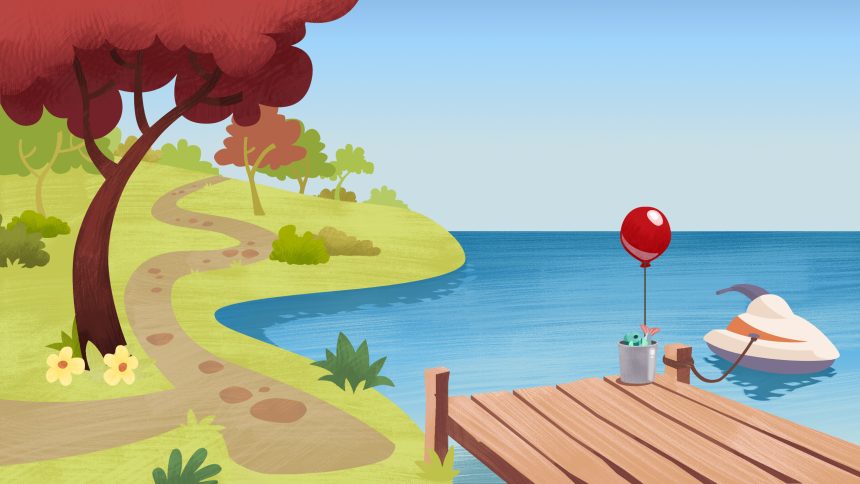
Australian students will soon be learning about severe allergies through an interactive mystery-solving experience designed to make allergy education more engaging, relatable and memorable for young people.
Australia has some of the highest rates of childhood food allergy in the world, with around one in 20 school-aged children living with food allergy, placing growing pressure on schools, families and young people to manage potentially life-threatening risks.
Launched today at EDUtech Australia, the new “The Mystery of School Island” learning experience forms part of the Allergy 250K program. Allergy 250K was originally established to support the estimated 250,000 young Australians aged 12-24 years, living with severe allergy.
For 10-year-old Gene, living with severe allergies means constantly checking labels, avoiding shared food, and knowing that even small mistakes around food can have serious consequences. His mother, Claire Jenkins, said the transition to high school can be particularly stressful as children become more independent and parents have less visibility over day-to-day situations.
“You spend years teaching your child how to stay safe, but eventually they have to navigate the world on their own,” Claire said. “Programs like this help other students better understand allergies and why they need to be taken seriously, so kids with allergies feel more supported and less alone.”
The Mystery of School Island was developed by the National Allergy Council, which is a partnership between Allergy & Anaphylaxis Australia and the Australasian Society of Clinical Immunology and Allergy (ASCIA) and is funded by the Australian Government Department of Health, Disability and Ageing.
Developed with input from teachers, Year 6 students and curriculum writer Nick Rose of Curriculum Makers, the experience is Australia’s first curriculum-aligned allergy education game. Students solve the mystery behind a student’s allergic reaction while learning how to recognise reactions, respond appropriately, avoid risky behaviours like sharing food, and understand food labels and common food allergens.
The program was specifically developed for students in Years 6 and 7 - a key transition period when children move from the more structured environment of primary school into the increased independence of high school.
National Allergy Council CEO Sandra Vale said the project responds directly to feedback from young people living with severe allergies.
“The most important finding from our engagement with young people was that they wanted their friends to understand allergies, but they didn’t want to be the ones constantly educating them,” Dr Vale said. “This gamified learning experience helps students better understand allergies while making allergy awareness a shared responsibility, particularly as students become more independent in high school.”
Teacher and Allergy 250K peer mentor Kara Gifford said the learning experience opens the door for more natural and supportive conversations around allergies among students.
“Students in this age group can be difficult to engage through traditional health education approaches, particularly when there is so much competing for their attention,” Kara said. “This gives schools a more relatable and age-appropriate way to start important conversations around allergy awareness and safety.”
Curriculum writer Nick Rose said integrating educational content into immersive storytelling can help strengthen engagement and retention.
“This project takes important health and safety information and presents it in a format that feels interactive, relatable and relevant to students,” Mr Rose said. “By aligning the experience with the Australian Curriculum, NSW syllabuses and Victorian Curriculum, it also provides schools and teachers with a practical tool they can incorporate into classroom learning.”
The free resource also includes teacher guides, classroom discussion prompts and supplementary activities, and can be used individually or as a classroom learning experience.
Schools and educators interested in learning more about the Allergy 250K program can visit: https://allergy250k.org.au/
ENDS
Distributed by Lanham Media on behalf of National Allergy Council
Media contacts:
Greg Townley | [email protected] | 0414 195 908
Fleur Townley | [email protected] | 0405 278 758
Available for interview:
- Maria Said, Co-Director of the National Allergy Council and Allergy 250K Co-Lead
- Professor Michaela Lucas, Co-Director of the National Allergy Council and Clinical Immunology/Allergy Specialist
- Kara Gifford, teacher and Allergy 250K peer mentor
- Nick Rose, Curriculum Writer (and Founder of Curriculum Makers)
- Claire Jenkins, mother of Gene, a 10-year old living with severe allergies.
- Other parent and student case study spokespeople available on request
Media Assets: B roll footage and photos available here
ABOUT THE NATIONAL ALLERGY COUNCIL (NAC)
The National Allergy Council is a partnership between the Allergy & Anaphylaxis Australia (A&AA) and Australasian Society of Clinical Immunology and Allergy (ASCIA), Australia’s peak medical and patient support organisations for allergic disease. The National Allergy Council delivers evidence-based public health initiatives, education, training and support in consultation with key stakeholders, to improve the health and wellbeing of people with allergic disease. nationalallergycouncil.org.au
Allergy facts:
- An estimated 8.2 million people live with allergic disease, costing Australia $18.9 billion a year in financial losses, and a further $44.6 billion in wellbeing losses.
- One in 10 babies have a confirmed food allergy. One in 20 adults report a medication allergy. One in 4 Australians have hay fever – up from one in seven in 2008. Up to twelve Australians die each year from bee or wasp stings.
- First Nations people are twice as likely to present at hospital with asthma and other allergy related illnesses, with emergency department presentations significantly increasing between 2018 to 2023.
- The Australian Capital Territory and Victoria have some of the highest rates of allergic disease.
- Conditions often co-occur, meaning many people – and households – manage more than one allergic disease at the same time.
- Each year, more than 2400 people are hospitalised with anaphylaxis (a severe allergic reaction), and 20 Australians lose their lives.
- Anaphylaxis deaths increased by seven per cent annually in Australia between 1997 and 2013 – mostly triggered by foods, insect stings or medications.
- Living with the risk of anaphylaxis has a significant impact on health and wellbeing of both the individuals and their families due to anxiety, isolation, and poor mental health.
- Allergic disease is complex, often people have more than one type, and multiple family members can be affected, requiring support and a coordinated approach to care, evidence -based education and research into prevention, diagnosis and management.