New research has uncovered a hidden pathway that allows COVID-19 to infect the immune system and trigger damaging inflammation in the lungs.
The study by La Trobe University and WEHI researchers found SARS-CoV-2, the virus that causes COVID-19, can hide inside tiny fragments of dying infected cells, known as apoptotic bodies (ApoBDs).
Immune cells called macrophages then ‘eat’ these virus-infected particles as part of the body’s normal ‘housekeeping’ process, which allows the virus to enter and spread between cells.
The study was published in Nature Communications.
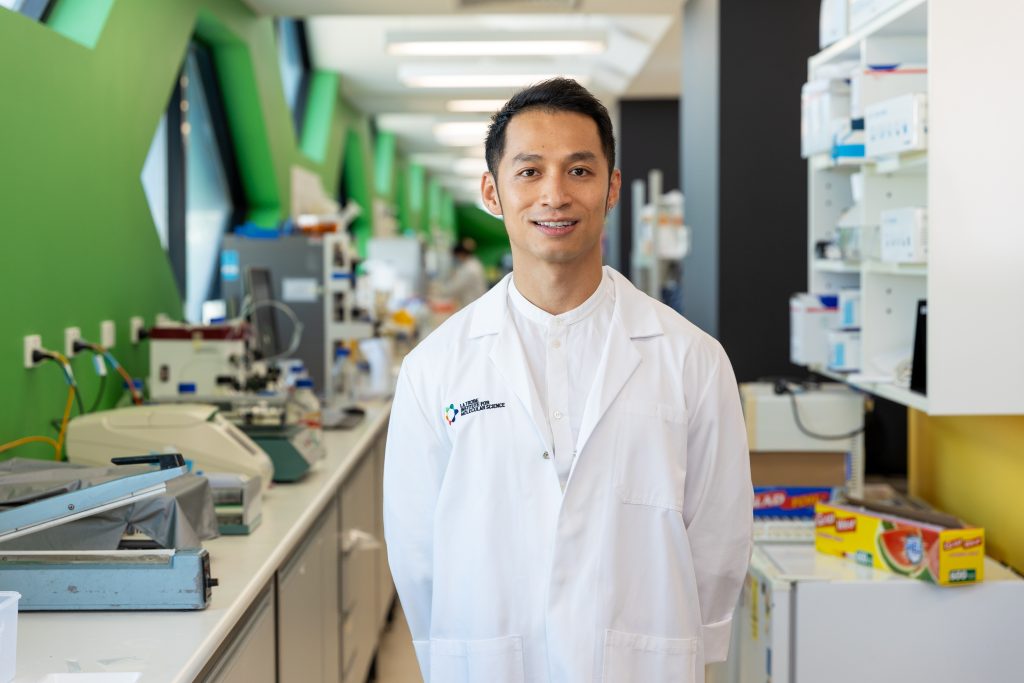
Lead researcher Dr Kha Phan, a National Health and Medical Research Centre (NHMRC) Emerging Leadership Fellow at the La Trobe Institute for Molecular Science (LIMS), said the process not only helped COVID-19 spread between immune cells, but it also triggered a harmful inflammatory response that could damage the lungs.
“Our findings show the virus can bypass the usual entry route via ACE2 receptors to hide inside dying cell fragments, gaining access to immune cells during the body’s ‘clean-up’ process,” Dr Phan said.
“Once inside immune cells, COVID-19 moves between cells in disguise, which can spark a powerful inflammatory response leading to severe lung tissue damage.
“By blocking the formation of these virus-infected cell fragments through repurposing existing drugs based on T-type calcium channel blockers, we were able to reduce lung damage, viral spread and harmful inflammation.”
Respiratory viral infections like COVID-19, influenza and RSV (respiratory syncytial virus) affect millions of people each year and remain a major cause of hospitalisation and death world-wide.
“This fundamentally shifts the way we think about viral infections and solves a long-standing puzzle about how COVID-19 infects immune cells and drives severe inflammation,” Dr Phan said.
“Unknown transmission pathways may also exist in viral diseases like influenza and RSV that involve similar inflammatory processes.”
“Understanding these mechanisms could help us develop more effective treatments and improve our preparedness for future viral outbreaks.”
Co-senior author, La Trobe Professor Ivan Poon, a NHMRC Chief Investigator in Biochemistry and Chemistry at LIMS said this discovery opened the door to new therapeutic pathways that could complement existing anti-viral drugs.
“Rather than targeting the SARS-CoV-2 virus directly, we may be able to stop the pathways it uses to spread and trigger harmful inflammation by developing new ApoBD-targeting drugs to interrupt this process,” Professor Poon said.
“This represents a completely different therapeutic approach that might help us tackle severe COVID-19 and other emerging viral threats.”
Media enquiries
Debora McInnes – d.mcinnes@latrobe.edu.au, +61 487 448 734