
Monash University has signed a Memorandum of Understanding (MoU) with Australia’s Therapeutic Goods Administration (TGA), formally establishing collaboration in pharmaceutical regulatory science and therapeutics development.
The agreement brings Monash into the TGA’s Academic Outreach Program which fosters collaboration across research, knowledge exchange and education to support the delivery of safe, effective and high-quality medicines in Australia and globally.
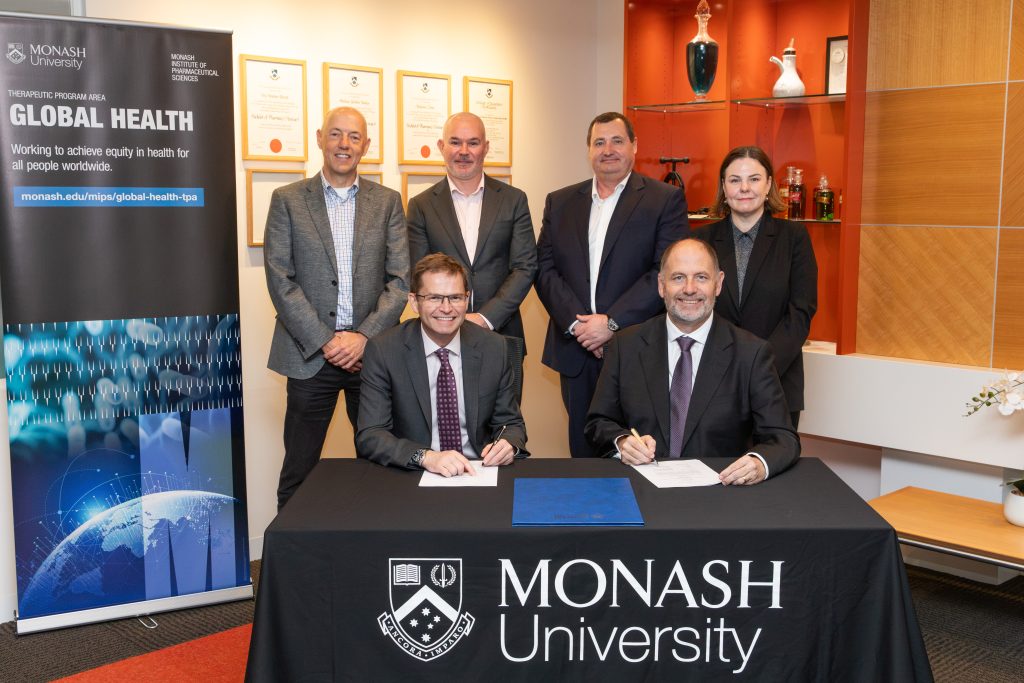
The MoU was signed by Professor Anthony Lawler, the Deputy Secretary of the Health Products Regulation Group and Head of the TGA, and Professor Chris Porter, the Director of the Monash Institute of Pharmaceutical Sciences and Academic Director of Therapeutics.
Professor Porter said the partnership further aligns academic research with regulatory practice.
“By combining Monash’s research expertise with the TGA’s regulatory leadership, we can advance innovation while also creating meaningful opportunities for student engagement and exposure to real-world regulatory challenges,” Professor Porter said.
Professor Lawler said the agreement reflects a shared interest in advancing regulatory science.
“We are delighted to welcome Monash University to the TGA's Academic Outreach Program. Regulatory science plays a critical role in supporting informed decision-making and helping regulators to respond to an increasingly complex and rapidly evolving environment,” Professor Lawler said.
“This program provides valuable opportunities to strengthen engagement, raise awareness and understanding, and encourage collaboration between the TGA and the academic sector.”
Through the Academic Outreach Program, the partnership will explore possible educational engagement opportunities at Monash, including curriculum enrichment and collaborative teaching activities that connect students with regulatory science and public health practice.
Monash University will continue to collaborate with the TGA’s Indo-Pacific Regulatory Strengthening Program (RSP) through the Monash Quality of Medicines Initiative (QoMI), due to the shared objectives of improving regulatory capacity and addressing the prevalence of substandard medicines in the region.
The first research activity will see the Monash QoMI working with the TGA’s RSP to evaluate existing methods – and identify new approaches – for detecting toxic contaminants in oral liquid medicines such as cough and cold syrups.
Ethylene glycol and diethylene glycol, highly toxic industrial solvents, are chemically and physically similar to commonly used pharmaceutical ingredients such as propylene glycol and glycerine. Their accidental or fraudulent addition in medicinal products has led to thousands of child fatalities over the past century, particularly in low and middle-income countries where regulatory oversight and testing capacity may be limited.
Since 2022, more than 400 children have died in Uzbekistan, The Gambia, Indonesia and India as a result of falsified ingredients entering the supply chain, leading to global alerts from the World Health Organization.
The collaborative research will focus on assessing and optimising analytical methods for detecting these contaminants in low-resource settings with limited laboratory infrastructure. In parallel, a Monash QoMI PhD project will explore the development of a new, low-cost and rapid screening test to identify contamination in pharmaceutical products.
Associate Professor Pete Lambert, Director of the Monash Quality of Medicines Initiative, said reliable tools were vital for detecting dangerous products.
“With medicines increasingly sourced through complex global supply chains, often with uneven quality oversight, it is critical that country stakeholders across both the public and private sectors have reliable tools to detect dangerous products before they reach patients,” Associate Professor Lambert said.
“Advanced analytical technologies are not always accessible in many settings, particularly in low and middle-income countries, so our focus is on optimising lower-cost, practical detection methods suited to these environments, while also exploring new approaches for rapid and scalable screening.”
MEDIA ENQUIRIES
Philip Ritchie
Media and Communications Manager
P: +61 430 336 243
GENERAL MEDIA ENQUIRIES
Monash Media
P: +61 3 9903 4840
For more experts, news, opinion and analysis, visit Monash News.