- Out-of-home advertising has become Australia's fastest-growing major medium, reaching $1.44 billion in 2025 — an increase of more than 11% year-on-year — as brands reassess their media strategies for 2026.
- Growing ad-blocker usage, particularly among 18- to 34-year-olds, and the fact that around 85% of digital ads fail to reach the 2.5-second memory threshold are driving renewed interest in unskippable, unblockable street advertising.
- Eroding trust in online content, fuelled by AI-generated fraud, is accelerating the shift, with research suggesting consumers who detect AI in a brand's marketing are around four times more likely to trust that brand less.
- The risks of over-reliance on digital platforms were highlighted by the collapse of Gold Coast agency Dashdot in May 2026, after changes to Meta's advertising platform more than doubled its client acquisition costs.
- Industry figures recommend placing out-of-home at the centre of media plans as an always-on layer, using human-crafted creative, precinct-level targeting, and culturally resonant work — a recent OATLY street campaign delivered a 700% lift in brand demand.
Out-of-home, now Australia's fastest-growing major medium at $1.44 billion, moves back to the centre of big brand media plans as ad-blocking and AI-generated content erode trust in the feed
MELBOURNE, July 2026. Australian brands are rethinking where the street sits in their 2026 media plans, as audiences grow more skilled at avoiding advertising and a wave of AI-generated content chips away at trust in the feed. Out-of-home has become the fastest-growing major medium in the country, reaching $1.44 billion in 2025, up more than 11% on the year, according to the Outdoor Media Association.
The shift starts with attention. GWI reports that close to a third of internet users now run an ad blocker at least some of the time, led by 18- to 34-year-olds, the group most brands want to reach. Of the ads that do get through, Amplified Intelligence puts the share that fail to clear the 2.5-second memory threshold at around 85%, which means most digital impressions are paid for and forgotten almost instantly.
"Audiences have become experts at protecting their attention, and now AI has given them a reason to distrust the feed as well," said a Rock Posters spokesperson. "The street sidesteps both. You cannot skip a wall, you cannot block it, and it reads as exactly what it is."
Trust is the second pressure. Jumio found that roughly seven in ten consumers are more sceptical of what they see online than a year earlier, specifically because of AI-generated fraud. The signal is sharper for marketers: research from Klaviyo and Datalily, surveying 8,000 people, including Australians, found that shoppers who spot AI in a brand's own marketing are about four times more likely to trust that brand less than more. A poster on a wall carries none of that hesitation. It is made by people, printed on paper, and pasted in a real place, which is why in a year when authenticity is harder to prove on a screen, the street reads as genuine.
The medium's fundamentals hold up regardless of what the feed is doing. Street posters are unskippable and unblockable, always-on, and they reach people in real life at scale. The Outdoor Media Association reports outdoor as the fastest-growing major medium and its strongest performer on return on investment, while The Harris Poll found 79% of people rank in-person, real-world experiences as their most memorable. Frequency in the right precincts, day after day, is how a brand stays top of mind at the moment someone is choosing.
The case is reinforced by the risk of leaning too hard on any single platform. In May 2026, Gold Coast agency Dashdot announced its voluntary liquidation, citing changes to Meta's advertising platform that more than doubled its cost to acquire clients and became unsustainable. Street posters and billboards are not rewritten overnight, and when paired well with digital, they can lift recall, reduce cost per acquisition and build trust.
"We are not arguing against digital, the smartest plans use both," the spokesperson added. "The point is where the street sits. Put it at the centre as the always-on layer and it lifts recall, and gives the rest of the mix something solid to stand on."
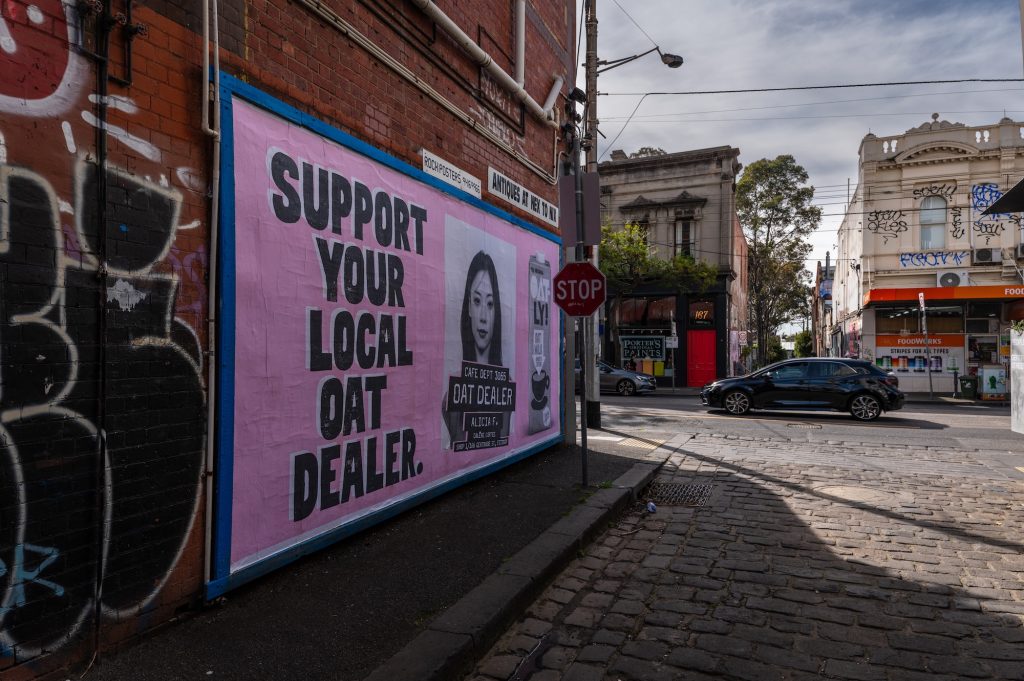
Rock Posters points to three moves that make the medium pay in 2026: brief the creative for the street so it is human-crafted, simple and bold; use precinct and proximity targeting to concentrate frequency where audiences actually move; and give the work a reason to be talked about. The company's recent OATLY campaign turned the street into a conversation and drove a 700% lift in demand for the brand, starting from almost nothing.
The full analysis is available at: https://www.rockposters.com.au/why-the-street-belongs-at-the-centre-of-your-2026-media-plan/
About us:
Rock Posters is Australia's largest independent street poster and out-of-home network. Founded in Melbourne in 1986, they have grown from printing gig posters for record labels into a national operation with in-house printing in Sydney and Melbourne. Their campaigns span cultural institutions, global brands and major tours, trusted by the National Gallery of Victoria and Sydney Film Festival, as well as media buyers for Prada, Nike and Taylor Swift. Sustainability sits at the root of everything they do: they are award-winning leaders in sustainable outdoor advertising, using Australian-made Revive Laser 100% Recycled Carbon Neutral paper, offsetting their installation transport, and inventing the "Green Poster" made from post-consumer waste and printed using vegetable-based ink. For more information: https://www.rockposters.com.au/
Contact details:
Rock Posters
03 9416 9966
226 Normanby Avenue, Thornbury VIC 3071