Saturday 22 August
Researchers, experts, and other interesting people available for interview around the country.
NSW: Native bees, seaweed, and 60,000+ years of Indigenous science at Redfern.
NSW: Dinosaurs, frogs, and a First Nations Science Village: two huge family-friendly events – Mount Annan & Abbotsbury.
QLD: Gin from bushtucker: distilling Indigenous botanicals and science, in Townsville.
NT: Why won’t your beer hold its head?
ACT: Help fix Wikipedia’s women problem.
NT: Garden in the Top End without killing everything.
QLD: Yes, the platypus is venomous but only in spring.
SA: A porcupinefish walks the red carpet.
SA: A seed bank to save South Australia’s plants.
TAS: Scientist puts sex-ed on stage in The Clitoral Chronicles.
NSW: There’s a census for koalas, too. In Bermagui.
VIC: How the gut, immune system and brain connect.
VIC: Meet the minds behind the Melbourne Museum.
ACT: Over-55s coding to keep the brain young.
ACT: Snakes, space, rockets, rocks and scientists take over Canberra’s shopping centres.
Read on for more on these, including direct event contact details.
Also today:
Coming up tomorrow:
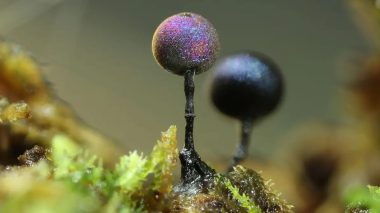
Giant Poo Palace. Milking snakes. Devil cancer. And the surprising beauty of slime moulds – see a preview of Sunday’s highlights.
National Science Week 2026 runs from 15 to 23 August.
Read on for direct contact details for each event, or contact Tanya Ha, [email protected] or 0404 083 863.
- More highlights by state: ACT - NSW - NT - QLD - SA - TAS - VIC - WA.
- More stories by round: The Arts - Business - Children & Family - Environment - Entertainment - Film - Food - Health - Indigenous - Queer - Seniors - Women in Science – Youth – Talkback talent.
- Visit the Media Centre for all media releases and images.
- Or visit ScienceWeek.net.au/events to find more stories in your area.
More about the event highlights
Native bees and seaweed at Redfern - Redfern, NSW
Learn how to care for Country with native bees, seaweed and Indigenous technology developed over thousands of years at the Indigenous Science Experience. This free event at the Redfern Community Centre celebrates Indigenous knowledge systems through interactive physics and chemistry experiments, yarning with Elders and a VR experience of Torres Strait Islander culture.
Saturday 22 August: www.scienceweek.net.au/event/indigenous-science-experience-at-redfern-7/redfern
Media enquiries: Joanne Jamie, [email protected], 02 98508283, or 0439 170 683
Indigenous student leaders, First Nations activity providers, and event organiser Joanne Jamie (non-Indigenous) are available for media interviews. View video from 2024 event.
Dinosaurs, frogs, PlantBank, and a First Nations Science Village: two huge family-friendly events – Mount Annan & Abbotsbury, NSW
Giant dinosaur puppets, liquid nitrogen science shows, animals, scientists, and crowds of kids having fun – great filming and photo opportunities in four different locations.
Frogs, bugs and a botanical insurance plicy: Saturday 22 August at Mount Annan
Sydney Science Trail at the Australian Botanic Garden Mount Annan features behind-the-scenes tours of the National Herbarium of New South Wales and PlantBank, where plants are studied and seeds are saved and stored as a vitally important ‘insurance policy’ against the extinction of native flora. The Gardens team are joined by invertebrate experts who can talk about the importance of creepy crawlies, and the FrogID team who are working to spot and save frogs and other amphibians.
www.scienceweek.net.au/event/sydney-science-trail-community-day/mount-annan
Media enquiries: 02 9231 8122 or to [email protected]
Native animals, Indigenous science, and a pop-up Ocean Lab in Western Sydney: Sunday 23 August
Science in the Scrub transforms Lizard Log into a large-scale, hands-on, outdoor science experience with more than 50 stalls, workshops and activity zones. Highlights include the life-sized roaming Australoventor Ginger, a First Nations Science Village, the pop-up Ocean Lab, robotics and engineering challenges, native animals, frogs and insects up close, and other activities.
www.scienceweek.net.au/event/science-in-the-scrub-2025-2/abbotsbury
Media enquiries: Jemma Pepper [email protected] or 0417 740 789.
Gin from bushtucker: distilling Indigenous botanicals and science – Townsville, QLD
Native lemongrass distilled into gin tastes like roses for some people and lemon for others, depending on their genes.
Proud Wiradjuri woman and gin distiller Clair Ryder blends Traditional Knowledge with modern science and innovative distilling, using ingredients that are ethically sourced with the blessing of Traditional Landowners.
Clair can talk about the chemistry behind native aromatics, the ecological significance of key species, and the cultural knowledge that has shaped their use for thousands of years.
She is presenting ‘Bush Alchemy’, a 90‑minute guided experience hosted by On Country Craft Distillery, the only distillery owned and operated entirely by First Nations women in Australia.
This session blends scientific insight with tasting raw bushtucker ingredients. Participants then experience how those same botanicals evolve when infused into spirits and incorporated into food.
Saturday 22 August: www.scienceweek.net.au/event/bush-alchemy-exploring-indigenous-botanicals-and-bushtucker-in-spirits/douglas/
Media enquiries: Clair Ryder, [email protected] or 0478 599 035.
Why won’t your beer hold its head? – Winnellie, NT
Making or breaking the perfect beer head is all about physics and chemistry. Don’t Lose Your Head is a lively, interactive presentation revealing what makes – or destroys – the perfect head, and why it matters.
Hosted by the Darwin and NT Homebrewers, the session uses live demonstrations to break down the roles of ingredients, cleanliness and technique, with the audience helping investigate why foam forms and why it vanishes too soon.
Saturday 22 August: www.scienceweek.net.au/event/dont-lose-your-head-science-of-beer-foam/winnellie
Media enquiries: Matt Elvey, Darwin and NT Homebrewers, [email protected].
Help fix Wikipedia’s women problem - Acton, ACT
Women are featured in less than 20% of Wikipedia’s 1.5 million biographical pages. The Australian National University is calling for Canberrans to help close this gap in a free workshop where participants will update or create Wikipedia biographies for women and gender-diverse scientists.
‘Inclusive Biographies in STEMM’ is hosted by The Australian National Centre for the Public Awareness of Science in partnership with WikiMedia Australia.
Wikipedia is a vital source of information online. Not only are its articles prioritised by search engines, the entire database has been scraped millions of times by AI agents. The content gender gap reflects the mostly-male volunteer editors who write and maintain Wikipedia’s articles, as well as the historical minimisation of women’s contributions in science, technology and culture.
Saturday 22 August. www.scienceweek.net.au/event/inclusive-biographies-in-stemm-project-a-mini-wiki-hackathon/acton
Media enquiries: SJ Barnes, [email protected].
Garden in the Top End without killing everything – Jingili, NT
Gardening in the tropics defeats most newcomers. Landcare NT’s Eco Fair gathers the people who have worked it out, with workshops and talks on native gardening, composting, pruning, irrigation, pest management and water-wise design.
Guided walks and local experts offer personalised advice, while stalls from community groups, environmental organisations and local businesses cover conservation projects, waste reduction and ways to attract native wildlife.
Hands-on nature activities and crafts for children run through the day. Suitable for anyone with a backyard, a balcony full of pot plants, or simple curiosity.
Saturday 22 August: www.scienceweek.net.au/event/top-end-native-eco-fair
Media enquiries: Landcare NT, [email protected]
Yes, the platypus is venomous but only in spring – Enoggera Reservoir, QLD
A duck’s bill, a beaver’s tail, lays eggs and makes milk – and, it turns out, one of the very few venomous mammals on Earth. Platypus Venom Revealed uncovers how only male platypuses produce venom, and only during the spring breeding season when they compete with other males.
Brought to you by the ARC Centre of Excellence for Innovations in Peptide and Protein Science, the family-friendly event explains how platypus venom works, why it’s so different from snake or spider venom, and how researchers keep discovering new things about this unusual animal.
Saturday 22 August: www.scienceweek.net.au/event/platypus-venom-revealed-2/enoggera-reservoir
Media enquiries: Dr Junming He, ARC Centre of Excellence for Innovations in Peptide and Protein Science, [email protected]or 0426 283 303.
Ambassadors available for interview: Director Professor David Craik, COO Dr Richard Kim and Dr Junming He.
A porcupinefish walks the red carpet – North Adelaide, SA
Audiences can walk the red carpet for the official premiere of two new animated short films, Little Scientists, Big Blue and Porci Explores Marine Parks, made with Fastbreak Films for National Science Week 2026.
Little Scientists, Big Blue follows Porci the Porcupinefish on an imaginative underwater journey through kelp forests and deep-sea ecosystems, while Porci Explores Marine Parks showcases South Australia’s 26 state and Commonwealth marine parks and the science behind protecting them.
Hosted by the Marine Discovery Centre and National Parks and Wildlife Service SA, the family event includes a panel of marine scientists, live music from Sea Star Rock, VR reef dives, marine touch tables and Indigenous science displays, emceed by Lucy Rasheed from Sea Star Rock.
Saturday 22 August: www.scienceweek.net.au/event/national-science-week-premiere-little-scientists-big-blue/north-adelaide
Media enquiries: Carmen Bishop, Marine Discovery Centre, [email protected] or 0422 885 409
Carmen Bishop and scientists involved in developing the script are available for media interviews.
A seed bank to save South Australia’s plants – Adelaide, SA
South Australia has at least 3,500 individual plant species. Seeds of more than 2,000 of them, including over 85% of the State’s threatened flora, are stored in the Seed Bank in Adelaide Botanic Garden. It’s part of a global seed bank partnership involving more than 100 countries.
Adelaide’s Seed Bank and its partnerships is an insurance policy to protect against extinction, provide seed stock for revegetation after bushfires, and provide the Botanic Gardens and State Herbarium scientists with samples to aid conservation science. For example, plants from saved seeds are helping to restore clover glycine and leafy greenhoods in parts of the Adelaide Hills affected by the 2019-2020 bushfires.
People visiting the Gardens will have the opportunity to meet the botanists and have a behind-the-scenes look at South Australia’s plant conservation efforts, see rare and threatened plant species, and learning how ecologists protect plants from extinction.
Saturday 22 August: www.scienceweek.net.au/event/secrets-of-the-seed-exploring-south-australian-plant-and-seed-science-liv
Media enquiries: Botanic Gardens and State Herbarium media, [email protected] or 0402 969 703.
Scientist puts sex-ed on stage in The Clitoral Chronicles – Hobart, TAS
The Clitoral Chronicles lifts the hood on the most misunderstood organ in biology: the clitoris!
The clitoris has been overlooked, under-appreciated and literally written out of history for centuries, but now Dr Tiana Pirtle, who has a PhD in reproductive ecology and physiology, is putting it centre-stage. She is joined by props and performers wearing sparkly clitoris and penis costumes.
Blending comedy, physical theatre, outrageous anatomical costumes and wild true stories from the animal kingdom, the show flips outdated ideas about sex, gender and science on their head — and puts female and LGBTQIA+ perspectives centre stage.
Dr Pirtle’s previous show ‘Vaginal Vignettes’ shared the stories of the multi-chambered vaginas and temporary passages, elongated clitorises, pseudo-penises, vaginas that can sort sperm, and armoured vaginal openings that put female animals in the driver’s seat of reproduction and evolution.
Read a UTas article about her work. Hear her on the Science Vs episode ‘When vaginas attack!’.
Friday 21 August and Saturday 22 August: www.scienceweek.net.au/event/the-clitoral-chronicles-4/hobart/
Media enquiries: Tiana Pirtle, [email protected] or 0456 826 322.
Could you spot a koala – they need you - Bermagui, NSW
Spotting a koala sitting at the top of a gum tree can be pretty hard when you’re standing on the ground, but members of the Koala Action Network have a whole range of tricks to help, from high-tech acoustic monitoring to the very low tech (looking for koala poo).
Accurately counting koalas in the wild is crucial for efforts to help their populations regrow after devastating losses from bushfires and other threats, but conservation efforts across the South Coast are still held back by patchy or incomplete surveys. The Network will train you so you can learn to find koalas in your local area, log your sightings and be a citizen scientist, filling in the critical missing pieces.
Saturday 22 August: www.scienceweek.net.au/event/koalas-in-our-backyard/bermagui
Media enquiries: Tamlyn Magee, [email protected] or 0411 101 168.
How the gut, immune system and brain connect - Melbourne, VIC
90% of chronic health conditions are linked to interactions between the gut, immune system, and the brain. Research in this area is critical for breakthroughs to treat and prevent conditions that range from digestive disorders to cognition and mental health challenges.
Meet the researchers from Monash University’s Gastroenterology, Immunology and Neuroscience (GIN) Program.
They’re presenting short talks at Brick Lane Brewing Co exploring how the gut, immune system, and brain are communicating to shape your health. From how microplastics may affect the earliest stages of life, to the gut signals that impact brain health, each speaker will unpack a different piece of the story.
Saturday 22 August: www.scienceweek.net.au/event/bridges-of-the-body-how-the-gut-immune-system-brain-connect/melbourne
Media enquiries: Meg Mackean, [email protected] or 0487 493 211.
Meg Mackean is available for media interviews.
Meet the minds behind the Melbourne Museum – Carlton, VIC
For one day, the scientists, researchers and collection experts behind Melbourne Museum step into the spotlight at Science on Show, sharing fascinating stories, rare specimens and surprising discoveries.
Visitors can explore hands-on displays, pop-up talks and family-friendly activities, then gather at the central stage for live quizzes, music, storytime and expert presentations. Young scientists can join a gardening workshop and plant a native seedling to take home.
From ancient fossils to living species and mineral marvels, it’s a chance to experience science up close.
Saturday 22 August: www.scienceweek.net.au/event/science-on-show-at-melbourne-museum/carlton
Media enquiries: Museum Media, [email protected] or 0466 622 621.
Over-55s coding to keep the brain young – Phillip, ACT
Anyone over 55 who can handle a keyboard and mouse can learn to build colourful, musical, moving creations at a free Creative Computing for Seniors workshop using Scratch – the block-based coding tool used by more than 100 million people worldwide.
In a relaxed setting, participants snap multi-coloured blocks together to make interactive stories, games and animations, no experience required. Lunch and refreshments are included.
The organisers pitch it as a way to keep the brain sharp that’s more fun than crosswords or sudoku and a chance to meet new people and start a local Scratch community.
Saturday 15 August and Saturday 22 August: www.scienceweek.net.au/event/creative-computing-for-seniors-workshop-using-scratch-10/phillip
Media enquiries: Thomas McCoy, [email protected] or 0402 050 852.
Thomas McCoy available for media interviews; photo and video opportunities available.
Snakes, space, rockets, rocks and more while you shop – multiple locations, ACT
Pop-up activity centres will give shoppers the chance to discover the science behind native plants, reptiles, engineering, space (and sci fi!), pollen mapping and the environment.
Canberra Centre, Westfield Belconnen, Westfield Woden, South.Point Tuggeranong, Majura Park Shopping Centre, Cooleman Court, and Marketplace Gungahlin will host a variety of displays and hands-on science activities during the weekends of National Science Week (15 - 16 and 22 - 23 August).
Media enquiries: Brook Clinton, [email protected] or 0406 356 207.
About National Science Week
National Science Week is Australia’s annual opportunity to meet scientists, discuss hot topics, do science and celebrate its contribution to our lives. Science drives economic and social change – from safe and nutritious food to reducing cancer deaths; from smart phones to AI; from under Antarctica’s ice floes to distant planets.
First held in 1997, National Science Week has become one of Australia’s largest festivals. Last year about 3 million people participated in more than 2,500 registered events and activities.
National Science Week 2026 runs from Saturday 15 to Sunday 23 August. Event details can be found at www.scienceweek.net.au.
National Science Week is proudly supported by the Australian Government, alongside key partners Questacon, CSIRO, the Australian Science Teachers Association, and ABC Science.