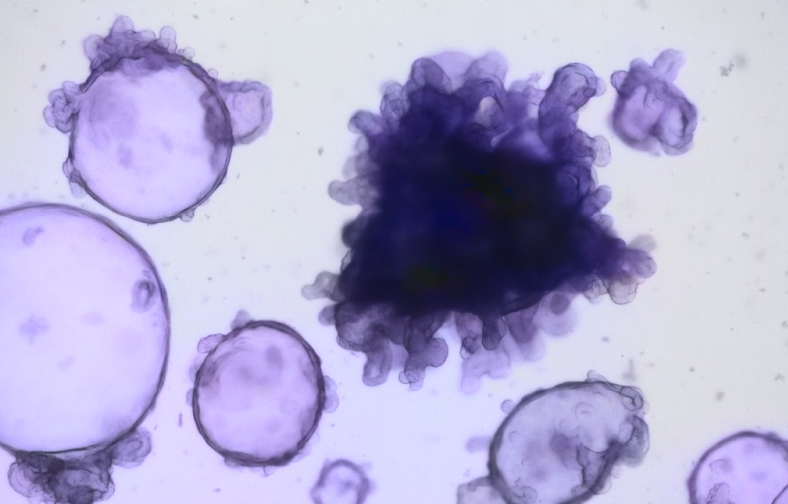

Researchers from Monash University and the Hudson Institute of Medical Research have grown live models of paediatric patients’ digestive systems to investigate solutions for inflammatory bowel disease (IBD).
Using live tissue and bacteria from the intestine to create miniature 3D ‘organoid’ models, nicknamed ‘mini guts’, researchers have been able to test how and where the specific bacteria in a patient’s digestive system can affect tissue and cause inflammation.
This ecosystem, or microbiome, is unique to each person, which means an IBD treatment that works for one person may not work for another.
Published in the Scientific Reports, part of the prestigious Nature suite of journals, this research is the first to have developed an organoid model that incorporates both the intestinal lining and its bacteria, and pioneers the technology to inject bacteria into the intestinal organoids to study its impact on inflammation.
Lead researcher Professor Helen Abud, from the Monash Biomedicine Discovery Institute, said it takes researchers a step closer to personalised IBD treatments.
“The mini guts we have developed allow us to move past a ‘one-size-fits-all’ approach,” Professor Abud said.
“By creating living replicas of a patient’s intestinal lining, we can observe how this critical barrier protects the body from harmful gut contents, and how it heals or breaks down when exposed to different bacteria.
“These mini-guts organise themselves exactly like a real bowel lining, providing a beautiful and accurate tool for understanding the diversity of this disease.”
Senior researcher Adjunct Associate Professor Edward Giles, a researcher at Monash University and Hudson Institute of Medical Research and paediatric gastroenterologist at Monash Children’s Hospital, said it has the potential to significantly improve care for children with the IBD.
“Children aged 9 to 18 represent a group where early intervention is vital, as they face decades of managing this chronic condition,” Associate Professor Giles said.
“From a clinical perspective, this methodology is unique because it combines the expert study of a patient’s disease with the specific bacteria living at the site of their inflammation.
“It gives us a way to test whether we can promote healing of the intestinal barrier or even find ‘protective’ bacteria that could become treatments themselves.”
First author Dr Eva Chan, from the Innate Immune Responses to Infection Research group in the Centre for Innate Immunity and Infectious Diseases at the Hudson Institute of Medical Research.
"This methodology isn't just about recreating a disease state, it's about developing a predictive research tool,” Dr Chan said.
“By building this biobank of matched organoids and bacterial collection from each individual patient, we are laying the groundwork for a future where we can test and tailor interventions in the lab before they ever reach the patient’s bedside.”
Read the research paper: https://doi.org/10.1038/s41598-026-46184-8
ASSETS AVAILABLE
Images available here. Credit: Monash University.
MEDIA ENQUIRIES
Toni Brient
Media and Communications Manager
P: +61 423 964 191
E: [email protected]
GENERAL MEDIA ENQUIRIES
Monash Media
P: +61 3 9903 4840
E: [email protected]
For more Monash media stories, visit our news and events site