Scientists, experts and event organisers are available for interview before and throughout National Science Week.
Here are South Australian highlights from the national festival that reaches more than 3 million people through 2,500+ events. Science Week will run 15 to 23 August 2026.
Direct contact details for each event listed below and online.
Contact national publicist Tanya Ha for contacts and tips: [email protected] or 0404 083 863.
Highlights for South Australia:
- Growing a garden
On the Moon? – Adelaide - Female fossil rockers
head to the caves – Naracoorte - Koala census:
help wanted on Kangaroo Island
- Fear, love and algae blooms:
Surfing scientists on our relationship with the ocean – Streaky Bay & Penong - Shoot the stars
On your smartphone – Stockport - The taste of Wuthering Heights gin – Adelaide
- Creative jobs:
Our AI future and today’s students - Adelaide, Mawson Lakes, Whyalla & Mount Gambier - The tallest bubble ever made – Gilberton
- A porcupinefish
Walks the red carpet – North Adelaide - A seed bank to save South Australia’s plants – Adelaide
- Cosmic collisions:
A musical exploration of space-time – Adelaide & online - Flower power: Australia’s most amazing wildflower. Online national survey
- LAUNCH TONIGHT: with elephant toothpaste at the Museum
More on these below including contact details for interview.
Or find more stories in your area at ScienceWeek.net.au/events.
Visit the Media Centre for all media releases and images.
South Australian launch
Friday 14 August
at Museum with explosive experiment
National Science Week kicks off with VIPs conducting the ‘elephant toothpaste’ experiment at the South Australian Museum, followed by a behind-the-scenes look at the Museum’s Science Centre.
Launch event with:
- Her Excellency the Honourable Frances Adamson AC, Governor of South Australia
- The Honourable Kyam Maher MLC, Deputy Premier of South Australia
- Science TikToker and National Science Week ambassador Maddie Massy
When: 5pm on Friday 14 August 2026
Where: South Australian Museum, North Terrace, Adelaide
Media enquiries: Elise Boultby, [email protected] or 08 8273 9107
Move info: www.scienceweek.net.au/event/national-science-week-launch/adelaide/.
South Australian highlights
Growing a garden on the Moon – Adelaide
Plants are essential to life on Earth – and we’ll need them to survive on the Moon and Mars.
In this workshop, participants step into the shoes of plant scientists, psychologists and food chemists to design a plant-inspired solution for a space mission.
Run by the Australian Space Discovery Centre and Plants for Space, the session lets visitors hear from real researchers about how plants grow in space, then think creatively to solve the challenge of limited food, water and room on board.
Saturday 15 August: www.scienceweek.net.au/event/plants-for-space-mission-to-the-moon-liv/adelaide
Media enquiries: Australian Space Discovery Centre, [email protected] or 08 8432 1400
Female fossil rockers head to the caves – Naracoorte
The trio – Danni, Morgan and Blair, who graduated from Dinosaur University – are the alter-egos of performers Summa Arrizza, Montana Vincent and Lily Horton-Stewart.
Their show explores Australia’s prehistoric past, while shining a light on challenges facing women in science and inspiring girls to follow their lead and dream big!
Friday 14 August to Sunday 16 August: www.scienceweek.net.au/event/naracoorte-rocks-the-world-beneath-our-feet/naracoorte/
Media enquiries: Michael Mills, [email protected] or 0411 287 381.
Help wanted for Kangaroo Island’s koala census – Kangaroo Island, SA
Australia’s koala populations are under increasing pressure from drought, disease (including chlamydia), habitat loss and the effects of bushfires.
Kangaroo Island in South Australia is home to a large, mostly disease-free koala population, but its limited gene pool could make it vulnerable to future threats.
Researchers from Flinders University are studying this important population at the island’s Koala Sanctuary, and they need volunteers this Science Week: citizen scientists will collect observations that support wildlife monitoring and conservation.
They will look for koalas in trees, learn how to spot signs that koalas are nearby, and record sightings using simple data collection tools. Along the way, participants will help note where koalas are found, which trees they are using, and what the surrounding habitat looks like.
Participants will also view and handle innovative technologies used to study koala movement and behaviour, such as GPS collars and a radio-tracking antenna, and learn how drones, thermal imaging and on-ground surveys can be used together to find and monitor wildlife.
Saturday 15 August and Sunday 16 August: www.scienceweek.net.au/event/koala-connections-join-a-real-koala-survey/gosse/
Media enquiries: Flinders University media relations, [email protected] or 0466 527 875.
Prof Karen Burke da Silva and Dr Katie Gates are available for media interviews.
Love the ocean, or fear it? – Streaky Bay & Penong
Spending time with the ocean changes how we think, feel and act.
Science in the Outback Pub will explore biophilia and biophobia – our love and fear of the sea – with two scientists who also love surfing examining how spending time by the ocean changes the way people think, feel and act.
Dr Brianna le Busque from Adelaide University examines the growing evidence behind our deep emotional and psychological ties to “blue spaces,” showing how the ocean can improve mood, reduce stress, and foster feelings of calm and energy.
She’s also studying people’s anxiety around the impacts of South Australia’s harmful algal bloom.
Dr Rebecca Olive from RMIT University is turning surfers, swimmers and walkers into beach scientists.
They provide photos and data for +coastal monitoring, such as day-to-day wave movements or algal bloom sitings, via CoastSnap, a citizen science platform and app. She is an expert in human-environment relationships.
They’re giving talks and bring their research out of the lab and into public venues in Streaky Bay and Penong.
Streaky Bay: Tuesday 18 August: www.scienceweek.net.au/event/science-in-the-outback-pub-2/streaky-bay
Penong: Wednesday 19 August: www.scienceweek.net.au/event/science-in-the-outback-pub-3/penong/
Media enquiries: Grayson Cooke, [email protected] or 0415 428 906.
Brianna le Busque, Rebecca Olive and event organiser Grayson Cooke are available for media interviews.
Shoot the stars on your smartphone – Stockport
The Astronomical Society of South Australia is throwing open its Stockport Observatory for a free Star Party, offering telescope viewing, guided tours of the night sky and a hands-on workshop on astrophotography using nothing but a mobile phone.
The evening includes laser-guided tours to help identify planets, stars and nebulae, activities for children, and the chance to use both visual and electronic-imaging telescopes.
A sausage sizzle and astronomy merchandise will be available on the night. The event is free thanks to the support of Inspiring South Australia, though tickets must be booked in advance.
Saturday 15 August: www.scienceweek.net.au/event/a-night-under-the-stars-with-the-astronomical-society-of-south-australia/stockport
Media enquiries: Ken Grant, [email protected] or 0448 931 104
Ken Grant available for media interviews.
The taste of Wuthering Heights gin – Prospect, SA
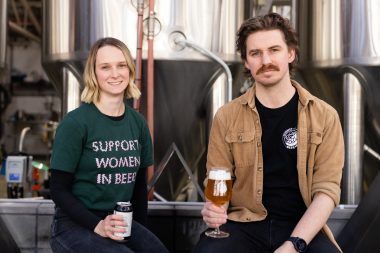
Fiction Distilling turns classic novels into gin. Pride and Prejudice is an English garden that becomes a tropical escape the moment you add tonic. 1984 changes colour. The Great Gatsby is an experiment in what salt does to a spirit.
At Payinthi on Prospect Road, the distillers explain the chemistry behind each bottle – how botanicals react with one another, how a flavour profile gets built, and how a book ends up as a liquid.
Also on the shelf: The Three Musketeers, an olive gin that mellows citrus, and Wuthering Heights, gothic elements and all.
Saturday 15 August: www.scienceweek.net.au/event/botanicals-and-beakers-the-science-of-gin-with-fiction-distilling
Media enquiries: [email protected]
Will there be creative jobs for today’s students? - Adelaide, Mawson Lakes, Whyalla & Mount Gambier
What role should AI play in creative work? How do we balance innovation with ethical responsibility? What choices do we want young people and communities to make as technology develops?
And what is Australia’s place in this global technological transformation?
Prime Minister Albanese is establishing an AI office. What do the experts say? Ask Australian AI researchers Dr Rebecca Marrone and Dr Maria Vieira.
Dr Rebecca Marrone is a Senior Lecturer at Adelaide University’s Centre for Change and Complexity in Learning (C3L). She has a background in educational psychology, and her research is primarily in the fields of creativity, wellbeing, and human and artificial cognition.
Dr Maria Vieira holds a PhD in STEM and a master’s degree in the psychology of creativity. As a member of the Centre for Change and Complexity in Learning (C3L), her research explores creativity, human-AI collaboration, and gender equity, with a particular focus on STEM fields in which women remain underrepresented.
Rebecca and Maria will be speaking at the ‘Future Minds: Creativity and ethics in the age of AI’ series of lectures and student workshops (for years 9-12), inviting audiences to reflect, discuss and engage with some of the most important questions shaping our technological future.
Media enquiries: Annabel Mansfield, [email protected] or 0479 182 489.
Rebecca Marrone and Maria Vieira available for media interviews.
The tallest bubble ever made – Gilberton
Marty McBubble, holder of the world record for the tallest bubble ever made, will demonstrate the science behind bubble rockets, volcanoes, tornadoes, cubes, carousels and jellyfish at the Scientific Bubble Show.
Combining quirky gadgets with comedy, the show reveals the physics that makes giant bubbles possible.
Tuesday 18 August: www.scienceweek.net.au/event/scientific-bubble-show-at-walkerville-town-hall/gilberton
Media enquiries: Graeme Denton (Marty McBubble), [email protected] or 0407 816 059.
A porcupinefish walks the red carpet – North Adelaide
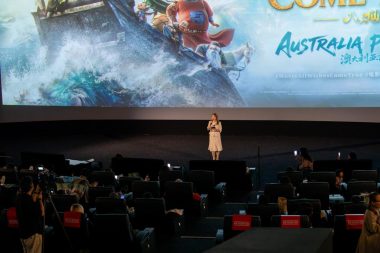
Audiences can walk the red carpet for the official premiere of two new animated short films, Little Scientists, Big Blue and Porci Explores Marine Parks, made with Fastbreak Films for National Science Week 2026.
Little Scientists, Big Blue follows Porci the Porcupinefish on an imaginative underwater journey through kelp forests and deep-sea ecosystems, while Porci Explores Marine Parks showcases South Australia’s 26 state and Commonwealth marine parks and the science behind protecting them.
Hosted by the Marine Discovery Centre and National Parks and Wildlife Service SA, the family event includes a panel of marine scientists, live music from Sea Star Rock, VR reef dives, marine touch tables and Indigenous science displays, emceed by Lucy Rasheed from Sea Star Rock.
Saturday 22 August: www.scienceweek.net.au/event/national-science-week-premiere-little-scientists-big-blue/north-adelaide
Media enquiries: Carmen Bishop, Marine Discovery Centre, [email protected] or 0422 885 409.
Carmen Bishop and scientists involved in developing the script are available for media interviews.
A seed bank to save South Australia’s plants – Adelaide, SA
South Australia has at least 3,500 individual plant species. Seeds of more than 2,000 of them, including over 85% of the State’s threatened flora, are stored in the Seed Bank in Adelaide Botanic Garden. It’s part of a global seed bank partnership involving more than 100 countries.
Adelaide’s Seed Bank and its partnerships is an insurance policy to protect against extinction, provide seed stock for revegetation after bushfires, and provide the Botanic Gardens and State Herbarium scientists with samples to aid conservation science. For example, plants from saved seeds are helping to restore clover glycine and leafy greenhoods in parts of the Adelaide Hills affected by the 2019-2020 bushfires.
People visiting the Gardens will have the opportunity to meet the botanists and have a behind-the-scenes look at South Australia’s plant conservation efforts, see rare and threatened plant species, and learning how ecologists protect plants from extinction.
Saturday 22 August: www.scienceweek.net.au/event/secrets-of-the-seed-exploring-south-australian-plant-and-seed-science-liv
Media enquiries: Botanic Gardens and State Herbarium media, [email protected] or 0402 969 703.
The sound of cosmic collisions: a musical exploration of space-time – Adelaide & online
The most violent events in the universe create elements such as gold, platinum and the iodine in human blood.
Dr Karelle Siellez is listening to the aftermath of these massive kilonova through electromagnetic radiation ad gamma-ray bursts.
She will explore the ‘sound’ of cosmic collisions, and what these signal reveal about the universe, during public talks across the country as part of the 2026 Marie Curie lecture series.
Karelle is an astrophysicist and lecturer at the University of Tasmania. She contributed to the first detection of a gamma-ray burst and gravitational waves from the same cosmic event, recognised with the 2017 Breakthrough Prize. She is also an award-winning science communicator who integrates art, sound, and storytelling into her work.
Monday 24 August: www.scienceweek.net.au/event/2026-marie-curie-lectures-painting-the-universe-a-visual-and-musical-exploration-of-space-time-with-dr-karelle-siellez-6/adelaide/
Media enquiries: Dr Karen Livesey and Dr Karen Siu (Marie Curie Tour Co-ordinators), [email protected], 0478 260 533
What do you think is Australia’s most amazing wildflower? – online
ABC Science wants Australians to discover our hidden “flower power”, the kind you find in botanical gardens rather than hippie communes.
With the help of experts, ABC Science has selected ten flowering plants from across the country.
Not just another banksia or waratah, but blooms from the unsung understory that also do something unbelievable. These ten wildflowers are more than just a pretty face; each one hides a surprising superpower. The public will decide which is the most amazing.
Voting to decide Australia’s most amazing wildflower will start just before National Science Week in August, with the winning bloom announced on Friday August 21 in a live broadcast on Radio National.
The shortlist:
- Bladderwort (Utricularia) – Traps and digests insects inside tiny floating “bladders”
- Star flower (Calytrix) – Changes colour like a ‘traffic-light’ to direct pollinators
- Flannel flower (Actinotus) – Blooms from bushfire ashes like a floral phoenix
- Flying duck orchid (Caleana) – Traps insects for pollination and looks like a duck!
- Mulla mulla (Ptilotus) – Thrives, and flowers, in tough, hot arid environments
- Murnong/yam daisy (Microseris) – Provided a significant year-round nutritious food for Indigenous people
- Richea scoparia – Survives extreme cold and feeds snow skinks
- Creamy candle (Stackhousia) – Looks like a candle and emits a sweet fragrance at night
- Triggerplant (Stylidium) – Hits insects with pollen using a catapult-like trigger
- Underground orchid (Rhizanthella) – Lives underground and looks like a tiny demogorgan.
Wednesday 5 August – Friday 21 August. To find out more and vote, go to www.abc.net.au/wildflowers.
For interviews with Dr Ann Jones, contact Rob Caulley, ABC Publicity, [email protected].
About National Science Week
National Science Week is Australia’s annual opportunity to meet scientists, discuss hot topics, do science and celebrate its contribution to our lives. Science drives economic and social change – from safe and nutritious food to reducing cancer deaths; from smart phones to AI; from under Antarctica’s ice floes to distant planets.
First held in 1997, National Science Week has become one of Australia’s largest festivals. Last year about 3 million people participated in more than 2,500 registered events and activities.
National Science Week 2026 runs from Saturday 15 to Sunday 23 August. Event details can be found at www.scienceweek.net.au.
National Science Week is proudly supported by the Australian Government, alongside key partners Questacon, CSIRO, the Australian Science Teachers Association, and ABC Science.