
Interview Opportunity:
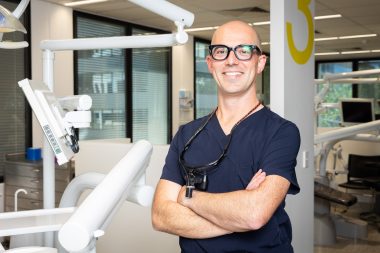
Leukaemia Foundation Head of Research Bill Stavreski: can talk to the points raised in the media release regarding the Leukaemia Foundation's new national scorecard.
Scorecard and additional assets (for states and territories): download here
Contact the Leukaemia Foundation Media Team:
[email protected] or 0473 154 079.
The Leukaemia Foundation today released a new national scorecard exposing major gaps in the assistance available to Australians who must travel long distances and stay away from home to access life-saving cancer treatment.
Benchmarking patient travel schemes against Australian Taxation Office estimates of real accommodation and private-vehicle costs, the scorecard shows support varies sharply across states and territories.i
In some jurisdictions, accommodation subsidies cover as little as 28 per cent of real-world costs.
Leukaemia Foundation Chief Executive Officer, Chris Tanti, said the findings show patients are being left to absorb unacceptable costs simply because the treatment they need is not available close to home.
“For people in regional, rural and remote communities, travel is not optional – it is often the only way to access specialist cancer care,” Mr Tanti said.
“Yet assistance across Australia is inconsistent and, in too many places, has failed to keep pace with the real cost of fuel, vehicle use, accommodation and everyday living.”
Accommodation is a particular pressure point. Current subsidies range from $49.50 per night in Victoria to $110 in South Australia – with all but South Australia failing to cover a reasonable portion of the actual costs of staying close to specialist treatment centres in capital cities.
The Leukaemia Foundation's National Scorecard sets out clear recommendations for state and territory governments. Each state was scored out of 100 based on how well its travel scheme covers the real costs of accommodation and private vehicle travel.
Accommodation counts for 80 per cent of the score and vehicle travel 20 per cent, reflecting the heavier financial burden of extended stays for blood cancer patients.
“Cancer treatment can involve months and sometimes years of travel, accommodation and time away from work,” Mr Tanti said.
“The financial burden compounds quickly, particularly when families are already managing lost income and the other costs associated with cancer.
“This is not simply a transport issue; it is a wider equity issue.”
The Leukaemia Foundation strongly believes that accommodation support should cover at least 70 per cent of the real cost of staying near treatment, reflecting the fact that the cost of a room in Sydney is not the same as a room in Adelaide.
Additionally, if patients are driving hundreds of kilometres for treatment, they should be reimbursed at least 45 cents per kilometre to cover a reasonable portion of expenses – about half of what the ATO says it costs to run a car.
Mr Tanti added, “These aren't one-size-fits-all numbers. They're place-based, and they account for the reality that many blood cancer patients need to travel interstate for treatment.
“These rates cannot be set and forgotten. We're calling for annual indexation, so support keeps pace with real costs instead of quietly falling behind, year after year.”
South Australia is ranked first on the national scorecard with an overall score of 95.3, followed by Western Australia at 87.5 and Tasmania at 79.2. Victoria ranked last at 41.3, behind the ACT at 47.4 and Queensland at 62.3.
Mr Tanti said the figures underline the need for every state and territory government to review and strengthen their patient travel assistance schemes.
“Where a person lives, and how much money they have in the bank, should never determine whether they can reach life-saving cancer treatment,” Mr Tanti said.
Join the call to Cut the Cost of Cancer. Sign the petition at leukaemia.org.au and urge governments to provide better financial support for Australians impacted by cancer.
For support, people affected by blood cancer can contact the Leukaemia Foundation on 1800 620 420 or visit leukaemia.org.au.
– ENDS –
About us:
About the Leukaemia Foundation: The Leukaemia Foundation stands with Australia to help cure and conquer blood cancer – with care. Together, we are attacking every blood cancer, from every direction, in every way we can. We stand beside every Australian to be their voice and their someone-to-turn-to, fighting to get them access to the best care. We also accelerate research that is delivering rapid advancements in blood cancer diagnosis and treatments. Plus, we provide services and support that empower people living with any blood cancer to live well after diagnosis. You can learn more about the Leukaemia Foundation and blood cancer at leukaemia.org.au
Contact details:
Email [email protected] or call the media team on 0473 154 079.