- New Australian Bureau of Statistics data shows the economy grew 0.4 per cent in the June quarter, with construction activity rising across both dwelling and engineering sectors, though ongoing cost pressures persist due to competition for limited labour and materials.
- CCAA Chief Executive Officer Michael Kilgariff says the figures highlight the urgent need to ensure Australia has sufficient construction materials supply capacity to support its housing, infrastructure and economic ambitions.
- Kilgariff argues that governments must protect strategically important construction material resources — particularly aggregates and concrete — close to areas of future demand, to reduce transport distances, lower costs and improve supply resilience.
- Planning and regulatory systems need to recognise construction materials as essential enabling resources, with efficient and timely approvals processes and improved freight networks to keep construction costs down.
- The CCAA warns that governments cannot separate housing and infrastructure policy from construction materials policy, calling for immediate planning to secure local materials supply as Australia simultaneously pursues ambitious housing targets, major infrastructure programmes and the energy transition.
Cement Concrete & Aggregates Australia (CCAA) says new economic data reinforces the need for governments to secure long-term access to locally produced construction materials as Australia works to deliver new homes, infrastructure and major projects.
The latest Australian Bureau of Statistics National Accounts show the Australian economy grew 0.4 per cent in the June quarter and 2.1 per cent over the year.
Construction gross value added increased 0.4 per cent during the quarter, while dwelling construction rose on the back of the existing pipeline of work and new project commencements.
Engineering construction also increased, driven by renewable energy and mining projects, while the ABS reported increased work on high-value heavy and civil engineering projects.
Importantly, the ABS identified continuing cost pressures across the construction sector, reporting that construction prices continued to rise due to ongoing competition for limited resources in both labour and materials.
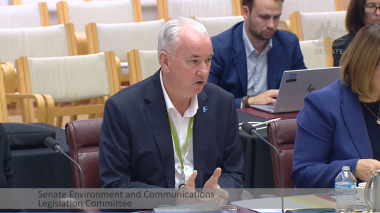
CCAA Chief Executive Officer Michael Kilgariff said the figures highlighted the importance of ensuring Australia had the construction materials supply capacity required to support its housing, infrastructure and economic ambitions.
“Whether Australia is building new homes, roads, railways, renewable energy projects or other critical infrastructure, those projects all depend on a reliable and competitive supply of cement, concrete and aggregates,” Mr Kilgariff said.
“The latest ABS figures show dwelling construction and engineering activity continuing at the same time as the construction sector faces competition for limited labour and materials.
“That should be a clear signal to governments that increasing the pipeline of projects is only one side of the equation. We also need to make sure Australia can efficiently supply the materials needed to actually build them.
“Cement, concrete and aggregates are high-volume essential materials, and particularly in the case of aggregates and concrete, proximity to the markets they serve matters.
“Protecting strategically important construction material resources close to areas of future demand can reduce transport distances, lower costs, improve supply resilience and reduce the number of heavy vehicle kilometres required to deliver the materials our communities need.”
Mr Kilgariff said planning and regulatory systems needed to recognise construction materials as essential enabling resources and provide greater certainty for existing and future operations.
“As our cities and regions grow, governments need to identify and protect strategically important resources before incompatible development makes them inaccessible,” Mr Kilgariff said.
“We also need efficient, predictable and timely approvals processes that allow responsible operations to be established, expanded and maintained as demand grows.
“At the same time, Australia needs freight networks that allow these materials to move efficiently from quarries, cement facilities and concrete plants to construction sites.
“Better heavy vehicle access, fit-for-purpose local roads and bridges, more efficient network approvals and sensible freight planning can all improve productivity and help keep the cost of construction down.
“Conversely, restricting resource access, allowing urban encroachment around strategically important operations, creating unnecessary regulatory delays or imposing additional costs on materials producers ultimately makes it harder and more expensive to supply the materials Australia needs.”
Mr Kilgariff said the challenge would become increasingly important as governments seek to simultaneously deliver ambitious housing targets, major infrastructure programs and the energy transition.
“Governments cannot separate housing and infrastructure policy from construction materials policy,” Mr Kilgariff said.
“If Australia wants to build more, we need to plan now for where the materials will come from, protect those resources, enable efficient production and ensure they can be transported to where they are needed.
“Secure local materials supply is fundamental to delivering Australia’s future growth affordably and efficiently.”
About us:
About CCAA
CCAA is the voice of Australia’s heavy construction materials industry, an industry that contributes $20.7 billion to GDP and supports 112,970 jobs nationwide. CCAA members produce most of Australia's cement, concrete and aggregates, which are essential to the nation’s building and construction sectors.
Contact details:
Contact: Mitch Itter, Manager Communications | 0431 542 660 | [email protected]