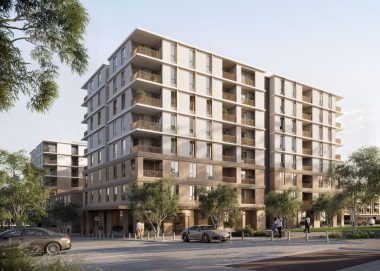
From weatherboard to minimalist panels, the façade is one of the most influential design decisions in any new build or renovation. As the first thing people see, it shapes how a home is perceived long before anyone steps through the front door. Material, profile, colour and the way light and shadow play across the surface all determine whether a house reads as coastal and relaxed, sharp and contemporary, or something in between.
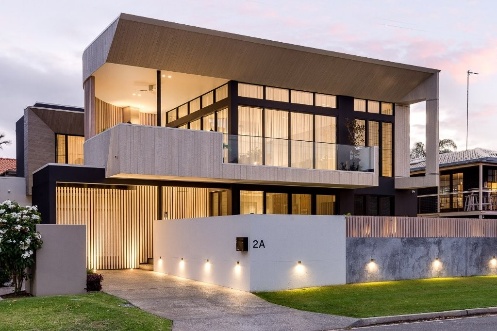
Yet with dozens of materials and profiles on the market, many homeowners struggle to balance aesthetics with long term performance.
Architect Julian Brenchley of Group Architects, known to many as the architect behind The Block, says most homeowners underestimate how much the façade influences and is a critical component of the overall architectural language of a home.
“The façade is the handshake of the house - it can tell you immediately the design style of the home and is the clearest expression of your personal style and vision. The biggest mistake people make is choosing a cladding profile that doesn’t deliver on the overall design and style they want,” says Brenchley.
Vertical lines can elongate a narrow block, wide boards can create a relaxed coastal feel, and smooth modern panels can deliver a sculptural, architectural look. But beyond aesthetics, the right cladding choice can improve durability, reduce maintenance and enhance the home’s overall value.
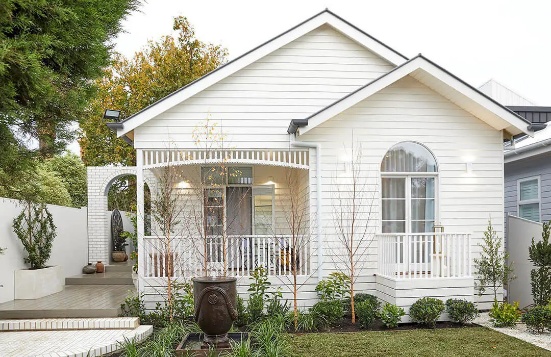
Paintable fibre cement cladding has long been a staple of Australian residential design thanks to its durability and resistance to rot, termites and moisture. But its design versatility has expanded dramatically. Cemintel’s StreetStyle collection now includes weatherboards, planks, vertical cladding, smooth panels and renderlook sheets, all designed for Australian conditions.
At the other end of the spectrum, vertical cladding has become a defining feature of modern Australian homes, particularly in coastal and inner-suburban builds. Where horizontal weatherboard suggests tradition, vertical lines draw the eye upward, giving a facade a taller, leaner proportion that suits double-storey homes and narrow-block designs.
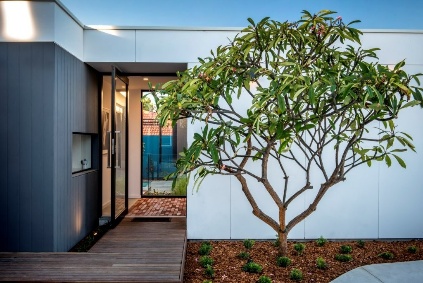
StreetStyle’s vertical joint options are available in a range of groove widths: a wide groove creates a bold, rhythmic pattern with pronounced shadow lines, while a narrow groove produces a more subtle, seamless surface. Paired with a contemporary colour such as matte black, slate grey or a deep navy, the result is a home that reads as modern and architectural.
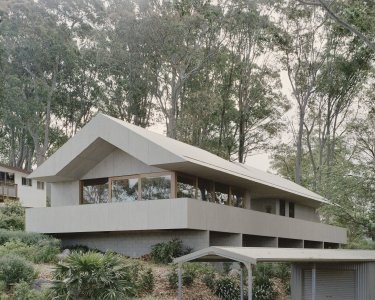
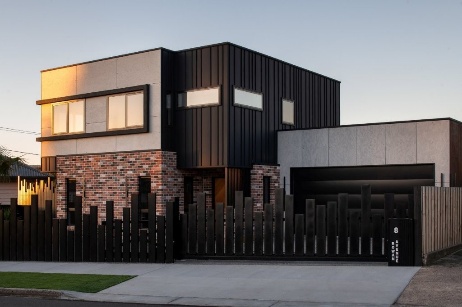
Brenchley, who has specified Cemintel across multiple residential projects, recommends homeowners consider three key factors before settling on a cladding profile:
1. Your personal style and the design story you want the home to tell. Whether you’re drawn to a classic Hamptons look, a relaxed coastal feel or a sharp, minimalist aesthetic, the façade should be the clearest expression of that style. Colour plays a major role here - crisp whites and soft neutrals create a coastal or heritage feel, while bold monochromes and deep charcoals amplify a contemporary, architectural look. “People often choose a cladding profile they like in isolation, rather than one that supports the overall style they’re trying to achieve,” Brenchley says.
2. The architectural character of the street. A Hamptons style weatherboard suits a wide frontage coastal or suburban street where the horizontal lines can stretch and breathe. A minimalist panelled façade may feel more at home in a contemporary neighbourhood.
3. The proportions of the block and the home. Horizontal boards visually widen a façade, vertical cladding elongates narrow or tall homes, and large panels suit strong geometric forms where clean, uninterrupted surfaces are the hero.
Whichever design style appeals, the versatility of the StreetStyle range offers homeowners modern materials to create design diversity to reflect their style and tastes, putting their own stamp on their street appeal, while delivering long‑term durability.
Find out more tips on how to achieve the look for your home with the StreetStyle range at www.cemintel.com.au.
ENDS
[1] Source: Australian Bureau of Statistics, Building Approvals, Australia (Catalogue 8731.0), 2013–2023. Analysis based on external wall material data for detached dwellings.
About us:
About CSR
CSR is an iconic Australian and New Zealand brand and a market leader in both residential and commercial building products, home to many of the most trusted and recognised brands in the trans-Tasman building industry. With a strong 170-year history, CSR has built a reputation for quality with its products and solutions found in 90% of Australian homes. CSR is a wholly-owned subsidiary of Saint-Gobain, a worldwide leader in light and sustainable construction.
Contact details:
For more information, please contact:
Vanessa Valderama |Niche Marketing Group | [email protected] Ph: 02 8585 4329
Hayley Maynard | Niche Marketing Group | [email protected] |M: 0424 288 078