A new five-year Centre of Research Excellence will bring together Australia's leading experts to improve the diagnosis, treatment and prevention of vascular dementia - one of the most common, yet often overlooked, causes of dementia.
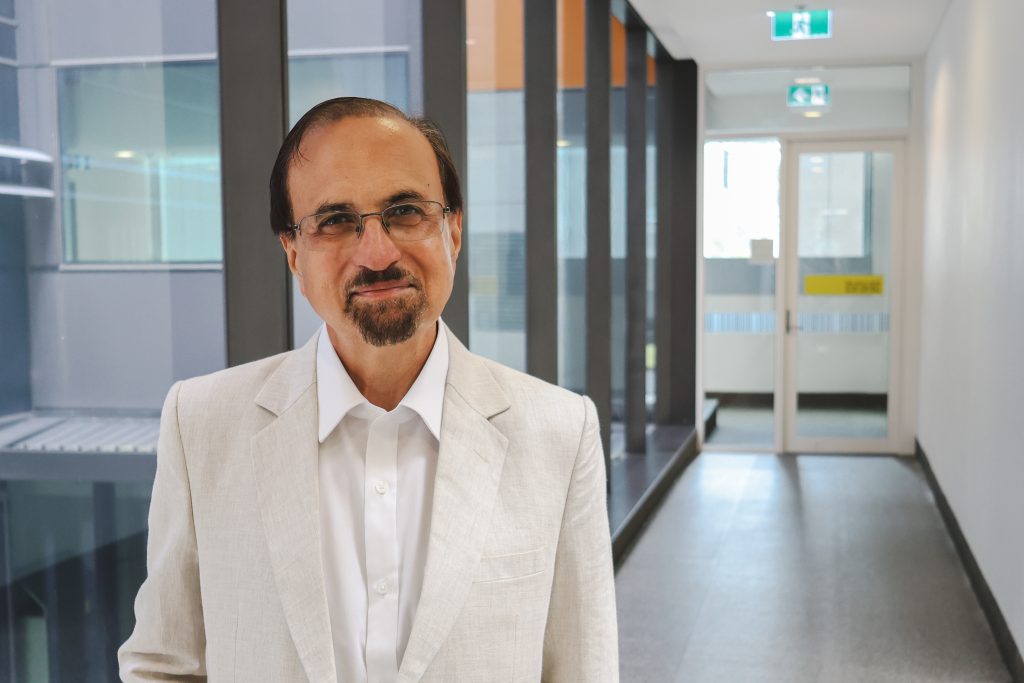
Led by Scientia Professor Perminder Sachdev, Co-Director of UNSW Sydney's Centre for Healthy Brain Ageing (CHeBA), the NHMRC-funded Centre of Research Excellence in Vascular Contributions to Dementia (VCD-CRE) builds on the success of Australia's first national vascular dementia research centre, cementing CHeBA's position as a global leader in the field.
Vascular cognitive impairment and dementia (VCID) is the second most common cause of dementia after Alzheimer's disease, accounting for up to one in four dementia cases and contributing to around half of all cases where dementia has multiple underlying causes.
Unlike many other forms of dementia, many of the risk factors for VCID - including high blood pressure, diabetes, stroke, heart disease and lifestyle factors - can be modified, making it one of the greatest opportunities for dementia prevention.
Professor Sachdev said the new Centre aims to transform how vascular dementia is diagnosed, prevented and ultimately treated.
"If we can better understand and control the vascular causes of dementia, we have a real opportunity to reduce the burden of dementia in Australia and globally," Professor Sachdev said.
The Centre brings together experts from neuropsychiatry, neurology, cardiovascular medicine, stroke, endocrinology, geriatrics, neuroimaging, genetics, proteomics, artificial intelligence, bioinformatics and statistics from UNSW Sydney, the Victor Chang Cardiac Research Institute, the University of Newcastle, The George Institute for Global Health and other Australian and international collaborators.
Over the next five years, researchers will work to validate internationally developed diagnostic criteria for VCID as well as develop blood, brain imaging and retinal biomarkers to enable earlier and more accurate diagnosis. It will enable greater understanding of genetic and population-specific risk factors and use artificial intelligence and multi-omics technologies to identify promising new drug targets. Finally, the funding will allow the development of prevention strategies that can be implemented globally.
The Centre will also establish a national Think Tank on vascular dementia, strengthen consumer involvement in research and train the next generation of researchers in this emerging field.
NHMRC CEO Professor Wesselingh said: “Health and medical research have the power to change lives by building the evidence we need to improve health outcomes for people across Australia.”
“Through NHMRC’s Centre of Research Excellence scheme, we are supporting high quality, collaborative research that can be translated into better policy, practice and care.”
Previous NHMRC funding to CHeBA has helped position Australia as an international leader in VCID research. Among its achievements, CHeBA researchers have led the development of the world's first internationally agreed diagnostic criteria for VCID, published harmonised neuropsychological assessment standards, established Australia's first CADASIL clinics and national research cohort, launched Australia's first Heart-Brain Study, developed novel brain imaging biomarkers, expanded major international research consortia investigating stroke-related cognitive decline and vascular risk factors, and supported the next generation of dementia researchers through national training initiatives.
Professor Perminder Sachdev and other CHeBA researchers have also played leading roles in shaping international dementia research priorities through the World Health Organization's dementia research blueprint and other global initiatives.
Professor Sachdev said the Centre represents the next step in translating these discoveries into better outcomes for patients.
"We want to change diagnostic practices for vascular cognitive impairment and dementia, influence dementia prevention internationally, and develop promising new treatments for cerebral small vessel disease," he said.
Professor Cheryl Jones, Dean of UNSW Medicine & Health, said the new Centre would help address an area of dementia research that has too often been overlooked.
"By bringing together leading researchers and clinicians, this Centre will help drive earlier diagnosis, better treatment and more effective prevention strategies for vascular dementia, improving the lives of people affected by the condition.”
Although Alzheimer's disease has historically attracted the majority of dementia research funding, Professor Sachdev said VCID has remained comparatively under-recognised despite its significant contribution to cognitive decline worldwide.
"With advances in biomarkers, genetics, imaging and artificial intelligence, we are now in a position to make major breakthroughs that simply weren't possible a decade ago."
The Centre's research is expected to improve clinical diagnosis, accelerate the development of new therapies and inform prevention strategies that could help reduce dementia risk for future generations.
Contact details:
Heidi Douglass
(02) 9385 0410