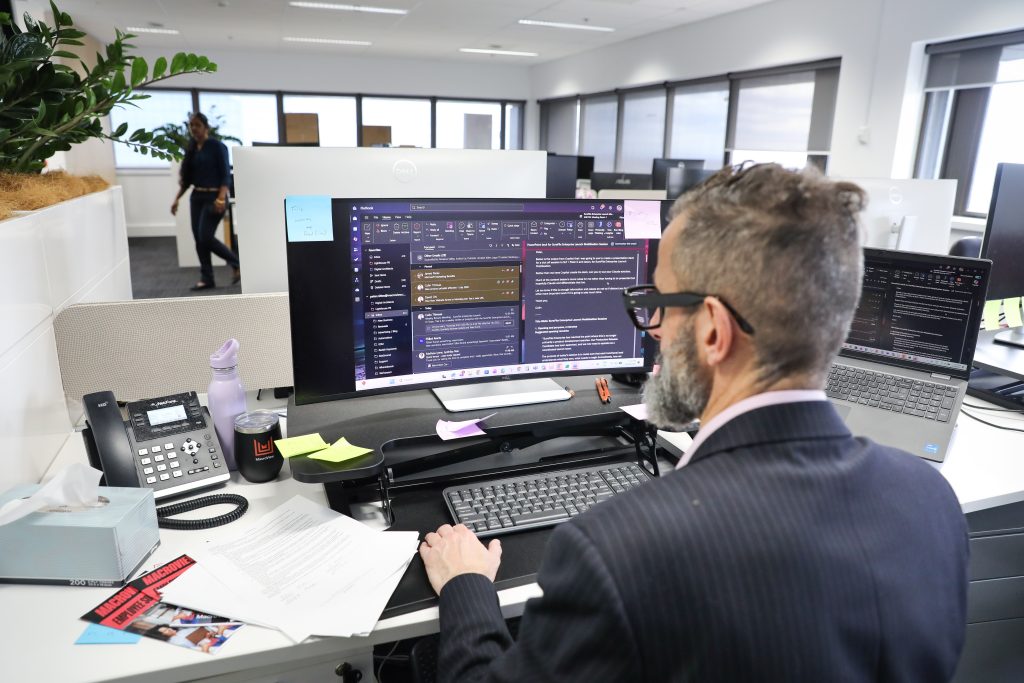

- Australian workers return from a week or more of leave to an average of 165 unread emails, with one in four deleting emails without reading them properly, according to research commissioned by MacroView.
- Workers employ various shortcuts to manage post-leave inbox pressure, including checking emails whilst on leave (31%), using personal time to catch up (26%), ignoring older emails (24%), and marking emails as read without addressing them (23%).
- One in three workers spend half a day or more regaining control of their inbox after returning from leave, with one in five taking a full day or longer, and 2% admitting they never fully caught up.
- Over a fifth of workers (22%) reported feeling anxious or overwhelmed by the volume of emails awaiting them on their return, with experts warning that inbox pressure is increasingly becoming a psychological barrier to re-entering the workplace.
- Business leaders and commentators warn that inbox overload is no longer just a personal productivity issue, with important emails potentially being missed and wider organisational consequences resulting from information becoming lost, deleted, or ignored in personal inboxes.
Australian workers are returning from a week or more of leave to overflowing inboxes and, for one in four, this means deleting emails without reading them properly, new research has found.
The research, commissioned by email management technology company MacroView and conducted by independent consumer research agency Antenna, found workers return from a week or more of leave to an average of 165 unread or unaddressed emails, prompting many to use shortcuts to simply regain control.
The shortcuts employed to cope with the pressure of post-leave inbox pressure also included:
· Checking or working through emails while on leave to avoid the backlog (31 per cent)
· Using their personal time on return to catch up (26 per cent)
· Ignoring older emails and focusing on only the most recent ones (24 per cent), and
· Marking the emails as read to clear the inbox (23 per cent)
The report also found that one in three workers (34 per cent) reported spending half a day or more to feel back in control of their inbox after returning from leave, including one in five who took a full day or longer and two per cent who admitted they never fully caught up.
22 per cent of workers reported feeling anxious or overwhelmed by the number of emails waiting for them.
Donna McGeorge said the results showed that the inbox was increasingly becoming a psychological re-entry barrier after leave – and was unlikely to ease given most Australian organisations run on email.
“Annual leave is meant to give people a chance to properly switch off, but inbox pressure is following Australians into their holidays and personal time – and creating additional pressures on the return to work,” McGeorge said.
“Workers are not just returning to work; they are returning to a queue of decisions, requests and unresolved tasks that can quickly feel unmanageable.
“It is unsurprising then to see that 22 per cent of respondents felt anxious or overwhelmed by the number of emails waiting for them.
“When people delete emails, ignore older messages or work through leave to avoid the backlog, it should not be dismissed as laziness or poor discipline. It is often a coping response to information overload.
“The bigger question for organisations is whether they are expecting individual workers to manually manage a volume of information that their systems and processes are no longer supporting.”
MacroView chief executive Colin Titmuss said the findings highlighted that inbox overload was no longer just a personal productivity issue.
“From the confessions we unearthed, it is clear that important emails could be being missed,” he said.
“When important information is stuck in personal inboxes, deleted, ignored or hard to find, it creates wider business consequences.
“But at the same time, people should be able to take leave without feeling they need to keep one eye on their inbox,” Mr Titmuss said.
“When the burden falls back on the employee to sort through and ensure the hundreds of emails are addressed and properly filed, it creates unnecessary pressure for individuals and makes it harder for the wider team and the business.”
About us:
ABOUT MACROVIEW
MacroView is an Australian-headquartered software company specialising in document, email management, documentation generation, records management and migration solutions built on Microsoft 365, SharePoint and MicrosoftTeams. MacroView products are used by more than 250, 000 users across 70 countries. macroview365.com.au
Contact details:
Jane Stagg
Lighthouse Communications Group
0422 578 541 | [email protected]
Aleks Miljkovic
Lighthouse Communications Group
0424 341 853 | [email protected]