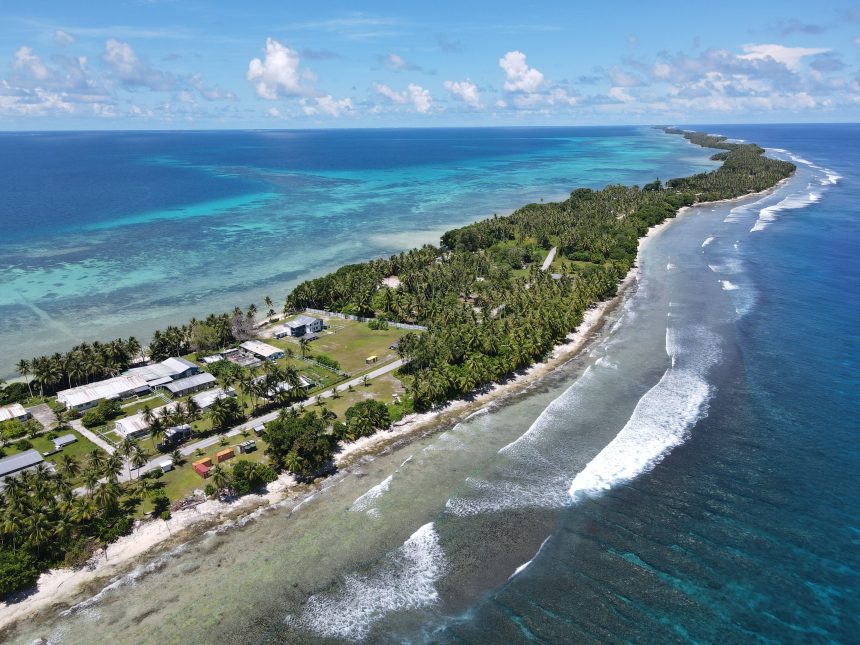
A major climate forum will help shape Pacific nation priorities for the pre-COP31 meeting and global climate negotiations.
Pacific climate priorities are the focus at a major international forum in Fiji this weekend, ahead of the official pre-COP31 meeting.
The 1.5°C to Stay Alive forum will be held at the University of the South Pacific in Suva on Saturday 3 October. The discussions and outcomes from the event will also carry into the first session of the official pre-COP31 program on Monday 5 October.
Led by the COP Universities Alliance and co-organised by the UNSW Institute for Climate Risk & Response (ICRR), the University of the South Pacific and The University of Melbourne, the forum will bring together scholars, government ministers, policymakers and climate practitioners from Australia and across the Pacific.
Dr Wesley Morgan from UNSW ICRR is the lead organiser of the forum, which he says will provide an important opportunity for Pacific experts and leaders to explain what they want to see from COP31 later this year.
“Pacific countries played a key role in securing the 1.5°C goal in the Paris Agreement because, for the region, this is not an arbitrary number. It is considered a threshold for survival,” says Dr Morgan.
“This forum will ask what it will take to keep 1.5°C within reach and ensure Pacific perspectives are heard as governments prepare for COP31.
“Australian negotiators will be there to listen to what Pacific ministers, researchers and communities expect from the negotiations. It is a genuine collaboration between Australian and Pacific universities, bringing regional expertise directly into the COP process.”
Keeping 1.5°C within reach
The forum comes as governments confront the likelihood that global warming will temporarily exceed 1.5°C above pre-industrial levels.
Dr Morgan said the prospect of an overshoot doesn’t mean the Paris Agreement’s temperature goal should be abandoned.
“Some countries may argue that the world should simply move on and aim for two degrees, but that would be a disastrous response for vulnerable communities,” he says.
“The priority must be to limit peak warming to the lowest possible level, reach net zero as quickly as possible and then pursue approaches that can bring temperatures back down.
“How countries respond to the challenge of keeping 1.5°C within reach will be a significant issue at COP31.”
The forum will examine the science of limiting warming, international legal obligations, ocean warming and sea-level rise, adaptation and climate finance.
It will also consider the implications of the International Court of Justice’s ruling on the responsibilities of major fossil fuel-producing countries for harms associated with fossil fuel production.
“For many years, Australia argued that emissions from the coal and gas it exported were solely the responsibility of the countries that used those fuels,” Dr Morgan says.
“The International Court of Justice has now made it clear that major fossil fuel producers also have obligations to prevent climate harm arising from fossil fuel production.
“The forum will unpack what that means for countries such as Australia.”
Pacific leadership centred
Marshall Islands Climate Envoy Tina Stege will deliver the opening address. The program will conclude with a high-level Talanoa with climate ministers and representatives from across the Pacific.
The event will also include Pacific contributors to Intergovernmental Panel on Climate Change assessments, alongside researchers and practitioners from universities across Australia and the region.
“The Pacific has long been at the forefront of the global push for stronger climate action,” Dr Morgan says.
“This forum recognises that expertise and leadership. It is about Australian institutions working with Pacific partners, rather than simply talking about the Pacific or speaking on its behalf.”
He says sustained engagement with the Pacific is important.
“Australia has a deep interest in demonstrating that it is listening to Pacific countries and willing to work with them on the region’s greatest security threat – climate change,” he says.
“Hosting globally significant climate discussions in the Pacific creates an opportunity to place the region’s experiences, priorities and solutions at the heart of the international agenda.”
Contact details:
Melissa Lyne, UNSW News & Content