Results at a glance:
- Victorian farmer confidence has rallied in the latest quarter, with fewer farmers expecting agricultural business conditions to decline over the next 12 months.
- Rising commodity prices and expectations of good seasonal conditions are supporting positive sentiment, although input costs remain the leading concern.
- Farmers’ investment intentions and income expectations have strengthened.
The latest Rabobank Rural Confidence Survey, released today, found sentiment in Victoria’s rural sector had risen to a net reading of -9 per cent, from -38 per cent in the previous quarter – placing the state’s farmers among the most confident in the nation.
The improved sentiment was primarily driven by a sharp decline in the proportion of Victorian farmers expecting farm business conditions to decline over the coming 12 months. This fell to 23 per cent, from 51 per cent last quarter.
More than half of the state’s farmers – 56 per cent – now expect agricultural business conditions to remain relatively stable in the year ahead, up from 31 per cent last survey. A further 14 per cent expect conditions to improve, broadly in line with 12 per cent with that view last quarter.
The latest survey, completed last month, found rising commodity prices remain the leading source of optimism among Victoria’s farmers, nominated by 52 per cent of those surveyed (up from 49 per cent last quarter). Almost one third – 32 per cent – of those surveyed expect a good season to support the agricultural economy, while 11 per cent anticipate a positive contribution from overseas markets and economies.
However, elevated input costs continue to be the main factor weighing on sentiment, nominated by 52 per cent of the state’s farmers, albeit down from 58 per cent in the previous quarter.
Concern about government intervention and policies increased – identified by 33 per cent of those surveyed (from 23 per cent last quarter), while 19 per cent of Victorian farmers cited war and geopolitical instability as a negative influence, up from 13 per cent previously.
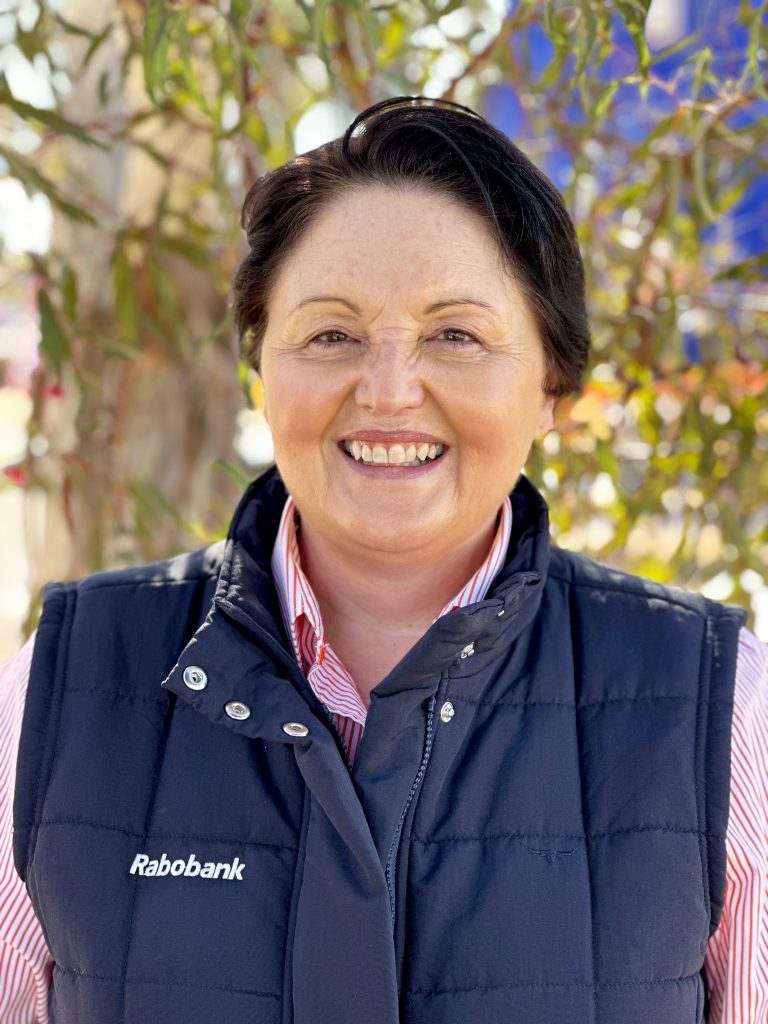
Rabobank state manager for Victoria and Tasmania Sally Bull said the latest survey indicated Victorian farmer sentiment was settling after an especially challenging second quarter. “Confidence came under pressure last quarter as disruptions in the Strait of Hormuz added to concerns about farm input costs and availability,” she said.
Ms Bull said elevated input costs continued to be a significant issue for many farm businesses. “While some expenses have come down from earlier highs, persistent uncertainty in global markets is still shaping producer confidence and forward business decisions,” she said.
“There is also growing concern among farmers about infrastructure developments and land access issues, contributing to increased unease in parts of regional Victoria.”
Despite a number of challenges, Ms Bull said, the prevailing sentiment across many farming sectors is one of cautious optimism, supported by strong seasonal conditions and positive production prospects.
By region, the survey found confidence had lifted across the state, with several regions moving into net “positive territory”, with more farmers optimistic than pessimistic in their outlook.
“Across much of Victoria, seasonal conditions have been highly favourable, with consistent rainfall since late February supporting strong crop prospects and pasture growth and underpinning confidence,” Ms Bull said.
Gippsland recorded the state’s strongest farmer confidence reading, rising to a net 12 per cent, from -52 per cent last quarter.
Ms Bull said Gippsland farmers nominated improving commodity prices and good seasonal conditions as the key reasons for their optimism.
High Country farmer confidence rose to a net eight per cent, from -20 per cent.
Ms Bull said Upper Murray farmers had been enjoying a “particularly good season – in comparison to the previous two years, however some parts of the High Country were looking forward to more rain soon”.
“And farmers in the Mallee are having an exceptionally strong season, with very good-looking winter crops across the region,” she said. Mallee farmer sentiment improved to net six per cent (up from -41 per cent last survey).
Western District farmer confidence also lifted, climbing to net two per cent, from -38 per cent last quarter. “While seasonal conditions are good in the Western Districts, there are some areas that are still requiring runoff to fill dams,” Ms Bull said.
Farmer confidence in Central Victoria rose to net four per cent, from -36 per cent.
By commodity, the Rabobank survey found Victorian beef producers recorded the highest confidence in the state, at a net seven per cent, up from -43 per cent last quarter.
Sheep producer confidence also moved into “positive territory”, rising to six per cent from -9 per cent.
Ms Bull said strong commodity prices were the chief factor driving livestock producer optimism.
The survey found dairy farmer confidence lifted sharply to three per cent, from -58 per cent, while grain grower confidence rose to five per cent, from -55 per cent.
“Dairy sector confidence has improved significantly, although it remains below that of other Victorian agricultural industries, as farmers continue to navigate a range of pressures, including elevated feed and input costs, and ongoing concern about the impact of a potential El Niño pattern on pasture growth and feed availability across southern Australia,” Ms Bull said. “Given the state's prominence in Australia's export-focused dairy industry, ongoing weakness in key global commodity markets, particularly cheese, is also adding to the cautious outlook among many producers, even as overall sentiment improves.”
Among Victoria’s grain growers, 45 per cent expect business conditions to remain stable in the year ahead, compared with just nine per cent with that view last quarter.
“While seasonal conditions vary between cropping regions,” Ms Bull said, “the overall outlook remains positive, with favourable winter crop yields expected to help offset pressure from soft grain prices.”
The improved sentiment is also being reflected in Victorian farmers’ spending plans.
Investment intentions are up, with those planning to increase investment in their farm businesses in the coming 12 months rising to 27 per cent (from 19 per cent last survey) and those intending to decrease spending sitting at 10 per cent (down from 19 per cent). A steady 61 per cent plan to maintain current investment programs (previously 60 per cent).
On-farm infrastructure remains the highest capex planned – by 58 per cent of Victorian farmers surveyed (up slightly from 55 per cent last survey). Adopting technologies is planned by 26 per cent (down from 32 per cent), while 28 per cent intend to invest in new plant/machinery (34 per cent previously) and 29 per cent are looking at increasing livestock numbers (27 per cent).
Ms Bull noted dairy and beef producers were showing interest in virtual fencing technology as an investment theme. “We are seeing growing interest in virtual fencing, particularly among beef producers looking to improve the utilisation and management of more challenging grazing country,” she said.
The proportion of Victorian farmers wanting to purchase property to expand their agricultural businesses remained steady at 11 per cent (from 12 per cent last quarter).
The survey found 31 per cent of the state’s farmers think their gross farm income will increase in the 12 months ahead (up from 25 per cent with that expectation last quarter), while a steady 47 per cent expect their income to remain unchanged (49 per cent previously). A total of 19 per cent expect a decrease in income, slightly down from the 22 per cent with that expectation last quarter.
A comprehensive monitor of outlook and sentiment in Australian rural industries, the Rabobank Rural Confidence Survey questions an average of 700 primary producers across a wide range of commodities and geographical areas throughout Australia on a quarterly basis.
The most robust study of its type in Australia, the Rabobank Rural Confidence Survey has been conducted since 2001 by an independent research organisation. The next results are scheduled for release in December 2026.
<ends>
Media contacts:
Denise Shaw Will Banks
Media Relations Media Relations
Rabobank Australia & New Zealand Rabobank Australia
Phone: 02 8115 2744 or 0439 603 525 Phone: 0418 216 103 103
Email: [email protected] Email: [email protected]
About us:
Rabobank Australia & New Zealand Group is a part of the international Rabobank Group, the world’s leading specialist in food and agribusiness banking. Rabobank has more than 125 years’ experience providing customised banking and finance solutions to businesses involved in all aspects of food and agribusiness. Rabobank is structured as a cooperative and operates in 35 countries, servicing the needs of more than nine million clients worldwide through a network of more than 1000 offices and branches. Rabobank Australia & New Zealand Group is one of Australasia’s leading agricultural lenders and a significant provider of business and corporate banking and financial services to the region’s food and agribusiness sector. The bank has 87 branches throughout Australia and New Zealand.