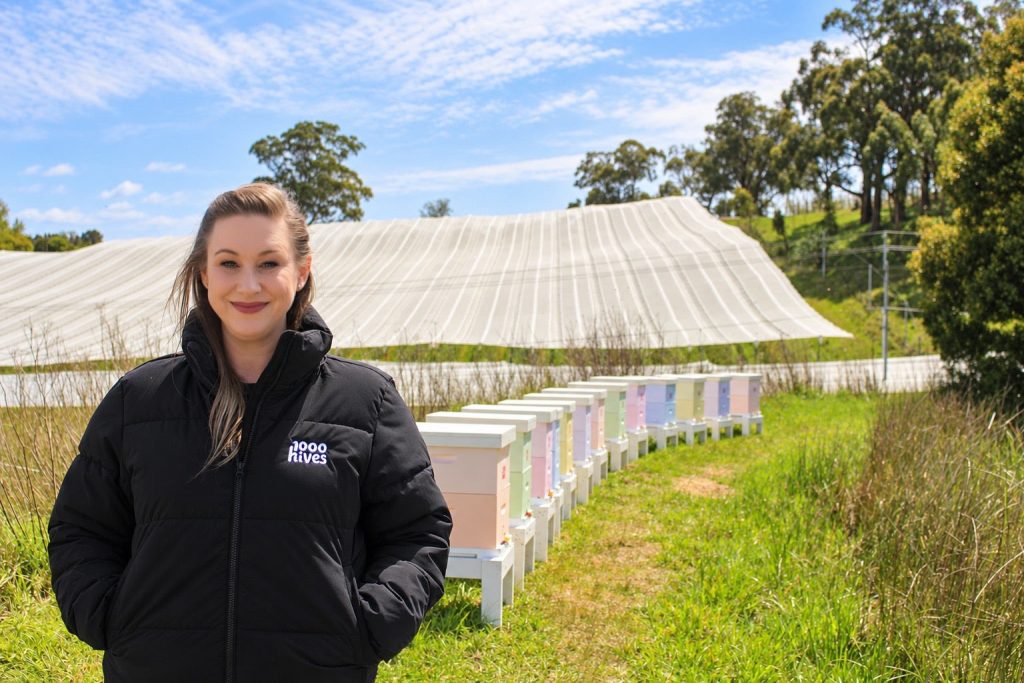
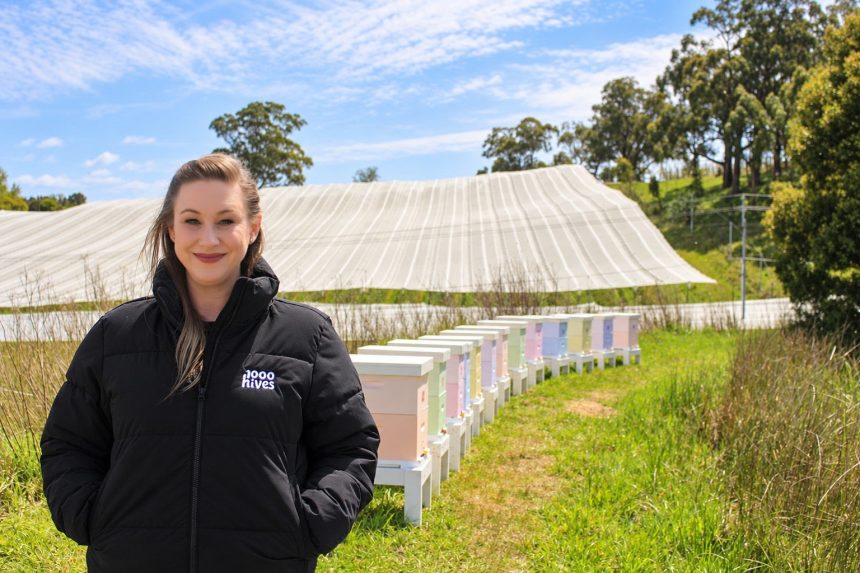
- Adelaide Hills mother Danielle Munn has founded 1000 Hives, a bee conservation and pollination resilience network aimed at supporting Australian farmers as the Varroa mite spreads across the country and threatens feral bee populations.
- The organisation has placed its first 40 hives at a working apple orchard in Lenswood, South Australia, with a long-term goal of establishing 1,000 permanently managed hives on farms, orchards, and rural properties.
- Industry bodies including Apple and Pear Australia and Cherry Growers Australia have warned growers that feral bees can no longer be relied upon for pollination, with managed hives becoming increasingly necessary to protect yields, fruit size, and quality.
- The Wheen Bee Foundation's 2026 pollination security report estimates that a 60 per cent decline in managed hive numbers could create a shortfall of approximately 290,000 commercial hives across four states during the August pollination peak.
- Members of the public can support 1000 Hives with a one-off contribution from $10, while growers who host hives receive placement and management at no direct cost; the organisation is also calling on beekeepers and landowners to join the network.
Now, one Adelaide Hills mum is building a growing bee conservation and pollination resilience network designed to support Australian farmers and help protect the systems that keep food on supermarket shelves as Varroa mite spreads across the country.
ADELAIDE, SOUTH AUSTRALIA | OCTOBER 2026
Founded by Danielle Munn, 1000 Hives began after Australia’s first Varroa detections raised concerns about the future of pollination, food production, and mounting pressure on Australian agriculture. What started as a single backyard hive has since grown into a long-term effort to strengthen pollination resilience, support biodiversity, and help farmers through permanently managed hives placed on farms, orchards, and rural properties.
Varroa changes the work behind every hive. The mite weakens colonies, and keeping managed bees healthy requires ongoing checks and treatment. For growers who once benefited from feral bees at no direct cost, arranging pollination can become another job to organise and another expense to absorb.
“For generations, many Australian farms benefited from pollination happening naturally in the environment. As those feral populations decline, farmers increasingly rely on managed hives to maintain production,” Munn said.
That shift is already showing up in advice to fruit growers. Apple and Pear Australia has urged orchardists to plan and budget for managed hives before flowering as Varroa threatens the pollination once supplied by feral bees. Cherry Growers Australia says those feral bees can no longer be relied on and that commercial pollination is becoming necessary to protect fruit size and quality.
1000 Hives is building a pollination network for growers across Australia. Its first 40 hives were placed last month at a working apple orchard in Lenswood, South Australia. The aim is to establish 1,000 managed hives. Rather than moving the colonies from crop to crop each season, the organisation places them permanently on suitable properties and works with professional beekeepers to inspect, care for and manage them.
1000 Hives chooses farm sites strategically, looking at the crops and growers around each host property. The goal is to build local pollination capacity that benefits the wider growing community as the network expands.
The Wheen Bee Foundation’s 2026 pollination security report estimates that if feral colonies decline and managed hive numbers fall by 60 per cent, the shortfall could reach about 290,000 commercial hives across New South Wales, Victoria, Queensland and South Australia during the August pollination peak.
“I’m not a large organisation. I’m not backed by government funding. I’m simply someone who believes that waiting until there’s a crisis isn’t the answer,” Munn said.
If growers cannot secure enough bees when their crops flower, they risk lower yields and poorer-quality fruit. Greater demand for managed hives can also mean higher pollination costs, particularly difficult for smaller farms.
“It affects pollination, food production, farming costs, and ultimately the price Australians pay at the checkout,” Munn said.
Under the 1000 Hives community initiative, Australians can back a hive with a one-off payment starting at $10. Those contributions help establish and care for colonies, while participating growers receive hive placement and management at no direct cost.
Danielle cannot build the network alone. 1000 Hives is calling on growers with suitable properties, beekeepers and the wider community to help place managed hives on more farms and build a more reliable source of pollination for the regions that grow our food.
“If Australia is losing pollination capacity, we need to start rebuilding it,” Munn said.
END
NOTES TO EDITORS
Sources and reporting background
- Wheen Bee Foundation, Pollination Security Status Report 2026
https://www.wheenbeefoundation.org.au/wp-content/uploads/2026/06/Pollination-Security-Status-Report-2026.pdf - Apple and Pear Australia, Varroa mite is changing the pollination equation for growers
https://apal.org.au/varroa-mite-is-changing-the-pollination-equation-for-growers/ - Cherry Growers Australia, Pollination guidance
https://www.cherrygrowers.org.au/cherry-industry-essentials/pollination/ - Apple and Pear Australia, Transition to management and pollination services
https://apal.org.au/transition-to-management-what-varroa-mite-means-for-pollination-services/
Media images, logos and press releases
https://1000hives.com.au/pages/media-resources
About us:
1000 Hives is an Australian bee conservation and pollination resilience organisation building a growing network of permanently managed hives on farms and rural properties in response to the spread of Varroa mite across Australia. The organisation focuses on pollination resilience, biodiversity, biosecurity, environmental monitoring, and long-term environmental infrastructure designed to support Australian agriculture and regional communities through measurable environmental activity and long-term ecological outcomes.
Contact details:
Danielle Munn
Founder, 1000 Hives Pty Ltd
[email protected]
0408 459 721 (SMS)
Email or SMS preferred. Interviews by appointment.