
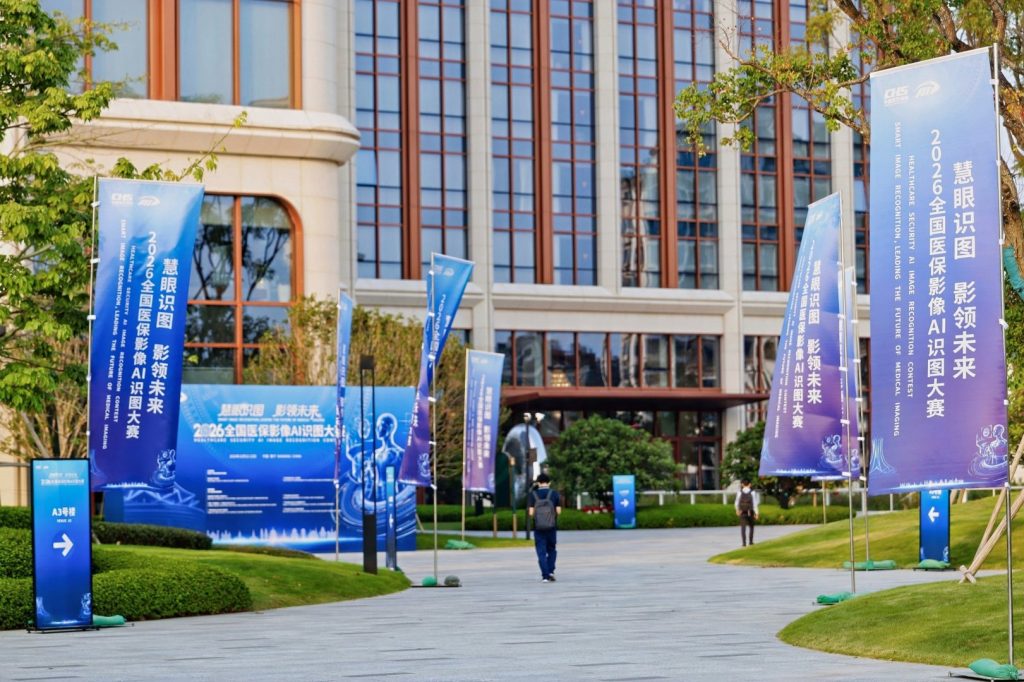
NANNING, China, Oct. 28, 2026 /Xinhua-AsiaNet/ --
A national medical imaging artificial intelligence competition was held on Oct. 22-23 in Nanning, south China's Guangxi Zhuang Autonomous Region, bringing together researchers, medical professionals and technology companies to test AI tools designed to help doctors detect diseases and explore health care cooperation between China and Southeast Asian nations.
The 2026 National Healthcare Security Medical Imaging AI Recognition Competition drew 1,332 registered teams, including participants from member states of ASEAN. A total of 66 team entries advanced to the finals.
Co-hosted by China's National Healthcare Security Administration and the Guangxi regional government, and organized by the Healthcare Security Administration of Guangxi, the competition featured eight categories, including lung cancer detection using CT scans, brain tumor analysis using MRI and breast cancer screening using mammography.
Advances in medical imaging have produced increasingly detailed scans and larger volumes of data for radiologists to examine. A chest CT scan that once generated about 100 images can now produce thousands, making the timely detection of small abnormalities a growing challenge.
One participating team, SenseLung from Shanghai, has developed AI tools to identify suspicious lung nodules, analyze their characteristics and generate structured reports to assist radiologists. Its work also extends to disease screening and patient follow-up.
But detecting abnormalities is only part of the challenge. Hospitals use different imaging equipment and scanning protocols, meaning an AI model that performs well at a major medical center may not deliver the same results at a smaller hospital.
The competition therefore assessed not only detection accuracy but also how well algorithms handled variations in medical images from different sources.
Such challenges extend beyond China. ASEAN countries have diverse health care systems, levels of digital development and access to medical resources. For hospitals considering AI-assisted diagnosis, compatibility with existing equipment and clinical workflows can be as important as performance in controlled tests.
The competition also highlighted the importance of collaboration between clinicians and technology developers.
In the mammography category, a team involving Guangxi Zhuang Autonomous Region People's Hospital and a local technology company developed an AI model to identify breast masses and tiny calcium deposits that may indicate disease.
Radiologists helped engineers understand clinical needs and refine the model, demonstrating how medical expertise and AI development can work together - an approach that could support joint research across borders.
Guangxi, which borders Vietnam, has long served as a gateway for China's exchanges with ASEAN. Initiatives including the China-ASEAN Artificial Intelligence Application Cooperation Center and the Fangchenggang International Medical Opening-up Pilot Zone are creating additional platforms for cooperation in AI and health care.
The competition was open to international participants and is part of efforts to connect AI research with clinical testing and commercial applications.
Under plans announced by Guangxi authorities, the region aims to work with ASEAN partners on cross-border clinical validation and demonstration projects to explore how medical imaging AI could be adapted to different health care settings.
Such cooperation involves more than transferring software. Differences in imaging equipment, medical procedures, patient data, privacy rules and regulatory requirements can affect whether AI systems can be safely introduced into clinical practice.
Access to high-quality medical imaging data is another key factor. China is developing medical imaging cloud infrastructure to facilitate the sharing and retrieval of imaging records among health care institutions. With appropriate safeguards, such infrastructure could also support AI development and evaluation.
Zhang Huimao, director of radiology at the First Hospital of Jilin University and president-elect of the Chinese Society of Radiology, said medical imaging data infrastructure could support not only clinical care but also AI model development, testing and evaluation.
Still, strong competition results do not automatically mean an AI tool is ready for hospital use. Models need clinical validation across different institutions, equipment and patient populations, along with regulatory approval where required.
Guangxi has introduced a three-year action plan to support the commercialization and application of technologies emerging from the competition, covering product validation, industry development, clinical testing and cooperation with ASEAN partners.
For China and ASEAN, the potential benefits extend beyond technological exchanges. In areas with limited access to specialist radiologists, reliable AI-assisted tools could help doctors identify suspicious findings more quickly and improve diagnostic efficiency.
AI, however, is intended to support rather than replace physicians, who must consider patients' symptoms, medical histories and other test results when making clinical decisions.
The competition offered a glimpse of AI's potential in medical imaging. Turning promising algorithms into reliable tools for hospitals across borders will require further testing, adaptation and cooperation, with the ultimate goal of improving patient care.