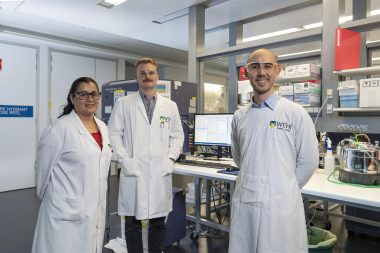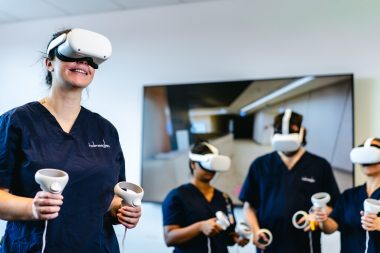
The Centenary Institute has established four new research laboratories, broadening its capabilities across the areas of infection and immunity, respiratory disease and biomedical artificial intelligence (AI).
The laboratories bring together researchers investigating major health challenges including tuberculosis (TB), influenza, chronic obstructive pulmonary disease (COPD) and melanoma. They also strengthen the Institute’s use of new technologies to better understand disease and explore potential avenues for developing new therapies.
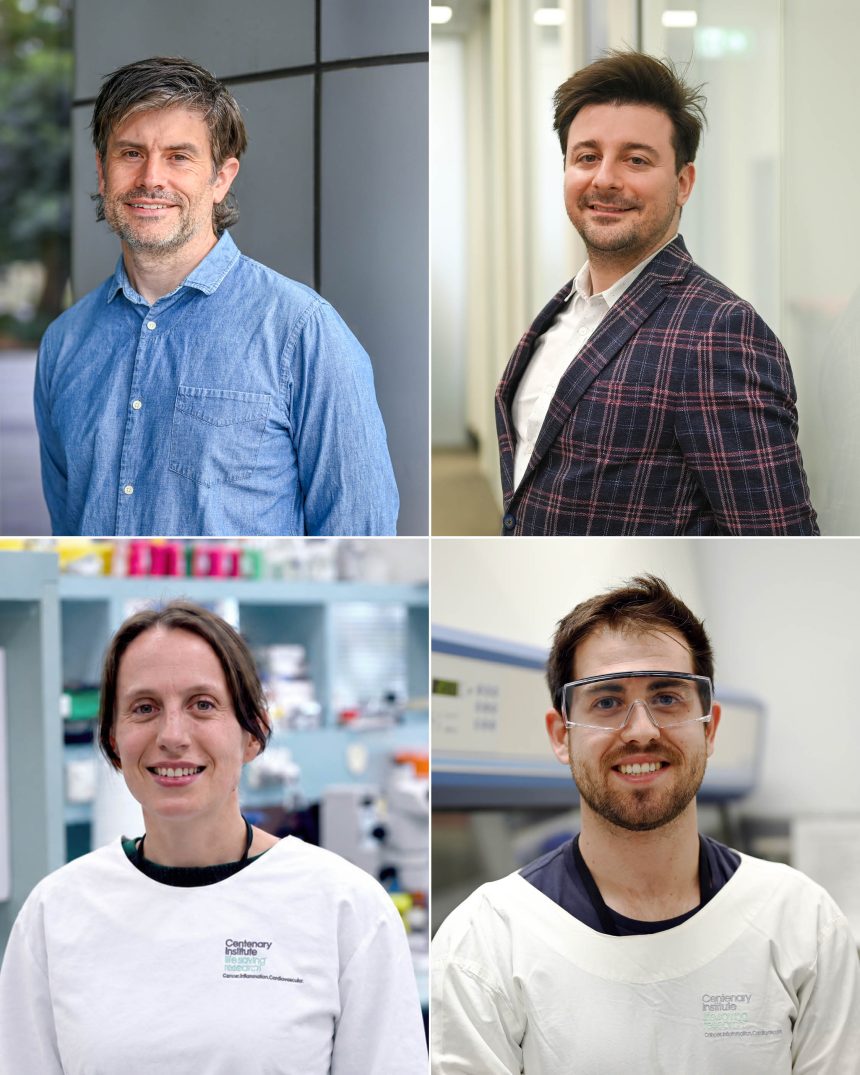
Professor Colin Jackson leads the Jackson Laboratory within the Centre for Biomedical AI. His research investigates how proteins, the building blocks of life, work and evolve. Using computer modelling, machine learning and laboratory experiments, the team seeks to design proteins with new or improved functions. These includes proteins that support stem cell transplantation. The work aims to turn discoveries about proteins into new tools for biomedical research and potential future treatments.
Dr Yagiz Aksoy leads the Aksoy Laboratory also within the Centre for Biomedical AI. The laboratory develops AI systems to support complex decision-making in healthcare, with a focus on using these technologies safely and responsibly in real-world settings. Its research spans cancer prognosis, melanoma risk and screening, and eye disease including childhood myopia. Dr Aksoy was recently awarded a prestigious Sylvia and Charles Viertel Clinical Investigator Award to advance AI research focused on melanoma risk prediction and early detection.
Dr Elinor Hortle leads the Hortle Laboratory within the Centre for Infection & Immunity. The laboratory studies the innate immune system, which provides the body’s first line of defence against infection. Research is examining how this defence system can also contribute to disease, including by helping bacteria survive or by driving chronic inflammation. The research also studies specialised immune cells involved in respiratory diseases such as asthma, TB and COPD, as well as ways to regulate immune responses. The work aims to identify potential targets for new treatments for serious diseases.
The Johansen Laboratory, led by Dr Matt Johansen, is also part of the Centre for Infection & Immunity. The laboratory investigates how bacterial and viral infections, including TB, COVID-19 and influenza, interact with the immune system and contribute to different disease outcomes. Research also examines how factors such as age, sex and underlying chronic respiratory disease can affect the severity of infection. By understanding why infections affect people differently, the research aims to support the development of more tailored therapies and better patient outcomes.
Centenary Institute Executive Director Professor Marc Pellegrini said the new laboratories expand the Institute’s research expertise across several important areas.
“From cancer and TB to COPD and the immune system, these laboratories add to the breadth of research being undertaken at Centenary to better understand disease and improve health,” said Professor Pellegrini.
“Alongside this work we’re developing and applying new technologies including artificial intelligence, to further advance medical research. These technologies offer new ways to understand disease and improve diagnosis and treatment, with the potential to benefit patients and the broader community.”
The Centenary Institute now has 17 world-class medical research laboratories investigating a wide range of health challenges including cardiovascular disease, rare diseases and gene therapy, cancer, and infection and immunity.
[ENDS]
About us:
About the Centenary Institute
The Centenary Institute is a world-leading independent medical research institute, closely affiliated to the University of Sydney and the Royal Prince Alfred Hospital. Our research spans the critical areas of cancer, cardiovascular disease, rare diseases, infectious diseases and biomedical AI. Our strength lies in uncovering disease mechanisms and applying this knowledge to improve diagnostics and treatments for patients.
For more information about the Centenary Institute, visit centenary.org.au
Contact details:
For all media and interview enquiries, please contact
Tony Crawshaw, Media and Communications Manager, Centenary Institute on 0402 770 403 or email: [email protected]