
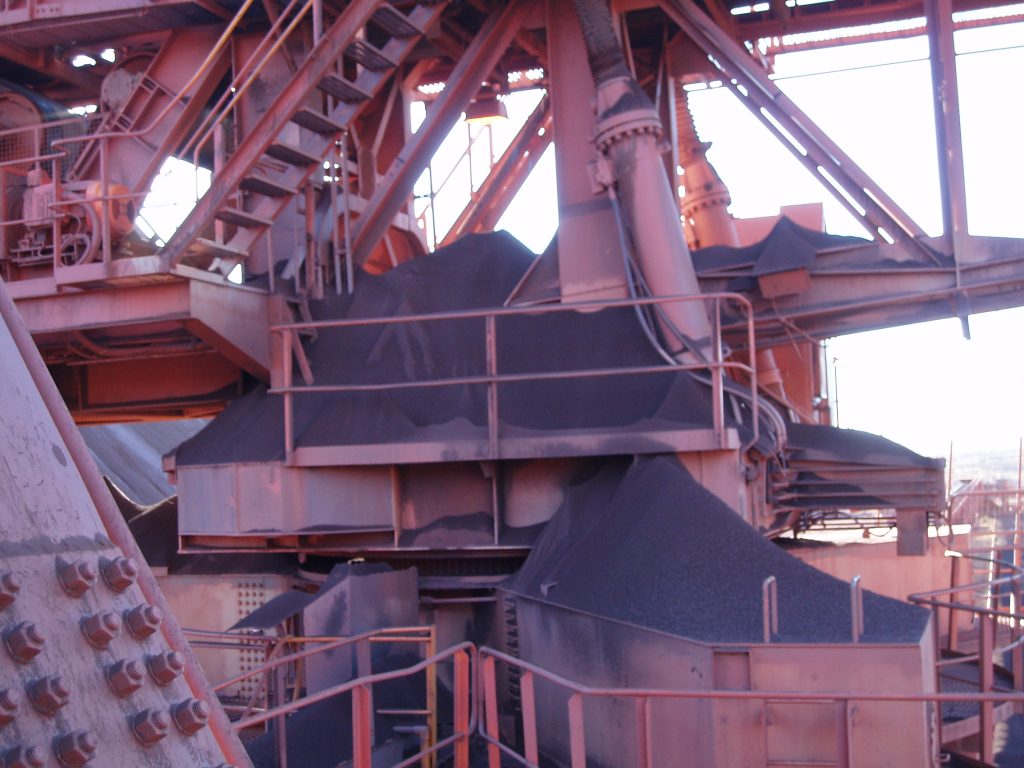
For many mining and minerals processing plants, washdown, maintenance, and downtime are part of everyday operations – but the cost is not just the time spent repairing equipment or getting a plant back up and running. It is the production that never makes it through the plant in the first place.
It has become so accepted that the operational symptoms of downtime – recurring spillage, blockages, wear and regular shutdowns – can become part of the normal operating environment. The data on the causes and cumulative impact may exist, but properly verifying and analysing it is often a job that gets pushed down the priority list.
“The cost of downtime varies from plant to plant, but is regularly tens of thousands of dollars an hour. If you add this up over a week, month, or year, fixing the root cause of the problem becomes far more attractive than constantly just treating the symptoms,” says Gian Naldi, Senior Materials Handling Engineer, Chute Technology.
Chute Technology has spent more than a decade tackling some of the toughest materials handling challenges in the mining, resources, minerals processing, and ports industries.
The short way is the long way
Naldi says that when spillage and other types of downtime occur, operations teams are often looking for quick wins.
“I understand where they’re coming from – if they can get conveyors, chutes, and other equipment up and running faster, they’re producing again, and everyone’s happy – for now,” he says.
“But if you’re not addressing the root cause of the problem, it’s just going to come back, costing more. It’s one of those cases where the short way is the long way.”
“And it’s often not known that there’s a more permanent fix available, with a quick return on investment (ROI), frequently under one month.”
Material flow optimisation – what to look for
“While there’s never a ‘one-size-fits-all’ solution, there are several things to look at when seeking to debottleneck material flow and solve recurring problems,” says Naldi. These include:
- The location of the belt or pulley. Many chutes were designed decades ago when maximum throughputs were up to 1,000 tonnes per hour (tph). After multiple plant upgrades through the years to increase capacity, sometimes up to 10,000 tph or more, some sites find the chutes are not keeping up with production or loading the conveyors inappropriately/incorrectly. Operators spend hours trying to track conveyors or adjust skirtboards to limit spillage, when the root cause is elsewhere.
- The chute design itself. This can involve factors including the angle, drop height, uneven loading of conveyors, liner material, skirtboard wear – and can vary greatly depending on the material involved. Wet, sticky coal will behave very differently to iron ore or hard rock, for example. Chute Technology uses advanced simulation software to model how material flows through the chute before anything is fabricated, so the design can be proven before installation.
- Consider the entire process, not just the problem area. If one area has excess spillage or wear, it can be tempting to look at fixing just that location. But the problem may stem from something further upstream in the material handling process. Chute Technology conducts entire site audits to identify underlying inefficiencies within transfer and materials handling systems, including problems that have developed over time or have simply never been fully addressed.
From downtime to throughput: what flow optimisation actually delivers
Having completed hundreds of chute and conveyor projects across ports, surface plants, and underground operations, Chute Technology has first-hand experience of how quickly ROI can be achieved when downtime is reduced and throughput increased.
Coal chute delivers big throughput gains
In one coal mining operation, Chute Technology installed a new coal chute with self-cleaning flow surfaces to radically reduce downtime from approximately 700 minutes per month to just 10.
“This particular mine was able to save 11.5 hours of downtime per month, which equated to an extra 23,000 tonnes of throughput,” says Naldi. “That’s an additional 23,000 tonnes of product that was able to make it through the plant each month. That means the entire chute – engineering, fabrication, and installation – is fully paid for in under one month – and the benefits are ongoing.”
Downtime saving leads to ultra-fast ROI
In another example, Chute Technology was brought in to assess a mine that calculated downtime was costing them $53,000 per hour. To address issues, they were opting to shut the plant down for a full eight-hour shift before resuming production.
“That means an eight-hour shutdown was costing them more than $400,000, and if they had to do this for several days in a row, the value of lost production could have paid for an entire new chute in under a week,” says Naldi.
The bottom line
The mining and materials processing industry is operating in increasingly competitive environments, with tighter margins, smaller maintenance windows, and more ambitious monthly production targets.
Solving a problem at the source, not repeatedly addressing symptoms, can deliver ongoing benefits with a fast ROI, but many operations are not aware that such solutions exist.
“Once we assess a site, solve a problem, and implement the solution, feedback is overwhelmingly positive. Maintenance and operations teams that look beyond the immediate problem can achieve returns that continue long after the initial solution is implemented,” concludes Naldi.
About us:
About Chute Technology
Chute Technology is an engineering firm that provides solutions in the material handling sector for bulk handling equipment from underground operations to railhead and ports. The company has extensive expertise with coal, minerals, and transfer chutes and conveyors.
Chute Technology provides Total Transfer Solutions, from mine to loadout. Our proven engineering capabilities produce practical, scalable solutions and are technologically world class. They are based on decades of partnering with Australian and international leaders in coal and minerals production, to resolve issues ranging from elimination of production bottlenecks to whole-of-process improvements that expand throughput and ROI.
Contact details:
Jack Mallen-Cooper
Managing Director
Mallen-Cooper Whyte
T: +61 2 9901 4306