- More than 280 students from Australia, New Zealand, the Pacific and the EU built 47 climate solutions in 60 hours. Each one tackled one of COP31’s priority areas.
- Climate Hack-tion turns the region’s COP31 momentum into action led by young people, with Australia leading the negotiations and the Pacific hosting the Pre-COP.
- The EU-funded hackathon shows the EU as a genuine climate partner to Australia, New Zealand and the Pacific
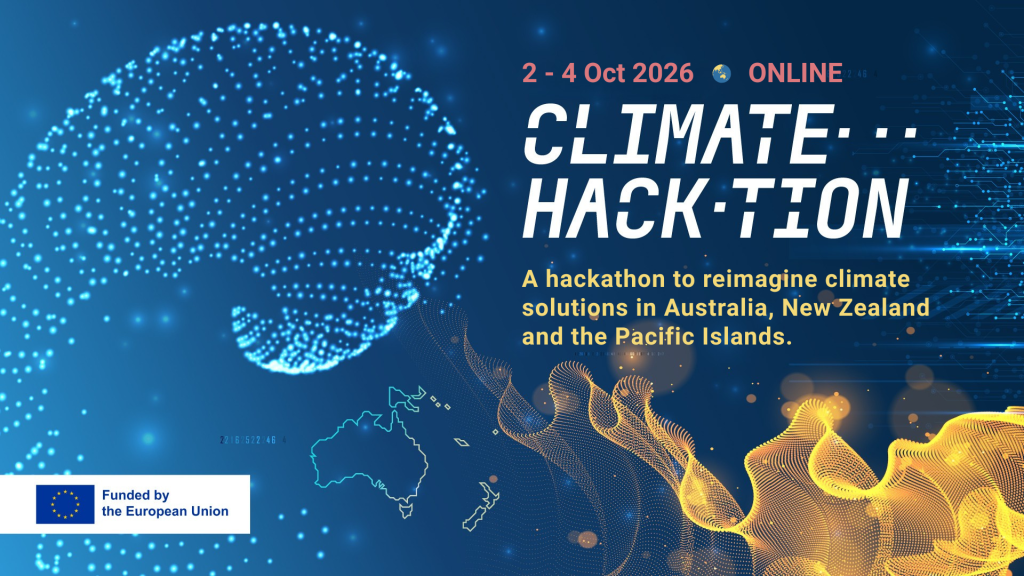
With COP31 only weeks away, more than 280 university and TAFE students from Australia, New Zealand, the Pacific and the EU have shown what regional climate action can look like in practice. Over 60 hours online, from 2 to 4 October, they built 47 working prototypes and mock-ups through Climate Hack-tion, the European Union’s first regional climate hackathon.
The hackathon coincided with the Pre-COP in Fiji from 5 to 8 October, and Climate Hacktion was designed to turn that momentum into action led by young people, so the generation that will live with the results of these negotiations has a direct stake in them.
Each team worked on COP31’s priority areas: electrification, waste and methane reduction, resilient cities and buildings, green industrialisation, and climate awareness and education. The solutions they built reflect the region’s own challenges: flooding, extreme heat, waste and food security.
The winners were announced at an online ceremony on 12 October by H.E. Lawrence Meredith, EU Ambassador to Australia, H.E. Lucie Samcová-Hall Allen, EU Ambassador-designate to New Zealand, and H.E. Barbara Plinkert, EU Ambassador to the Pacific.
- Winner: Draki by team Pixelers from the University of Queensland, named after the Fijian word for weather. It uses free satellite data from the EU’s Copernicus programme to text farmers which paddocks will flood and what to move before the water arrives.
- Runner-up: WasteWise by Team Fusion made up of students from Monash University, University of Adelaide and UNSW, an interactive game that teaches children to manage waste.
- People’s Choice: SweatShell by Not So Hot team of student from RMIT and University of Auckland, a biodegradable roof sheet that cools buildings without electricity. Participants voted for it.
- Special mention: ReSourceX in Australia (team Goal Digger from UNSW and UTS), a marketplace for recycled materials, and FieldLoss in the Pacific, a tool for measuring food loss.
EU Ambassador to Australia , Lawrence Meredith said: “COP31 is a defining moment for our region, and these students have made sure young people are taking climate solutions into heir hands. In 60 hours they took the climate priorities from the negotiating table to practical solutions for people - farmers, schools and communities could use tomorrow. Climate action needs all hands on deck. The EU is a strong climate partner to Australia, New Zealand and the Pacific, and these ideas are a powerful reminder of what is at stake as we head to Antalya.”
The EU works directly with Australia, New Zealand and Pacific countries on shared climate priorities. Climate Hacktion was delivered by the EU Delegation to Australia with the EU Delegations to New Zealand and the Pacific. It is an investment in the young people who will carry that partnership forward.
Contact details:
Victoria Kelly-Clark – EU Delegation to Australia
Ph: 0429 024 887