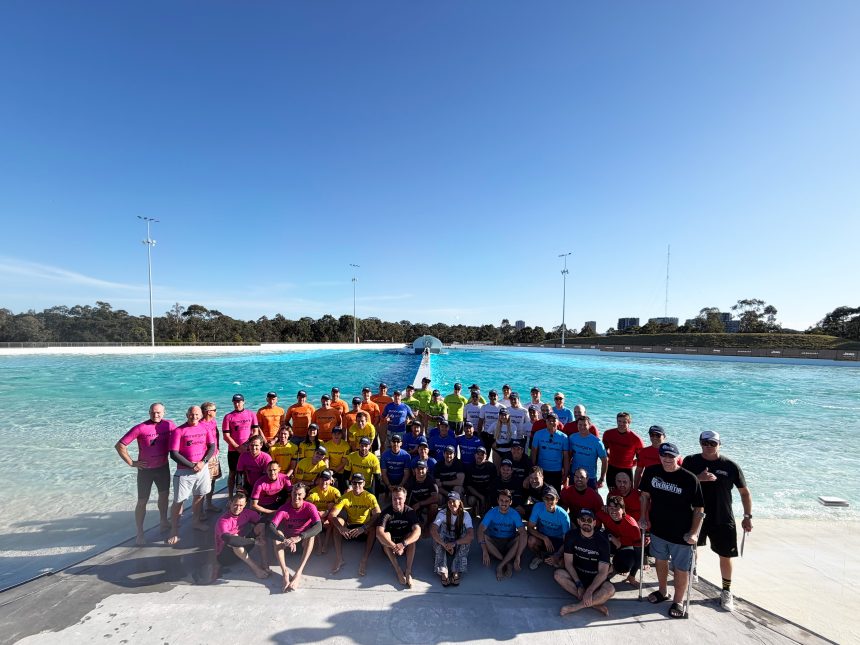
Seventy-two surfers have taken to the waves at URBNSURF Sydney for dementia research, while shining a light on the impact a diagnosis can have on entire families - and the importance of staying active and socially connected for lifelong brain health.
Held today, Friday 30 October, Wipeout Dementia 2026 brought together surfers, business leaders and supporters to raise funds for research at UNSW Sydney’s Centre for Healthy Brain Ageing (CHeBA).
Behind the fundraising are the personal stories for paddling out.
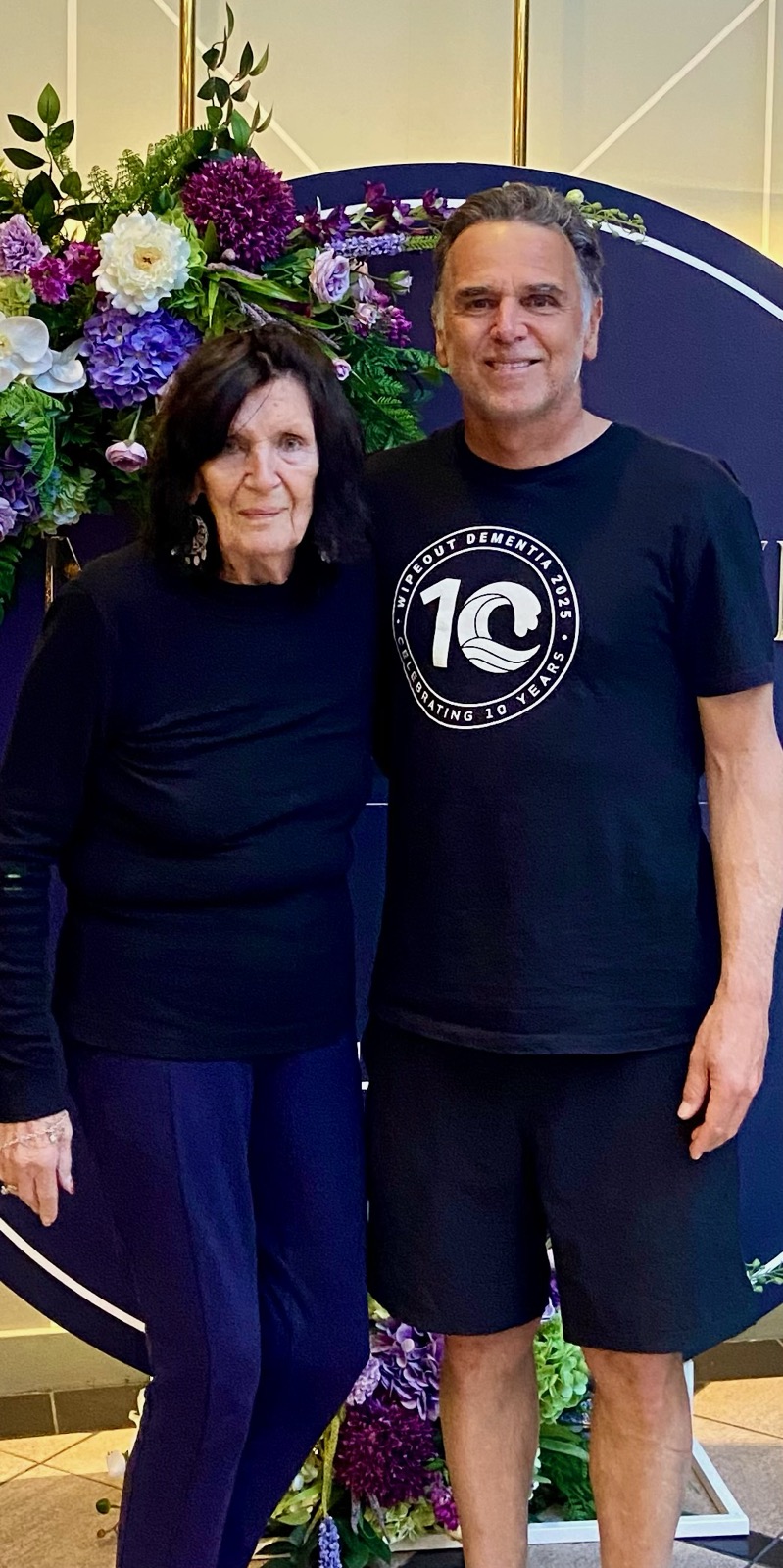
For long-term Wipeout Dementia Captain Craig Rodgers, this year’s event comes after a significant change for his family, with his mother moving into residential care following increasing isolation and five falls in six months.
Having watched his grandfather experience dementia as a teenager, Craig thought he understood what the disease could look like. His mother's experience has taught him otherwise.
“I now understand that everyone’s journey is different, including the impact on their family.”
His mother had been living independently but the family ultimately faced the difficult decision to move her into residential care.
“People don’t always appreciate the difficulty of finding a place, the potential cost or the emotional weight of that decision for a family,” Craig said.
“Moving into care is not the end, just the beginning of another stage. We're still visiting, taking her out to socialise and helping her stay connected.”
Craig said families needed greater practical support wherever their loved one was being cared for.
“Families need guidance on what to expect, how to provide care and where to turn for help. The responsibilities can have an enormous impact on their lives. They need support themselves.”
Research provides reason for hope
CHeBA Co-Director and 2026 Senior Australian of the Year Professor Henry Brodaty AO said Craig’s experience reflected a reality shared by hundreds of thousands of Australian families.
“Dementia rarely affects one person alone. Behind a diagnosis there may be a husband or wife becoming a carer, adult children supporting their parents, difficult decisions about whether someone can continue living safely at home and transitions into residential care,” Prof. Brodaty said.
Dementia is now the leading cause of death in Australia, but Prof. Brodaty said its future is not fixed.
“Research is changing what we understand about dementia - from opportunities to reduce risk and protect brain health throughout life, to earlier diagnosis and more effective treatments and care.”
“Changes associated with dementia can begin decades before symptoms emerge. Brain health is a lifelong consideration, which means we need to think about the factors that support it much earlier in life.”
CHeBA’s landmark Maintain Your Brain trial - the world’s largest online lifestyle intervention study - has strengthened evidence that targeting modifiable lifestyle risk factors can make a measurable difference to cognition.
“This gives us genuine reason for hope, but translating evidence into population-wide change requires sustained research and investment,” Prof. Brodaty said.
More than a fundraising network
Wipeout Dementia began 11 years ago with just 16 surfers raising more than $100,000. The property industry has driven the initiative since 2016, with more than $3.2 million now raised for CHeBA’s dementia research.
But something else has grown alongside the fundraising: a community built through surfing, friendship, shared experience and common purpose.
Craig has been part of that community since the first property industry event in 2016 and said many of the friendships now extend well beyond event day.
“There are many people involved whom I see and catch up with regularly throughout the year. Part of those conversations is checking how their loved ones are going, but also how they’re coping themselves.”
For many Wipeout Dementia surfers, those connections have endured through diagnoses, caring for parents and partners, residential care and bereavement.
And the science increasingly tells us those connections matter.
CHeBA research into “social bridging” has highlighted the importance of regularly interacting with a broad network of people through activities outside the home. These interactions provide opportunities to exercise memory, language and decision-making skills, with stronger social connection associated with better cognitive health.
CHeBA social health expert Dr Suraj Samtani said Wipeout Dementia provided a powerful real-world illustration of physical activity and social connection coming together.
“Brain health is influenced not only by how physically active we are, but also by how socially engaged we remain throughout our lives,” Dr Samtani said.
“Social bridging is about getting outside the home and interacting with a broader network of people. Different conversations, relationships and shared activities stimulate the brain and give us opportunities to use our memory, language and decision-making skills.”
“Wipeout Dementia brings together people across different ages, professions and backgrounds who may never otherwise have met. They surf together, reconnect year after year and have built friendships that extend well beyond the event.”
For Craig, that connection has taken on greater meaning as his own family navigates declining brain health.
“Everyone’s experience is different, but there’s a shared understanding of the impact on both the person with dementia and those supporting them.”
“Alongside supporting each other, we’re learning together and pushing each other to stay active for as long as we possibly can.”
With more than $250,000 raised in this year’s event, every surfer, sponsor and donor becomes part of the research effort - helping CHeBA advance work across dementia prevention, earlier detection, treatment and care.
For families like Craig’s, the reason for that research could hardly be more important. And for the Wipeout Dementia community, the message could hardly be clearer: Stay active and stay connected.
Wipeout Dementia Ambassadors: Wayne "Rabbit" Bartholomew AM, Felicity "Flick" Palmateer, Mark "Occy" Occhilupo
Congratulations to Major Prize Winners:
Highest fundraising team who won an experience at The Roosevelt: ‘Gordo’s Grovelers’
Highest individual fundraiser who won a custom MR board: Mike Gordon
Top fundraisers who won a custom JS Raging Bull surfboard: Sam Rowe, Jackson Skirka, Andrew Wilson, James Paver
Surf Contest Winners: KCE Team Sponsored ‘Kicking Cognitive Erosion’
Wave of the Day went to Pete Kavanagh
Wipeout of the Day went to Cal Horton
Prizes also went to Zac Hart, Will Rothwell and MVP Awards to Daisy Nankervis, Marcus Rosenberg, Brett Eichhorn, Matt Moulsdale, Glen Elsworth, Peter McCallum, Glenn Cowdrey, Guy Lake and Nick McGrath
Wipeout Dementia 2026 sponsored by:
Major Sponsor Morgans Financial Limited
Team and Prize Sponsors AWM - Commercial Furniture & Joinery Winten Property Group, Versatile Group Avenor Colliers, Liberty Specialty Markets, BlackGold Legal Sense Projects SHAPE Australia KCE Haigs Builder Brokers JS Industries
Event partner URBNSURF
Contact details:
Heidi Douglass