
- Research by Medianet analysed 2,610 AI responses and 14,661 citations across ChatGPT, Google AI Overviews and Perplexity, examining how the platforms represent Australian aged care and NDIS programmes over four weeks in late 2026.
- AI models are significantly behind on policy changes, with the superseded Home Care Packages system still appearing in 325 responses compared to 462 for its replacement, Support at Home, nearly a year after the transition; similarly, NDIS reforms from April 2026 appeared in just 12 responses while the 2019 Disability Royal Commission appeared in 121.
- The framing of a question heavily influences the answer, with negatively framed prompts generating unfavourable sentiment 73% of the time and causing AI models to shift away from government sources towards editorial content.
- Commercial aged care and NDIS providers supplied 27% of all citations overall, rising to 46% for the question What is Support at Home?, while citation behaviour varied considerably by platform, with ChatGPT drawing 88% of its citations from government sources compared to only 36% for Google AI Overviews.
- Medianet recommends that government agencies publish dated, plain-English explainers on announcement day, test and monitor AI answers across each platform separately, remove or clearly label superseded content, and brief frontline staff to expect citizens quoting outdated AI-generated information.
Australians asking AI assistants about aged care and disability support are getting answers shaped by outdated programs, years-old controversies and content written by commercial providers, according to new research from media intelligence company Medianet.
Phase 3 of Medianet's Opening the Black Box series, the research program that won Silver for Best Measurement of the Impact of Communication on AI Answers at the 2026 AMEC Global Awards, analysed 2610 AI responses and 14,661 citations. Thirty prompts about the NDIS and My Aged Care were tracked across ChatGPT, Google AI Overviews and Perplexity over four weeks in September and October 2026.
The old system hasn't left the building
The Support at Home program replaced the Home Care Packages system in November 2025. Nearly a year later, the old program still appeared in 325 AI responses, against 462 for its replacement. The superseded Aged Care Assessment Teams appeared 75 times. The new Integrated Assessment Tool appeared 53 times.
It's a similar scenario with the NDIS. Reforms announced in April 2026, including the Thriving Kids program, appeared in just 12 responses. Instead, the 2019 Disability Royal Commission appeared in 121 and the 2022 NDIS Independent Review appeared in 76. Despite sustained media coverage of the reforms, AI models continued to describe the scheme through older reference points.
The research suggests a new program name and even details of the outdated services can take up to a year to be updated in AI answers.
Ask a sceptical question, get a sceptical answer
Overall, AI models were favourable or neutral in 82% of NDIS mentions and 72% of My Aged Care mentions. But when the prompt was negatively framed, it was reflected in the answer and generated unfavourable sentiment 73% of the time.
The models also changed where they looked. Government sources supplied 52% of citations for neutral questions, but only 31% when prompts asked about problems, concerns or barriers. Editorial content was more likely to appear in critical answers, with 63% of editorial citations carrying unfavourable sentiment.
Government leads, but it doesn't write the whole answer
Government domains supplied 48% of all citations. Aged care and NDIS providers supplied 27%, rising to 46% for the question "What is Support at Home?" and 41% for "How is the NDIS supporting people?"
The platform mattered too. ChatGPT averaged three citations per response, 88% of them from government sources. Google AI Overviews averaged 6.8 citations, with only 36% from government. Perplexity drew on the most sources, averaging seven citations per response, and produced the most unfavourable answers.
What it means for public sector communicators
Amrita Sidhu, Managing Director of Medianet, said AI answers had become the first point of contact for many essential services.
"For essential government programs, AI answers are the new front counter. This poses a risk of citizens making decisions based on outdated or commercially filtered information, but it is also a powerful opportunity to shape the script and provide clear, timely and trusted guidance to the public.
"Announcing a reform is only half the job now. The NDIS changes were covered extensively in the media, yet six months later the models were still describing the scheme through the Royal Commission. Agencies need a dated, plain-English explainer on their own site on announcement day, and they need to check what each platform is saying after every change. Accuracy is now a reputation issue and a service delivery issue at the same time."
The report recommends government agencies and departments to test the questions citizens are likely to ask, such as how to apply, what a service costs and how to complain, and check answers for accuracy as well as sentiment. It also recommends tracking each AI platform separately, engaging the providers most frequently cited, removing or clearly labelling superseded pages, and briefing frontline and contact centre staff to expect citizens quoting outdated AI answers.
The findings apply well beyond government. Universities, utilities and other complex institutions face the same problem: many stakeholders publishing about them, programs that change faster than the models update, and audiences who arrive with sceptical questions.
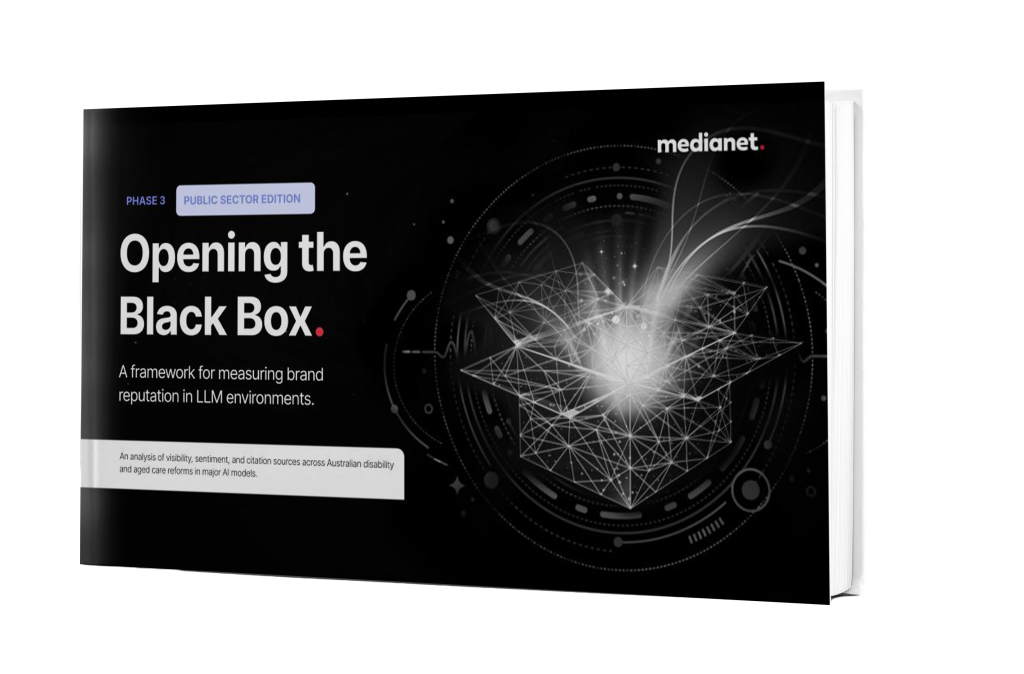
The full report, Opening the Black Box Phase 3: Public Sector Edition, is available here.
About the research
Medianet tracked 30 curated prompts designed to emulate real-world user behaviour, including neutral, supportive and sceptical framings, across ChatGPT, Google AI Overviews and Perplexity over four weeks between September and October 2026. The analysis produced 2610 responses and 14,661 citations, hand-coded by source type, sentiment and program visibility. Phases 1 and 2 examined how AI models represent corporate brands across banking, insurance and government.
About Medianet
Medianet is Australia's leading media intelligence company offering the most comprehensive Australian media contacts database, press release distribution, media monitoring and media analysis services to corporate, not-for-profit and government organisations. For service delivery, whole of government and regulatory organisations, Medianet helps make better communication decisions and understand public perception of their policies and operations. Part of Mediality Group, Medianet is Australian-headquartered and owned by Australian media organisations, and has more than 40 years of history. medianet.com.au
Contact details:
Amrita Sidhu, Managing Director - Medianet.
[email protected]
+61 481 177 686
Mercedes Carrin, Head of Marketing - Medianet
+61 430 729 397