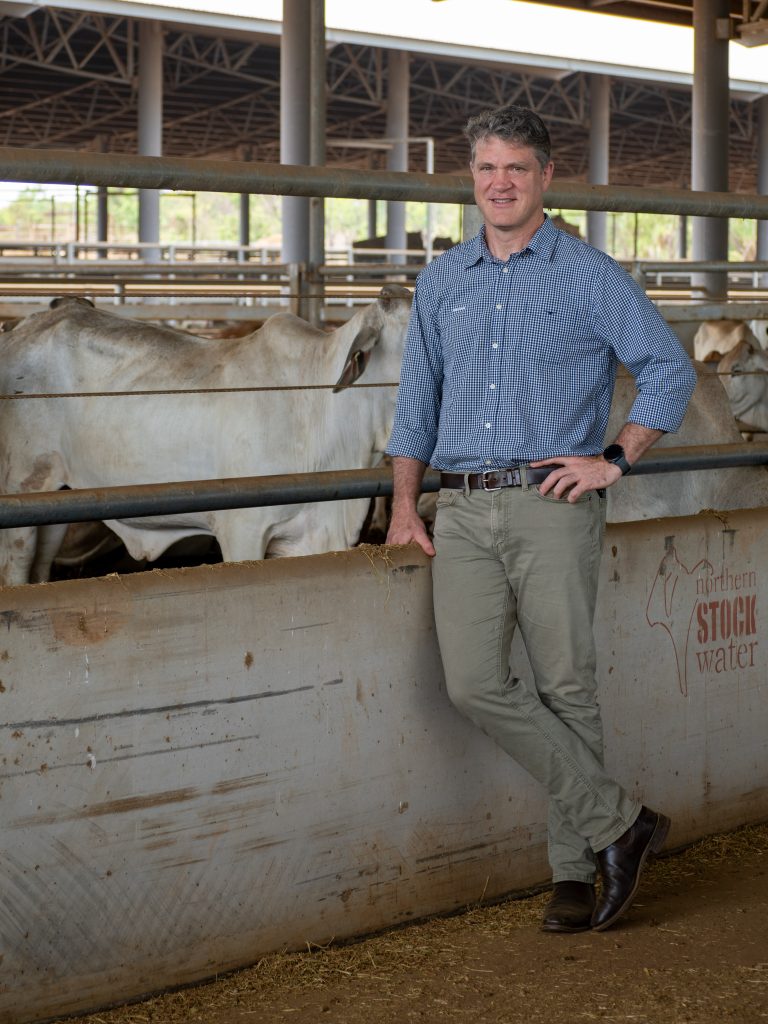
Australian beef production and exports are forecast to increase in 2027 as global supply declines for a second consecutive year, according to Rabobank. However, the possibility of drier seasonal conditions and changing trade arrangements could temper the Australian market.
In its just-released Global Beef Quarterly Q4 2026 report, the agribusiness bank’s RaboResearch division forecasts Australian beef production to increase by around three per cent in 2027, following an expected seven per cent rise in 2026. The country’s beef exports are also forecast to grow by approximately three per cent in 2027.
By contrast, RaboResearch forecasts global beef production to decline by 0.1 per cent in 2027 after an estimated 1.5 per cent contraction in 2026. This would be the first time since 2015 that global beef production has declined in consecutive years.
Report lead author, RaboResearch senior animal protein analyst Angus Gidley-Baird said Australia’s beef industry was expected to enter 2027 from a position of “considerable strength”, after managing high cattle numbers, variable seasonal conditions and changing trade flows during 2026.
“Australia has been able to turn a large cattle inventory into record beef production and exports, while cattle prices have remained strong, and that provides a solid platform heading into 2027,” he said.
“Assuming drier seasonal conditions and given the large cattle inventory, we expect slaughter numbers to rise by around three per cent next year. With carcass weights likely to plateau as more grassfed cattle enter the system, we are forecasting beef production to rise at a similar rate.”
Mr Gidley-Baird said strong overseas demand had helped the Australian cattle market absorb the increased production through 2026.
“Processor cow prices have traded at historically-high levels for much of the year, reflecting strong US demand, while young cattle prices have responded more directly to seasonal conditions,” he said.
“The central issue for 2027 will be the impact of the El Niño weather pattern. If conditions become dry early in the year, we could see larger numbers of cattle coming onto the market, which would put downward pressure on cattle prices and potentially test processing capacity.”
Trade access uncertain
Global beef trade is expected to remain unsettled after what RaboResearch describes as one of the “most protectionist years” for the sector in 2026.
China introduced a 2.688 million tonne tariff-rate quota with allocations for individual supplying countries, while the United States changed market access through additional beef quotas. Europe suspended Brazilian beef imports over antimicrobial compliance requirements, and Indonesia changed the way it allocates beef imports.
“Trade flows have had to adjust quickly as policy settings have changed, and we expect disruption to remain part of the market landscape in 2027,” Mr Gidley-Baird said.
“Some of those changes should become more predictable as exporters, importers and supply chains gain experience operating under the new arrangements, but access to key markets will remain an important driver of where beef moves and at what price.”
Mr Gidley-Baird expects Australian beef shipments to China to remain high in early 2027, potentially exhausting Australia’s quota by around May. Strong shipments to South Korea could also trigger its safeguard measure again, potentially by July.
Brazil, the world’s largest beef exporter, is seeking to diversify its markets as China’s quota arrangements constrain shipments, the RaboResearch report said. Both Japanese and South Korean officials visited Brazil in 2026 and there is a possibility that Brazil may be granted access to these markets in 2027.
Mr Gidley-Baird said US cattle supplies are projected to remain historically tight in 2027, supporting elevated cattle and beef prices. “China’s domestic beef production is forecast to decline as its herd rebuild continues, while its beef imports are expected to recover by around three per cent following an estimated 10 per cent fall in 2026.”
Tight supply puts affordability in focus
Australia and New Zealand are expected to record the strongest production growth among the major beef-producing regions.
The report’s global analysis forecasts growth of 3.5 per cent for Australia and 8.8 per cent for New Zealand, compared with declines of three per cent for Brazil, one per cent for the EU27 and UK, and one per cent for China. US production is expected to be relatively flat.
“Global beef availability remains tight and, in a number of markets, cattle and beef prices are already historically high,” Mr Gidley-Baird said.
“Another year of constrained global production means the industry will need to carefully manage supply-chain costs and margins, while recognising there is a limit to how much additional cost consumers will be prepared to absorb.”
The report says beef prices have reached record highs across many regions. It also notes the FAO bovine meat price index was 17 per cent higher year-on-year in May 2026. The widening price gap between beef and competing proteins is encouraging some substitution towards pork and poultry in some regions, RaboResearch says.
Mr Gidley-Baird said the combination of limited global supply and Australia’s comparatively strong production outlook should continue to create opportunities for Australian beef exporters in 2027.
“That is a positive position to be in, although the El Niño weather pattern, consumer affordability and trade settings will ultimately determine how the year plays out,” he said.
<ends>
RaboResearch Disclaimer: Please refer to Australian RaboResearch disclaimer here
Media contacts:
Denise Shaw Will Banks
Media Relations Media Relations
Rabobank Australia & New Zealand Rabobank Australia
Phone: 02 8115 2744 or 0439 603 525 Phone: 0418 216 103
Email: [email protected] Email: [email protected]
About us:
Rabobank Australia & New Zealand Group is a part of the international Rabobank Group, the world’s leading specialist in food and agribusiness banking. Rabobank has more than 125 years’ experience providing customised banking and finance solutions to businesses involved in all aspects of food and agribusiness. Rabobank is structured as a cooperative and operates in 35 countries, servicing the needs of more than nine million clients worldwide through a network of more than 1000 offices and branches. Rabobank Australia & New Zealand Group is one of Australasia’s leading agricultural lenders and a significant provider of business and corporate banking and financial services to the region’s food and agribusiness sector. The bank has 87 branches throughout Australia and New Zealand.