-
1 in 3 Australian homes contain asbestos-containing materials (ACMs), with approximately 6 million tonnes of ageing ACMs remaining in Australia's built environment.
-
More than 4,000 Australians die annually from asbestos-related diseases, equivalent to one life lost approximately every two hours, 11 every day and 77 every week. That's almost three times the national road toll (1,334 deaths in the 12 months to September 2026).
-
The World Health Organization (WHO) confirmed in August 2026 that all six forms of asbestos are carcinogenic, causing cancers including lung, laryngeal and ovarian cancers, and malignant mesothelioma, for which there is no cure. The WHO warns that asbestos exposure remains a risk decades after asbestos was installed in buildings.
-
Mesothelioma cases have steadily increased over the past 40 years, with non-occupational exposure remaining a significant concern, particularly among women.
-
51% of Australian Mesothelioma Registry exposure assessment participants assessed as having possible or probable asbestos exposure reported exposure during major home renovations, while 39% reported living in homes undergoing renovations.
-
94.1% of women and 23.1% of men assessed as having possible or probable asbestos exposure reported non-occupational exposure only. These percentages relate to exposure assessment participants, not all mesothelioma patients.
-
Any home built or renovated before 1990 could contain asbestos, including brick, weatherboard and clad homes, apartments and Victorian terraces that have undergone renovations. Asbestos may be found in roofing, wall sheeting, floor coverings, insulation, bathrooms, kitchens, fences and outbuildings.
-
Only 30% of Australians surveyed in 2025 believed they could afford professional asbestos removal, raising concerns that financial pressures may encourage unsafe DIY practices.
-
Australians spent a record $4.15 billion on renovations during April to June 2026, the highest quarterly renovation spending recorded since 1974.
-
National Asbestos Awareness Month is Australia's only multi-award-winning, national asbestos education campaign. Established in 2011, it provides free, practical resources at asbestosawareness.com.au to help homeowners, renovators, DIYers and tradies identify potential asbestos hazards and manage ACMs safely.
MEDIA RELEASE: EMBARGOED 12:01AEDT 23 NOVEMBER 2026
BANNED BUT STILL KILLING: AUSTRALIA'S ASBESTOS LEGACY CLAIMS 11 LIVES EVERY DAY
National Asbestos Awareness Week 23-29 Nov - Friday 27 Nov is Asbestos Memorial Day 2026
Australia’s third-wave of asbestos-related deaths is increasing despite a national ban on asbestos almost 23-years ago with one Australian dying from asbestos every two hours and eleven minutes from fibres caused by legacy asbestos that remains hidden in one third of Aussie homes – that’s over 4000 deaths every year - three times the national road toll.
Cherie Barber, Australia’s Renovation Queen™ and Ambassador for the National Asbestos Awareness campaign said, “Deaths caused by inhaling asbestos fibres are not a thing of the past. Asbestos remains a very real and present danger especially for homeowners of properties built before 1990.
“Clearly Aussies love renovating with $4.15 billion spent on renovations in just the 2026 June quarter, the highest three-month period of spending since 1974, but the lack of public knowledge on ACM identification and the risks associated with disturbing asbestos fuels fears that people are putting their lives and the lives of loved ones at risk,” Ms Barber said.
“The First Wave of asbestos-related deaths were miners, transporters and manufacturers of asbestos-containing materials (ACMs), while The Second Wave impacted trade and construction workers installing the deadly materials.
“With Australia’s Third Wave of asbestos-related deaths consistently increasing over the past 40 years, particularly among homeowners, renovators and tradies, anyone considering renovating a property built before 1990 must learn about asbestos risks, how to identify ACMs and importantly, how to manage asbestos safely,” she said.
The consistent need to grow awareness of asbestos risks was reinforced with the most recent National Asbestos Awareness Survey (2025) that found that while 91% of respondents knew a little bit about asbestos; in general, people reported being poor at identifying ACMs, while only 30% of people said that they could afford asbestos removal.
According to the World Health Organization’s (WHO) Asbestos paper (11 August 2026), all six forms of asbestos can cause a range of cancers including cancer of the lung, larynx, ovaries and malignant mesothelioma (there is no cure), noting that “Anyone engaging in construction, maintenance and demolition of buildings where asbestos has been used is potentially at risk even many years or decades after the asbestos was put in place.”
“What we’re seeing today are thousands of avoidable deaths largely caused through disturbing ACMs during renovations, demolition or maintenance when those working on homes were exposed to asbestos fibres in the process,” Ms Barber said.
The 2026 Mesothelioma in Australia Report from the Australian Mesothelioma Registry (AMR) published by the Australian Institute of Health and Welfare records that mesothelioma cases have consistently risen over the past 40 years.
Among AMR survey participants assessed as having possible or probable exposure to asbestos fibres; 51% reported exposure during major home renovations where asbestos products were present; 39% reported living in a house during renovations; 13% had resided in a fibro home built between 1947 and 1987; and 21% had lived with someone who brought dust into the home.
“There is no known safe level of exposure to asbestos fibres,” Ms Barber said.
“If ACMs are disturbed during renovations, maintenance or demolition and if asbestos-containing dust is taken home on clothing or tools, homeowners and tradies could be risking their lives and the lives of anyone who comes into contact with the fibres including children,” she said.
“With mesothelioma cases of non-occupational exposure (only) recorded at 94.1% for women and 23.1% for men, and cases of both occupational and non-occupational exposure recorded at 51.5% (63.3% men and 5.6% women); increasing awareness and education resources on how to manage ACMs safely, can help save lives,” said Ms Barber.
Asbestos was used in the manufacture of a broad range of building and decorator products (over 3000), leaving a large number of ‘legacy’ ACMs lurking in homes built or renovated before 1990, and in commercial properties built before 2004.
Asbestos could be found in one-in-three Aussie homes, lurking under floor coverings such as carpets, linoleum and vinyl tiles. It could be in ceiling space (insulation), around hot water pipes, under kitchen sinks, behind wall and floor tiles, in cement floors, in flat and corrugated sheeting in internal and external walls, ceilings, eaves, roofs, fences, extensions, garages, outdoor toilets, backyard and farm structures, chook sheds and even dog kennels. It could be anywhere!
“With asbestos-related deaths projected to continue increasing, and with so many older homes containing ACMs, it’s vital that renovators and tradies take the warnings seriously and visit www.asbestosawareness.com.au to learn what they need to know, and importantly, ensure they only use licensed asbestos professionals to identify and remove ACMs,” Ms Barber said.
Chair of the Asbestos Education Committee, Clare Collins said, “With so many Australians unaware of or complacent about the dangers of disturbing asbestos-containing materials in older homes, coupled with the reluctance of some homeowners to pay for professional asbestos assessment and removal, Australia’s deadly asbestos crisis will continue to claim lives.
“With around 6 million tonnes of ageing ACMs remaining in one-in-three Australian homes, we’re urging all homeowners, particularly renovators and tradies to take the warnings seriously and respect the dangers of asbestos because it’s not worth the risk to themselves or their families especially children,” she said.
Phil Smith, the husband of Leah Smith, a beloved mother of two who lost her battle with malignant mesothelioma on 22 August 2024 at age 49, just eight months and one day after diagnosis, knows that the only way to save lives is to increase awareness of asbestos risks when renovating older homes.
“Mesothelioma is a terrible but preventable disease that Leah developed because she was exposed to asbestos fibres as a 3-year-old toddler while pottering around with her parents when building their home using ACMs, unaware that the fibres released in the process would one day take their daughter’s life,” he said.
“Until Leah was diagnosed with this hideous disease, we knew a little bit about asbestos, but we’d never heard of mesothelioma or that it was caused by asbestos fibres.
“Until someone you know is affected by it, most wouldn’t know much about it because there’s less awareness of asbestos-related diseases, particularly mesothelioma than there is for other cancers like breast, skin and prostate cancer,” he said.
Volunteering his time to prevent asbestos-related deaths, Phil began his life-saving journey just weeks after Leah’s passing. Transforming his personal grief into purpose, Phil create Ride In Shorts For Leah, an initiative that raises awareness about the dangers of asbestos while raising funds to support asbestos education and prevention initiatives Australia-wide.
“Our family, friends and the whole community were left devastated when Leah lost her battle with this deadly disease that we knew nothing about, so to help save lives, we’ve made it our mission to raise awareness of the dangers of asbestos so no other family experiences the avoidable tragedy of losing a loved one to an asbestos-related disease,” Mr Smith said.
“If your home was built or renovated before 1990, it is likely to contain asbestos in some form or another so before taking up tools be sure to use a licenced asbestos assessor or occupational hygienist to assess your property and only use licenced asbestos removalists because it just might save your life or the life of a loved one,” he said.
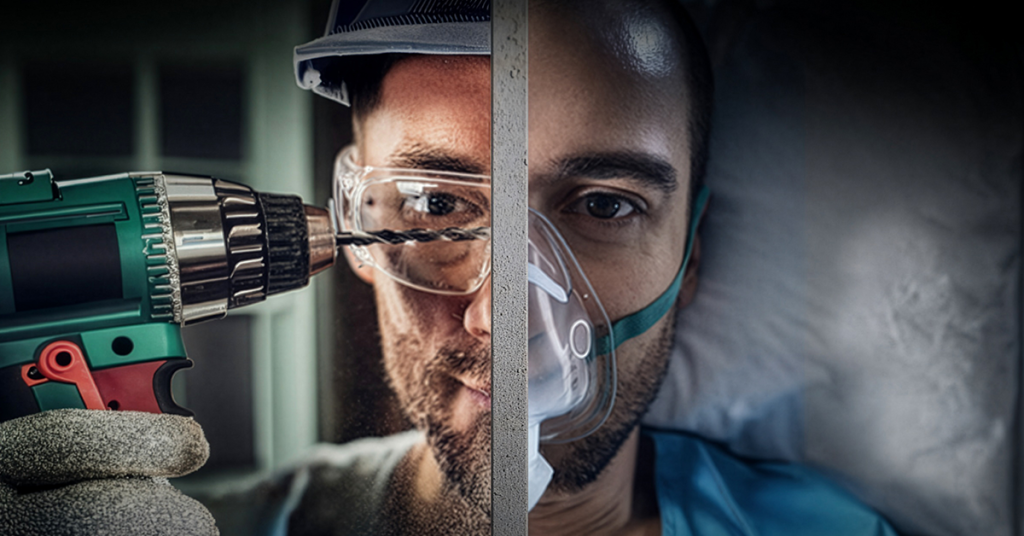
When it comes to asbestos, the rule is, Don’t cut it! Don’t drill it! Don’t drop it! Don’t sand it! Don’t saw it! Don’t scrape it! Don’t scrub it! Don’t dismantle it! Don’t tip it! Don’t waterblast it! Don’t demolish it! Don’t dump it! And whatever you do... DON’T remove asbestos yourself,” Mr Smith said.
With another Australian life lost to asbestos every two hours and eleven minutes, if planning a renovation, homeowners must respect asbestos and before taking up tools. Visit www.asbestosawareness.com.au because it’s not worth the risk!
-ENDS-
-ENDS-
MEDIA CENTRE
To access asbestos information and resources, images and graphics of asbestos-containing materials or Asbestos Awareness Ambassador Cherie Barber, Australia’s Renovation Queen™, please refer to the Media Centre at asbestosawareness.com.au OR via
- MEDIA CENTRE: https://bit.ly/AsbestosAwareness-Media-Centre
-
- RELEASES & JOURNALIST NOTES: https://bit.ly/AsbestosAwareness-MediaReleases
- IMAGES & GRAPHICS: Various images and graphics of asbestos-containing materials (ACMs) or Ambassador Cherie Barber visit: https://bit.ly/AsbestosAwareness-Images
- Phil and Leah Smith Photographs - https://asbestosawareness.box.com/v/Leah-Smith-Photos
- FOOTAGE: VNR/BROLL - https://bit.ly/AsbestosAwareness-Footage PLAYLIST: bit.ly/AsbestosAwareness-YoutubePlaylist
- Radio Community Service Announcements: https://bit.ly/CSA-AsbestosAwareness
INTERVIEW REQUESTS
For detailed Journalist Notes or to arrange interviews with Cherie Barber or a variety of expert spokespersons listed below and case studies, contact Advocacy Australia on 02 9518 4744. Email: [email protected]
- Clare Collins: 0414 821 957 w [email protected] -
- Alice Collins: 0414 686 091 w [email protected]
HASHTAGS
#AsbestosAwareness #AsbestosAwarenessMonth #RespectAsbestos #RenovationRoulette #RespectAsbestosRisks #StopPlayingRenovationRoulette #DIY #Asbestos #Renovate #Renovating
THE NATIONAL ASBESTOS AWARENESS CAMPAIGN
Since 2011, Australia’s only multi award-winning Asbestos Awareness campaign has been dedicated to saving lives by alerting renovators, property investors, managers and tradies about the dangers of asbestos and providing effective, user-friendly tools and information on how to manage asbestos-containing materials safely at www.asbestosawareness.com.au
To help save lives, in 2026 the Asbestos Education Committee continues the National Asbestos Awareness Month campaign and its long-standing leadership role of providing world-first, user-friendly and freely accessible education resources at asbestosawareness.com.au for those who may risk disturbing asbestos including homeowners, renovators, landlords, tradies, commercial property and regional property owners where naturally occurring asbestos is known.
ASBESTOSAWARENESS.COM.AU
asbestosawareness.com.au is the world’s most comprehensive online information source on identifying and managing ACMs with resources for renovators, investors and tradies including Asbestos in Homes: A Guide to Identification, Testing and Removal video; Asbestos 101 for Residential Property Owners, Managers and Tradies; Asbestos in Your Home – The Ultimate Renovators Guide video, Asbestos Awareness Residential Property Checklist – A Homeowner’s Guide to Identifying Asbestos-Containing Materials; Factsheets for homeowners and tradies, Trade-specific guides; Asbestos Products Database; Asbestos in Commercial Properties and Naturally Occurring Asbestos guidelines.
asbestosawareness.com.au provides comprehensive asbestos information and user-friendly free resources:
- Asbestos in Homes: A Guide to Identification, Testing and Removal (Video guide on asbestos inspections and removal hosted by Australia’s Renovation Queen™ and Asbestos Awareness Ambassador, Cherie Barber)
- Asbestos 101 for Residential Property Owners, Managers and Tradies (Education resource to help homeowners, tradies and property investors learn the facts about asbestos and how to manage it safely)
- Asbestos in Your Home – The Ultimate Renovators Guide (Easy to follow video hosted and produced by Australia’s Renovation Queen™ and Asbestos Awareness Ambassador, Cherie Barber)
- Asbestos Awareness Residential Property Checklist – A Homeowner’s Guide to Identifying Asbestos-Containing Materials (User-friendly step-by-step guide to identifying asbestos in the home)
- Asbestos Awareness - 20 Point Safety Check (Asbestos risks and how to manage asbestos safely)
- Fact Sheets for Homeowners (When, why and how to use Personal Protective Equipment (PPE))
- Asbestos Awareness Toolbox Talks (10 Toolbox Talks to help employers better inform workers of asbestos risks )
- Asbestos Awareness for Young Workers (Education resource developed with SafeWork NSW )
- Residential Checklist for Tradies – A Tradespersons Guide to Asbestos (Identify the product types and locations)
- Trade Specific Checklist for Tradies – A Tradespersons Guide to Asbestos (Tailored to 23 specific trades)
- Fact Sheets for Tradies (When, why and how to use Personal Protective Equipment (PPE))
- Asbestos Product Database (Australia’s first comprehensive online asbestos product database)
- Asbestos Management for Commercial and Non-Residential Properties (Australia’s only comprehensive guide)
- Naturally Occurring Asbestos – Asbestos Management Plan Guide (Australia’s only comprehensive resource)
ASBESTOS AWARENESS CAMPAIGN MEDIA SPOKESPERSONS
Cherie Barber – ASBESTOS AWARENESS AMBASSADOR
Cherie Barber is widely known as Australia’s Renovation Queen™. Cherie is a regular TV renovator, highly sought-after public speaker, author and award-winning businesswoman with her renovating for profit career spanning more than 30 years. Cherie lost her grandfather to asbestos-related disease and has been a dedicated Ambassador for the National Asbestos Awareness campaign to educate homeowners and DIYers on how to renovate homes with asbestos safely since 2013.
Bret Baker JP
Bret Baker is President of the Asbestos & Hazmat Removal Contractors Association of NSW (AHRCA). Bret is a Civil and Environmental Engineer and is the Managing Director of Beasy Pty Ltd with more than 25 years’ experience in asbestos removal and demolition. Bret is a long-time industry representative on a number of government asbestos and demolition advisory committees including SafeWork NSW Demolition & Asbestos Consultative Committee and the Asbestos Safety & Eradication Agency of Australia – Management and Removal Committee Member. Bret has presented at state and national asbestos forums on asbestos-related industry issues. Bret is a member of the Asbestos Education Committee for the National Asbestos Awareness Campaign.
John Batty
John Batty is one of the founding members and President of the Asbestos & Hazardous-Materials Consultants Association (AHCA) and Managing Director of EDP Consultants, a global provider of Health, Safety and Environmental Services. John has more than 20 years’ experience in asbestos and hazardous materials management and is a consultant to a number of government departments and private organisations. John is a member of the Asbestos Education Committee for the National Asbestos Awareness Campaign.
Clare Collins
Clare Collins is the Director of the National Asbestos Awareness campaign and asbestosawareness.com.au. Clare is the Managing Director of Insight Communications, the creators and managers of the Asbestos Awareness campaign since 2011. Working in consultation with government experts and industry leaders, Insight are the creatives behind the multi-award-winning campaign and asbestosawareness.com.au. Insight has presented the campaign to stakeholders and industry leaders in the UK, Europe and Australia. Clare is also the Chair of Advocacy Australia and the Asbestos Education Committee for the National Asbestos Awareness Campaign.
Mathew Klintfält, Asbestos Awareness Advocate and son of the Late Carol Klintfält OAM
Mathew Klintfält is the son of the Late Carol Klintfält OAM who was honoured with an Order of Australia in Queen’s Birthday Honours Roll 2015 for her tireless Asbestos Awareness advocacy following her mesothelioma diagnosis. Mathew advocates for the prevention of asbestos-related diseases and is a member of the Asbestos Education Committee for the National Asbestos Awareness Campaign.
Phillip Smith – Asbestos Education Committee Member
Phillip Smith is the Executive General Manager - Environment, Health, Safety and Quality at SHAPE Australia and has more than 30 years' experience in the construction industry. Throughout his career, Phil has been a strong advocate for asbestos awareness, education and risk management. He is a member of the Asbestos & Hazmat Removal Contractors Association, the OFSC Industry Reference Group and the National Asbestos Awareness Campaign's Asbestos Education Committee. Phil is committed to supporting initiatives that improve community awareness and help prevent exposure to asbestos-related risks. Phil holds trade, construction, strategic leadership and WHS qualifications and is recognised for his practical approach to safety leadership, governance and organisational improvement.
Joanne Wade
Joanne Wade is the Head of National Asbestos and Dust Diseases for Slater and Gordon Lawyers and is a respected thought leader in advocating for the needs of people with asbestos-related diseases since 1996. Joanne brings a unique credibility and very personal experience to the role, as her father is a victim of asbestos disease, which has led her to a career she is passionate about. Ms Wade was a founding member of Australia’s first Asbestos Education Committee for the Asbestos Awareness Campaign aimed at educating homeowners and renovators about the dangers of asbestos.
ABOUT PHIL SMITH & WIFE LEAH SMITH
Philip Smith – Husband of Leah Smith & Founder of the “Ride In Shorts For Leah” awareness and fundraising initiative.
In May 2026, Phil Smith was named the recipient of Volunteering Queensland’s “Queensland New Volunteer Award 2026”. Phil was recognised for his exceptional dedication and making a significant positive impact through his volunteering services to the community through creating and leading Ride In Shorts For Leah, a grassroots asbestos awareness and fundraising initiative established in honour of his late wife, Leah Smith, who tragically died from an asbestos-related cancer in August 2024, after unknowingly being exposed to asbestos fibres as a three-year-old when her parents built their family’s home.
Phil Smith is a Mackay-based volunteer advocate, former mining workshop supervisor and founder of Ride In Shorts For Leah, a national asbestos awareness and fundraising initiative established in memory of his late wife, Leah Smith, who died from malignant mesothelioma in 2024 following asbestos exposure as a three-year-old.
Beginning his volunteering journey just weeks after Leah’s passing, Phil transformed personal grief into purpose, creating Ride In Shorts For Leah to raise awareness about the dangers of asbestos exposure and support asbestos education and prevention initiatives across Australia. What began as a grassroots community awareness activity encouraging horse riders and communities to wear shorts while riding on Leah’s birthday has grown into a national movement involving riders, clubs, volunteers and supporters across every Australian state and territory.
Through community events, fundraising, media advocacy and public education, Phil has become a leading grassroots advocate for asbestos awareness and asbestos-related disease prevention. Through his volunteering with Advocacy Australia’s Asbestos Education Committee, Phil has contributed more than 1,200 volunteer hours and helped raise over $47,000 to support life-saving asbestos awareness initiatives.
LEAH SMITH’S STORY - By Phillip Smith
Mrs Leah Smith - 11 December 1974 – 22 August 2024
Leah Smith was born on 11 December 1974. When Leah was around 3 years old, her mother and father were owner-builders of their home in Gympie, Queensland. At the time, little did they know that most of the building materials they were working with contained asbestos and in the process, these materials were releasing asbestos fibres that could be inhaled.
An inquisitive child, Leah loved to be around her Mum and Dad and regularly pottered around the building site and at the end of each day, she’d help her parents during clean-ups. This is where we believe Leah was exposed to asbestos fibres.
In 1990 I met Leah. We started courting on 26 September of that year and were then married on 29 April 1995 in Gympie. We have two sons, one born in 1996, the other in 1999. Both were the joy in Leah’s life.
It was toward the end of 2023 when our world began falling apart. From August to December, Leah began her struggle with an unknown illness that made it difficult for her to breathe amongst other things, and she was initially diagnosed it as pneumonia. But even with treatment her condition didn’t improve. It got worse.
In November Leah saw a lung specialist who identified some fluid in her lung cavity, and he referred her to a specialist surgeon in Townsville to have the fluid drained on her 49th Birthday. 600ml of fluid was drained from Leah’s lung and sent for analysis to identify the root cause of her illness. At the same time, they also identified a kidney mass.
On 21 December 2023, we received the devastating call to inform us that Leah had malignant mesothelioma which is caused by inhaling asbestos fibres. It is an aggressive cancer for which there is no cure.
In January 2024, Leah started immunotherapy infusions, but the specialists advised it wasn’t stopping the growth and her treatments ceased on 23 April 2024. We’d been told by Leah’s oncologist that the “standard prognosis” for this disease was 7-12 months following diagnosis. On 22 August 2024, just 8 months and 1 day after Leah was diagnosed, sadly she lost her battle with this terrible disease and we lost a dearly loved wife, mother.
Everyone who knew Leah, knows how much she loved animals, and particularly horses. Leah was extremely well known in our local horse community and one “quirk” of Leahs that she was well known for by family and friends, was that when she wasn’t competing, she loved to ride in shorts and a singlet or T-shirt.
To help prevent others from exposing themselves or loved ones to asbestos fibres that can kill, we’ve created a national event in honour of Leah that we’ve called, “Ride in Shorts for Leah”.
MEDIA RELEASE SOURCES
- Australian Government, National Road Safety Data Hub: Monthly Road Deaths (September 2026). National road toll of 1,334 deaths in the 12 months ending September 2026. https://datahub.roadsafety.gov.au/reporting/monthly-road-deaths
- Australian Institute of Health and Welfare (AIHW): Mesothelioma in Australia 2025 (26 August 2026). National mesothelioma incidence, mortality and occupational and non-occupational asbestos exposure data from the Australian Mesothelioma Registry. https://www.aihw.gov.au/reports/cancer/mesothelioma-in-australia
- World Health Organization (WHO): Asbestos Fact Sheet (11 August 2026). Health risks, carcinogenicity of all forms of asbestos and global occupational asbestos-related mortality. https://www.who.int/westernpacific/newsroom/fact-sheets/detail/asbestos
- World Health Organization (WHO) and International Labour Organization (ILO): WHO/ILO Joint Estimates of the Work-related Burden of Disease and Injury, 2000–2016 (2021). Global occupational exposure to asbestos and associated deaths. https://iris.who.int/bitstream/handle/10665/345242/9789240034945-eng.pdf
- Asbestos and Silica Safety and Eradication Agency (ASSEA): National Asbestos Awareness Survey 2025. National findings on asbestos knowledge, identification, attitudes, behaviours and affordability of professional asbestos removal. https://www.asbestossafety.gov.au/our-work/current-projects-and-research/national-asbestos-awareness-survey
- Australian Bureau of Statistics (ABS): Building Activity, Australia, June 2026. Quarterly residential alterations and additions activity. https://www.abs.gov.au/statistics/industry/building-and-construction/building-activity-australia/jun-2026
- Realestate.com.au: Homeowners Spend Record $16.6b on Renovations as Housing Affordability Worsens (October 2026). Housing Industry Association analysis reporting $4.15 billion in renovation spending during the June 2026 quarter. https://www.realestate.com.au/news/homeowners-spend-record-166b-on-renovations-as-housing-affordability-worsens/
- Cancer Council Australia: Tools Down: New Cancer Data Offers Safety Reminder for DIY Renovators. https://www.cancer.org.au/about-us/news-and-media/media-releases/tools-down-new-cancer-data-offers-safety-reminder-for-diy-renovators
- National Centre for Asbestos Related Diseases (NCARD): Australians Affected by Asbestos Asked What Researchers Should Study Next. https://ncard.org.au/australians-affected-by-asbestos-asked-what-researchers-should-study-next/
- Institute for Respiratory Health: Asbestos in Australia Today: Risk, Research, and Future of Care (September 2026). https://www.resphealth.org.au/2026/09/asbestos-in-australia-today-risk-research-and-future-of-care/
ASBESTOS AWARENESS SPONSORS

Contact details:
Advocacy Australia - 02 9518 4744
Clare Collins: 0414 821 957
Alice Collins: 0414 686 091