
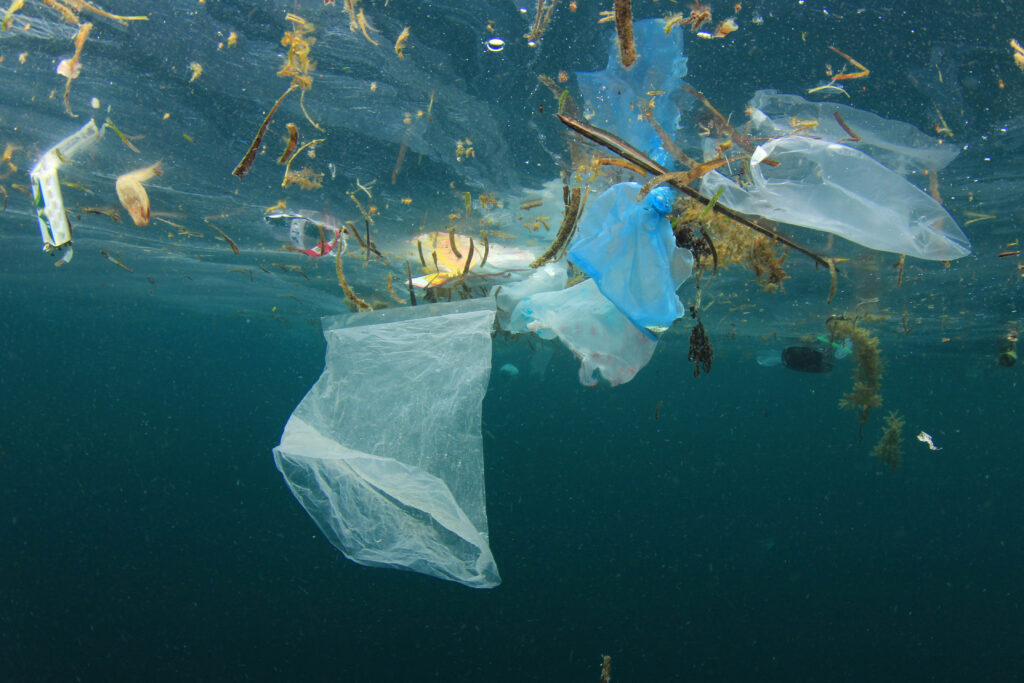

WWF-Australia has called on Australia and other nations to pursue every available pathway to secure a global treaty to end the plastic pollution crisis, on the eve of final negotiations in Geneva.
Representatives from more than 175 countries will meet for INC-5.2 from 5-14 August in a last effort to agree on legally-binding rules to reduce plastic production and consumption and ban the most polluting plastic products.
The treaty is a once-in-a-lifetime opportunity to create a global solution to this worsening crisis. Unless governments agree on an ambitious treaty, plastic pollution is likely to triple by 2040.
Previous attempts to finalise a treaty have ended in deadlock, with a small minority of countries refusing to accept the science and obstructing meaningful progress.
WWF-Australia’s Chief Regenerative Officer, Nicole Forrester urged Australia to play a leadership role at these final negotiations.
“Australia has an opportunity to lead with integrity and ambition to secure a treaty to end the plastic pollution crisis. If we’re serious about regenerating nature, we must shift to a circular economy where plastic stays in use and out of the environment. Cutting plastic pollution will protect ecosystems, empower communities and help build a future where people and nature thrive together,” said Ms Forrester.
WWF-Australia’s No Plastic in Nature Policy Manager, Malene Hand said Australia and other countries should pursue all diplomatic pathways to deliver a strong treaty, including voting on a new treaty text or forming a majority coalition of ambitious countries to adopt the treaty outside of the INC process.
“Australia and the ambitious majority must forge their own path to a strong, binding treaty. The majority of countries want to take action. This is their last chance to deliver a treaty that protects people and nature,” said Ms Hand.
“Otherwise they risk going home with a weak, toothless treaty that will only lock in harm for generations to come.”
Negotiations for a global plastic pollution treaty are well into over-time and every day that goes by, another 30,000 tonnes of plastic pours into our oceans.
Australia has serious skin in the game, as the second highest generator of single-use plastic per person in the world. An estimated 140,000 tonnes of plastic waste leaks into the Australian environment annually.
Failure to secure a strong treaty at INC-5.2 will only make the job of addressing this crisis more difficult, costly and dangerous for people all around the world.
WWF’s new report with the University of Birmingham, Plastics, Health, and One Planet, synthesises nearly 200 pieces of the latest peer-reviewed research on the potential risks that plastic pollution poses to human and environmental health.
The report shows that micro and nanoplastics, as well as plastic additives, are associated with endocrine disruption and hormone-related cancers (like breast and testicular cancer), reproductive and fertility impairments, and chronic respiratory conditions.
While research continues to evolve, current evidence justifies why the precautionary principle must be invoked to minimise future harm.
“The serious risks plastic poses to human health and the environment demand an urgent global response. We have all the evidence that governments need to take action. The longer we delay, the greater the costs,” said Ms Hand.
The negotiations in Geneva must conclude with a treaty built on specific binding rules supported by the majority of countries to be able to effectively tackle global plastic pollution.
This means a treaty which includes global bans on the most harmful plastic products and chemicals; global product design requirements to enable a non-toxic circular economy; financial and technical support for developing countries to ensure effective implementation and mechanisms to strengthen and adapt the treaty over time.
Contact details:
Paul Fahy, 0455 528 161, [email protected]