
SBC Medical Group Holdings Incorporated (Nasdaq: SBC) (“SBC Medical”), a global provider of comprehensive consulting and management services to the medical corporations and their clinics, today announced the launch of a new brand, “Hada no Aozora Clinic”, scheduled to open in Tokyo on October 1, 2025. This clinic will adopt a hybrid dermatology model that integrates insurance-covered general dermatology and private-pay aesthetic treatments, advancing SBC’s multi-brand strategy in the rapidly expanding aesthetic medicine market.
This press release features multimedia. View the full release here: https://www.businesswire.com/news/home/20250917897380/en/
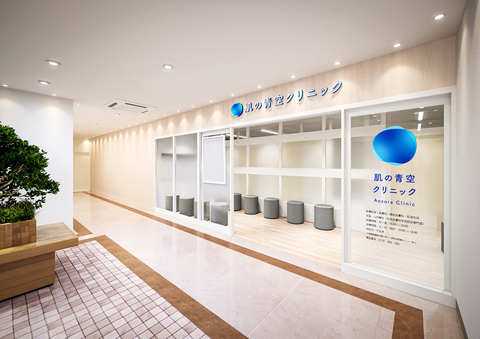
SBC Medical Accelerates Multi-Brand Strategy with Hybrid Dermatology Model “Hada no Aozora Clinic” Establishment
As life expectancy continues to rise and demographic aging accelerates, more people are seeking treatments that help them maintain both well-being and a youthful appearance over a longer lifespan. Within this environment, aesthetic dermatology is experiencing particularly strong growth, fueled by rising consumer interest in skin quality and preventive care.
According to the Japanese Society of Aesthetic Plastic Surgery, non-surgical procedures increased from approximately 1.62 million in 2017 to 3.06 million in 2024, with their share of total aesthetic treatments rising from 83% to 88% over the same period, demonstrating both rapid volume growth and a structural shift away from surgical interventions.
SBC is capturing this growth opportunity by accelerating the rollout of efficient, specialized dermatology models that meet rising demand for non-surgical care. “Hada no Aozora Clinic” combines insurance-based and private-pay services to address a full spectrum of dermatological needs, from general skin conditions to advanced aesthetic treatments, creating a welcoming environment for a wide range of patients, including those new to aesthetic medicine.
The clinic complements existing SBC brands such as NEO SKIN CLINIC and JUN CLINIC, enabling the Group to serve patient segments ranging from entry-level to expert users and to build a high-margin, multi-tier portfolio. SBC operates a network of more than 250 clinics worldwide and records over six million patient visits annually. Drawing on its long-standing experience in both private-pay and insurance-based care, the company leverages standardized operations and an established network to maintain a highly efficient, low-cost operating model.
“Demand for aesthetic dermatology has been expanding at a remarkable pace in recent years. Over the years, SBC has steadily built a robust framework to provide a broad range of services across both private-pay and insurance-covered care. Based on this proven track record, we established 'Hada no Aozora Clinic' to further advance our Group’s belief in making aesthetic medicine more accessible. This new brand represents an important step forward in SBC Medical Group’s growth strategy, enabling us to meet diverse skin concerns across all generations,” said Yoshiyuki Aikawa, CEO of SBC Medical Group Holdings.
About SBC Medical
SBC Medical, headquartered in Irvine, California and Tokyo, Japan, owns and provides management services and products to cosmetic treatment centers. The Company is primarily focused on providing comprehensive management services to franchisee clinics, including but not limited to advertising and marketing needs across various platforms (such as social media networks), staff management (such as recruitment and training), booking reservations for franchisee clinic customers, assistance with franchisee employee housing rentals and facility rentals, construction and design of franchisee clinics, medical equipment and medical consumables procurement (resale), the provision of cosmetic products to franchisee clinics for resale to clinic customers, licensing of the use of patent-pending and non-patented medical technologies, trademark and brand use, IT software solutions (including but not limited to remote medical consultations), management of the franchisee clinic’s customer rewards program (customer loyalty point program), and payment tools for the franchisee clinics.
For more information, visit https://sbc-holdings.com/en
Hada no Aozora Clinic: https://hadanoaozora.jp/ (Japanese site only)
Forward-Looking Statements
This press release contains forward-looking statements. Forward-looking statements are not historical facts or statements of current conditions, but instead represent only the Company’s beliefs regarding future events and performance, many of which, by their nature, are inherently uncertain and outside of the Company’s control. These forward-looking statements reflect the Company’s current views with respect to, among other things, the Company’s product launch plans and strategies; growth in revenue and earnings; and business prospects. In some cases, forward-looking statements can be identified by the use of words such as “may,” “should,” “expects,” “anticipates,” “contemplates,” “estimates,” “believes,” “plans,” “projected,” “predicts,” “potential,” “targets” or “hopes” or the negative of these or similar terms. The Company cautions readers not to place undue reliance upon any forward-looking statements, which are current only as of the date of this release and are subject to various risks, uncertainties, assumptions, or changes in circumstances that are difficult to predict or quantify. The forward-looking statements are based on management’s current expectations and are not guarantees of future performance. The Company does not undertake or accept any obligation to release publicly any updates or revisions to any forward-looking statements to reflect any change in its expectations or any change in events, conditions, or circumstances on which any such statement is based, except as required by law. Factors that may cause actual results to differ materially from current expectations may emerge from time to time, and it is not possible for the Company to predict all of them; such factors include, among other things, changes in global, regional, or local economic, business, competitive, market and regulatory conditions, and those listed under the heading “Risk Factors” and elsewhere in the Company’s filings with the U.S. Securities and Exchange Commission (the “SEC”), which are accessible on the SEC’s website at www.sec.gov.
View source version on businesswire.com: https://www.businesswire.com/news/home/20250917897380/en/
Contact details:
SBC Medical Group Holdings Incorporated (Asia)
Hikaru Fukui / Head of Investor Relations E-mail: [email protected]
Akiko Wakiyama / Head of Public Relations E-mail: [email protected]
ICR LLC (In the US)
Bill Zima / Managing Partner Email: [email protected]