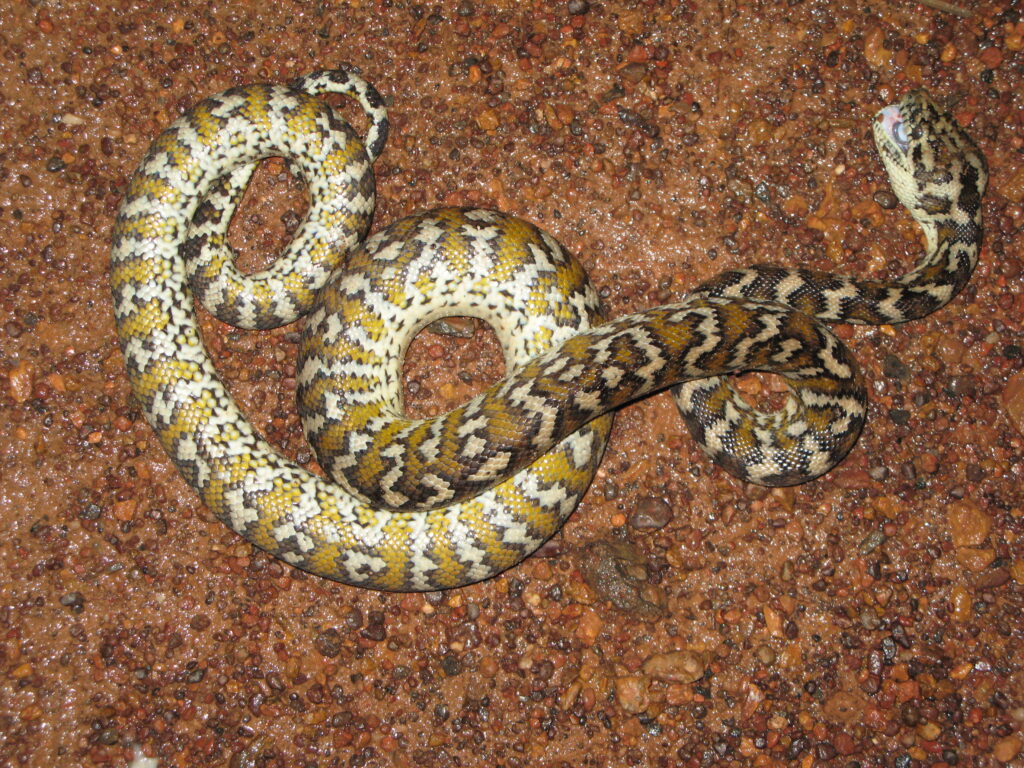
Hundreds of millions of animals are killed on our roads each year. Now, scientists have revealed how these deaths could play an unexpected role advancing wildlife science and conservation.
A major review of 300 peer-reviewed studies from 67 countries, published today in Biology Letters, found examples of roadkill being used for a surprisingly wide range of scientific and education purposes.
Study lead author from RMIT University’s School of Science, Dr Christa Beckmann, said adopting some of these uses more broadly made sense and could even reduce reliance on using live animals for some research.
“We found examples of successfully using roadkill to map species distributions, monitor disease and environmental pollution, study diets, track invasive species, supply museum collections, and even discover species previously unknown to science,” Beckmann said.
“In some cases, roadkill has helped locate populations thought to be extinct or provided teaching material for university classrooms.”
Beckmann added that using roadkill for research also offered ethical advantages.
“Because the animals are already dead, researchers can often avoid live capture and handling, aligning perfectly with global animal-ethics principles that encourage replacing invasive methods wherever possible,” she said.
“Obviously roadkill is not appropriate for all research and, if used, needs to be handled with appropriate health and safety precautions.”
Beckmann said despite this, the study should be a wake-up call for how we could better use this largely overlooked resource.
“While roadkill will always be tragic, using these losses wisely could help drive scientific discovery and conservation forward, rather than letting valuable information decompose by the roadside,” she said.
‘Roadkill reimagined: a review of innovative scientific use and value of animals killed by vehicular traffic’ is published in Royal Society Biology Letters (DOI: https://doi.org/10.1098/rsbl.2025.0471)
Contact details:
Dr Christa Beckmann is available for interview via RMIT media team on +61 439 704 077 or [email protected]