Toshiba Electronic Devices & Storage Corporation ("Toshiba") has launched "TCD2400DG," a lens-reduction type[1] CCD[2] linear image sensor developed expressly for line scan cameras[3] used in visual inspections. Shipments start today.
This press release features multimedia. View the full release here: https://www.businesswire.com/news/home/20251217615732/en/
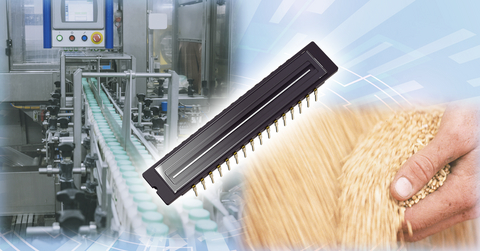
Toshiba: “TCD2400DG,” a lens-reduction type CCD linear image sensor developed expressly for line scan cameras used in visual inspections.
Image inspection equipment that integrates line scan cameras, including color sorters, is used in diverse applications, among them sorting and grading foodstuffs, recognizing and removing foreign objects, identifying types of recycled plastics, and detecting scratches or stains on industrial products.
TCD2400DG is a color CCD linear image sensor with 4096 picture elements in a three-line array, with a 7μm pitch between elements. Each line functions independently to recognize red, green and blue (RGB). The line rate, the number of lines captured per second, 22.7kHz, is faster than that of the 10.5kHz TCD2564DG, Toshiba’s current product for image inspection equipment.
Image inspection equipment rapidly processes massive volumes of image data to precisely and accurately identify objects passing in front of the equipment at high speed. By approximately doubling the readout speed of TCD2564DG, TCD2400DG will contribute to equipment with improved processing speeds.
The sensor acquires high-resolution color images, with no need for the color interpolation processing[4] required by Bayer element arrays. This performance makes it highly suited to color line scan camera applications that require immediate judgment.
The sensor incorporates other improvements. The timing generator circuit[5] and CCD driver[6], both externally mounted in Toshiba’s current products, are integrated into the sensor, which reduces the number of signal lines required to drive the CCD and renders an external CCD driver unnecessary. It also eliminates the need for strict timing adjustment between signals, simplifying wiring work and streamlining system development process. The reduction of external wiring helps suppress electromagnetic interference that occurs during high-speed operation.
Toshiba will continue to expand its product lineup and promote advances in imaging and sensing technology that supports applications such as scanners for multifunction devices and inspection equipment.
Notes: | |
[1] | The method of reducing an image with optical lenses and projecting onto a CCD or CMOS image sensor. |
[2] | Charge Coupled Device |
[3] | A camera that generates an image by scanning the subject one line at a time. Unlike an existing area camera that captures an entire “surface” at once, a line scan camera continuously captures “lines” and constructs a complete image as the subject moves. |
[4] | A mechanism in which R, G, and B filters are arranged in a checkerboard pattern. Missing color information in each element of the array is supplemented from its surrounding elements to generate a color image. |
[5] | A circuit for generating signals necessary to drive a linear image sensor. |
[6] | A circuit for amplifying the drive signals of a linear image sensor. |
* See this release plus images on Toshiba's website.
Toshiba Releases Lens-Reduction Type CCD Linear Image Sensor for High-Speed Data Readouts by Image Inspection Equipment
Applications
-
Color sorter
- Food sorting machines for grains and other agricultural products
- Industrial product sorting machines for plastic pellets and similar materials
-
Inspection equipment
- Web inspection (for sheet materials such as rolls, paper, cloth, and film)
- Printed material inspection
Features
- High-speed line rate: 22.7kHz (max)
- Number of image sensing elements: 4096 elements (three independent lines for RGB), widely adopted for inspection equipment.
- The element array consists of three independent element lines (4096 elements×3 lines), one each for RGB, enabling acquisition of high-resolution images without the delay caused by color interpolation processing.
- The built-in timing generator circuit and CCD driver help facilitate system development and reduce EMI.
Main Specifications
Part number | ||
Power supply voltage
| VAVDD, VDVDD, VCKDVDD : 3.1 to 3.5 VVDD10 : 9.5 to 10.5 | |
Image sensing element size
| 7×7 (7μm pitch) | |
Number of image sensing
| 4096 elements×3 lines (RGB per line) | |
Data rate | Max | 100MHz (50MHz×2ch) |
Line rate | Max | 22.7kHz |
Package | WDIP32 | |
Others/Additional features | Timing generator circuit, CCD driver | |
Follow the link below for more on the new product.
TCD2400DG
Follow the link below for more on Toshiba‘s linear image sensors.
Linear Image Sensors
* Company names, product names, and service names may be trademarks of their respective companies.
* Information in this document, including product prices and specifications, content of services and contact information, is current on the date of the announcement but is subject to change without prior notice.
About Toshiba Electronic Devices & Storage Corporation
Toshiba Electronic Devices & Storage Corporation, a leading supplier of advanced semiconductor and storage solutions, draws on over half a century of experience and innovation to offer customers and business partners outstanding discrete semiconductors, system LSIs and HDD products.
Its 17,000 employees around the world share a determination to maximize product value, and to promote close collaboration with customers in the co-creation of value and new markets. The company looks forward to building and to contributing to a better future for people everywhere.
Find out more at https://toshiba.semicon-storage.com/ap-en/top.html
View source version on businesswire.com: https://www.businesswire.com/news/home/20251217615732/en/
Contact details:
Customer Inquiries:
Analog Device Sales & Marketing Dept.
Tel: +81-44-548-2219
Contact Us
Media Inquiries:
C. Nagasawa
Communications & Market Intelligence Dept.
Toshiba Electronic Devices & Storage Corporation
[email protected]