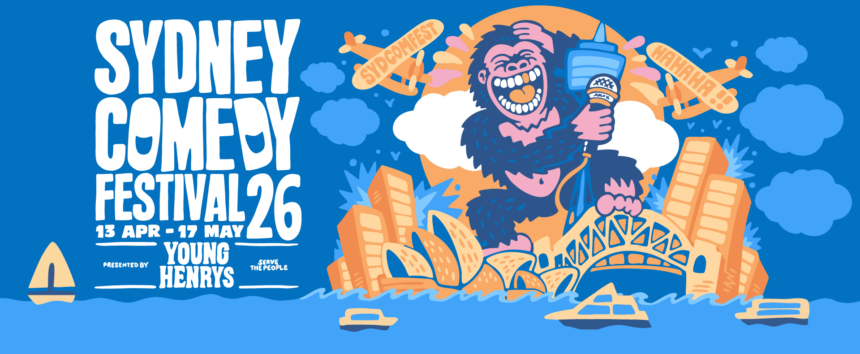
- Tiffany Haddish and Richard Gadd will perform exclusive Australian shows at the 2026 Sydney Comedy Festival in April and May
- Haddish will perform stand-up at the State Theatre (25th April) and Enmore Theatre (26th April)
- Gadd will appear in a one-night-only conversation event at Sydney Opera House (11th May), including discussion of his new TV show 'Half Man'
- Both performers are acclaimed artists - Haddish is an Emmy and Grammy winner, while Gadd created Netflix's hit show 'Baby Reindeer'
- Presale tickets available from 26th February, with general release from 4th March 2026
24th February 2026: In a 2026 Sydney Comedy Festival exclusive, two icons of the international comedy scene, Emmy and Grammy-award-winning comedic actress, Tiffany Haddish and star, show creator and writer of Netflix’s global phenomenon Baby Reindeer Richard Gadd make their highly-anticipated Australian return in three special events this April and May.
This is your only chance to see both comedy legends live in Australia as Haddish brings her fearless and ferociously funny stand-up to the State Theatre on Saturday 25th April and the Enmore Theatre on the public holiday eve Sunday, 26th April, and Gadd joins us for a live, onstage conversation exploring his razor-sharp dark humour blended with deeply personal storytelling. Richard Gadd’s In Conversation is a special one-night-only event at The Sydney Opera House on Monday, 11th of May. Gadd will also share some insights into his new TV show, called Half Man, which will be streaming on Stan.
Haddish is a multifaceted artist, actor, and comedian who has established herself as one of the most sought-after comedic actresses and performers worldwide. Best known for her breakout role as the scene-stealing “Dina” in the smash hit comedy Girls Trip, her performance was included in The New Yorker's list of the best film performances of the 21st century. She will soon reprise her role in the highly anticipated sequel Girls Trip 2, opposite Jada Pinkett Smith, Queen Latifah and Regina Hall. She is a New York Times bestselling author of the memoir, The Last Black Unicorn, Grammy Award winner for Best Comedy Album for her Netflix special Black Mitzvah, and has also made history by becoming the first black female stand-up comedian to host Saturday Night Live, which won her the Primetime Emmy Award for Outstanding Guest Actress in a Comedy Series.
Gadd is the creator and star of the #1 streamed show on Netflix Baby Reindeer, which received over 52.8 million hours of streaming within the first two weeks. Winner of an Olivier Award for Outstanding Achievement in Affiliate Theatre for his one-man show that inspired the Netflix hit, Gadd can also be seen in Hulu’s Wedding Season, Peacock’s Code 404, Starz’s Outlander and has writing credits for Netflix’s Sex Education and the BBC’s Jon Richardson: Ultimate Worrier.
Sydney Comedy Festival General Manager, James Declase said, “After last year’s exclusive Australian show for Scottish powerhouse, Daniel Sloss, as part of the Sydney Comedy Festival, in 2026 we are thrilled to be bringing out not one, but two of the biggest names in comedy for their only Australian shows. Don’t miss out on what promises to be two of the biggest events on this year’s calendar.”
Presale opens on Thursday 26th February via www.sydneycomedyfest.com.au, with general release tickets on sale on Tuesday 4th March. Tickets will be limited. Demand will be massive.
Don’t miss two of the world’s greatest comedians in a one-off, Sydney comedy festival special.
The Sydney Comedy Festival is proudly supported by the NSW Government through its tourism and major events agency, Destination NSW.
| Tiffany Haddish | State Theatre | Saturday 25th April |
| Tiffany Haddish | Enmore Theatre | Saturday 26th April |
| Richard Gadd | Sydney Opera House | Monday 11th May |
ENDS
About us:
Contact details:
Jessica Kenway - 0413 809 244 - [email protected]
Marygrady Lardizabal - 0479 081 960 - [email protected]