-
Florey scientists have uncovered elevated intracranial pressure as a previously unrecognised cause of brain dysfunction in sepsis.
-
The researchers used a Florey-patented drug to rapidly restore brain pressure in preclinical sepsis.
-
The promising treatment - already being tested in an Australia-wide sepsis clinical trial - could also help patients with traumatic brain injury following the latest findings.
Media Release
Media Release
14 July 2026
Saving lives in ICU: new hope for sepsis and traumatic brain injury patients
Key points
-
Florey scientists have uncovered elevated intracranial pressure as a previously unrecognised cause of brain dysfunction in sepsis.
-
The researchers used a Florey-patented drug to rapidly restore brain pressure in preclinical sepsis.
-
The promising treatment - already being tested in an Australia-wide sepsis clinical trial - could also help patients with traumatic brain injury following the latest findings.
Researchers from The Florey Institute of Neuroscience and Mental Health have made two major scientific discoveries that could significantly transform how sepsis-related brain dysfunction is detected and treated.
The Florey scientists have confirmed a link between sepsis-related brain dysfunction and elevations in intracranial pressure. In sepsis, widespread inflammation can make the brain swell and disrupt normal blood flow, causing pressure inside the skull to rise.
In a further advance, the team have demonstrated that a megadose of sodium ascorbate administered through the bloodstream shows promise as a treatment for brain dysfunction in sepsis.
The findings from their research in a large animal model of sepsis have been published in the journal Scientific Reports.
Sepsis and the brain
A medical emergency triggered by an abnormal immune response to infection, sepsis is the leading cause of death in intensive care units. It claims about 11 million lives each year.
Up to 70 per cent of sepsis patients will experience brain dysfunction, including delirium or sudden confusion and disorientation, and those who survive can have ongoing cognitive issues.
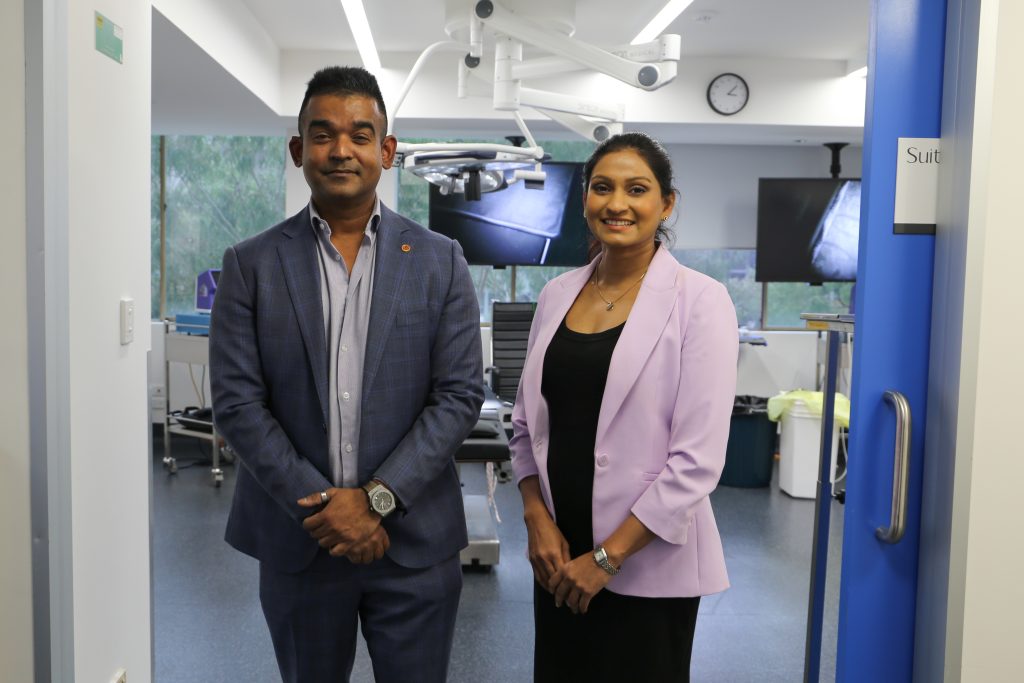
Lead researcher and Florey PhD student, Maya Bishop, said uncovering a link between sepsis and elevated intracranial pressure was a surprising, but significant discovery.
“Our team is the first to measure pressure directly in the brain during sepsis and what we have found is evidence of clinically significant elevations in intracranial pressure,” Miss Bishop said.
“We found elevated intracranial pressure reduces blood perfusion pressure to the brain and that could potentially be contributing to the delirium, acute brain dysfunction and the long-term cognitive impairment experienced by many sepsis survivors.”
Treating the problem
Miss Bishop’s supervisor and The Florey’s Head of Stroke and Critical Care Research Priority Area, Professor Yugeesh Lankadeva, co-developed and patented the megadose sodium ascorbate used as a treatment in the study.
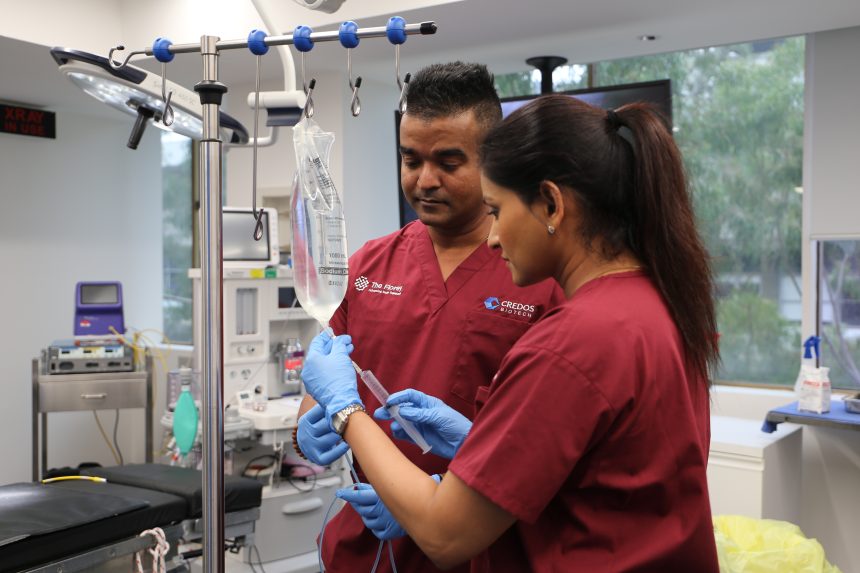
“By delivering megadose of sodium ascorbate intravenously to our sepsis animal models, we were able to rapidly normalise intracranial pressure, restore blood and oxygen delivery to the brain, improve blood pressure and responsiveness to life-saving medicines used to treat low blood pressure,” Professor Lankadeva said.
“The megadose sodium ascorbate formulation is already being tested at the Royal Adelaide Hospital and 13 other hospitals across six Australian states and territories as a potential treatment to reverse sepsis-induced multi-organ injury in critically ill patients.
“Excitingly, what our new study has uncovered may extend beyond sepsis. Increased intracranial pressure is often seen in patients with traumatic brain injury, often sustained in motor vehicle accidents or through violent head trauma.”
As a result of their findings, the megadose sodium ascorbate will be tested on traumatic brain injury patients at Royal Adelaide Hospital by Associate Professor Mark Plummer, who co-supervised Miss Bishop’s research with Professor Lankadeva.
“Current treatments for elevated intracranial pressure have limitations and side effects, whereas sodium ascorbate may offer a unique approach by reducing brain swelling while improving cardiovascular function and vital organ perfusion,” Associate Professor Plummer said.
Professor Lankadeva is Founder and Chief Executive Officer and Associate Professor Plummer is Chief Medical Officer of the Florey spinout company, PanAscea which was established with the aim of advancing megadose sodium ascorbate to transform sepsis management in Australia and worldwide.
Florey’s support of PhD students
Miss Bishop said as a PhD student she felt lucky to be part of world-leading research.
“I’m so proud and excited to be part of this project. It’s a privilege to be at The Florey.
“Students like me are given access to an incredible platform that allows us to work alongside world-leading experts and to use advanced techniques to conduct high-priority brain-related research.”
Professor Lankadeva said he was proud to support Miss Bishop’s work.
“As a supervisor it gives me great pride to see the next generation of researchers be so passionate, hardworking and dedicated.
“This was not an easy project. It took a lot of hours, effort and teamwork. Miss Bishop has worked hard to complete a complex set of experiments to yield these results and she’s never given up.
“Her work is a great example of a compelling combination of scientific discovery, clinical translation and commercial impact. Importantly, it has the potential to save lives globally.”
-ends-
About us:
The Florey is an independent medical research institute devoted to tackling brain and mental health conditions. Our mission is to improve lives through research. We envisage a world where early detection and timely intervention mean these conditions are preventable or treatable, so that we can all live full and healthy lives.
We have more than 50 teams investigating our research priorities: Dementia, Neurodegeneration and Immunology, Stroke and Critical Care, Epilepsy and Neurodevelopment, and Mental Health.
Find out more about us on our website: www.florey.edu.au
Contact details:
Anastasia Salamastrakis, Media and Communications Manager
[email protected] | 0456 666 271