Australian organisations face a new challenge in managing psychosocial risk after the Federal Government confirmed it will retire the country's most widely used workplace psychosocial assessment platform, just months after strengthened workplace health and safety obligations took effect.
Since 1 July, Australian organisations have been expected to demonstrate how they identify, assess, control and review psychosocial hazards under strengthened workplace health and safety requirements. The People at Work survey – the free, government-backed assessment platform used by around 5,000 organisations and more than 160,000 workers since 2020 – will permanently close on 2 October.
Developed jointly by Safe Work Australia and state and territory regulators, the platform played an important role in bringing psychosocial risk into the mainstream of Australian workplaces. Its retirement, however, leaves organisations facing a higher legal bar while losing one of the most widely used tools for understanding psychosocial hazards.
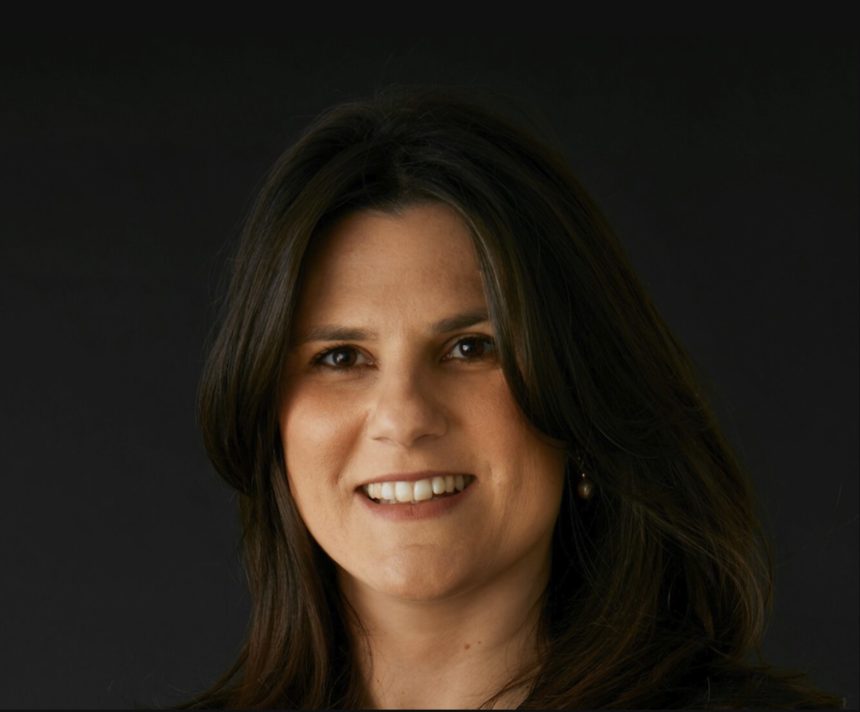
One of Australia's leading researchers in organisational culture and psychosocial risk, Dr Anna Kiaos, said many organisations are still working through what the strengthened workplace health and safety framework means in practice.
“Since these changes came into effect, the conversations I'm having with boards and executives have changed noticeably,” Dr Kiaos said. “Organisations aren't asking whether psychosocial risk matters anymore. They're asking how they demonstrate they're managing it, what evidence regulators expect to see and whether the systems they've relied on until now are still sufficient.”
Regulators have made clear that psychosocial risk management is no longer a point-in-time survey exercise. Organisations are expected to identify, assess, control and review psychosocial hazards on an ongoing basis, while maintaining evidence of the actions they have taken.
Affiliated with the University of New South Wales' Discipline of Psychiatry and Mental Health, Dr Kiaos researches how organisational culture affects psychological health. Her advice to organisations across nearly every sector, including government, financial services, health, professional services and hospitality, is grounded in her own peer-reviewed field research into organisational culture and psychosocial risk.
Her latest peer-reviewed study, published this year in the Journal of Organizational Ethnography, examined organisational culture inside Service NSW over eight months through 74 interviews across six organisational levels. It found organisations can be genuinely well-intentioned yet still misread psychosocial hazards, responding to exhaustion, increasing errors and declining morale with engagement and culture initiatives rather than addressing excessive workload and working conditions.
“What the research showed is that organisations can be genuinely well-intentioned and still misread the signal in front of them,” Dr Kiaos said. “Exhaustion gets treated as a motivation problem rather than a workload problem, and the response becomes more culture initiatives rather than reducing the organisational cultural pressure creating the psychological risk. That isn't bad faith – it's what happens when there isn't a structured way of identifying psychosocial hazards.”
It was this gap between measuring employee sentiment and understanding psychosocial risk that led Dr Kiaos to develop the Culture Pressure Map™, an organisational diagnostic informed by her research.
Unlike traditional organisation-wide surveys, the diagnostic examines shared culture, subcultures and microcultures to identify where psychosocial pressure is accumulating, helping leaders prioritise action and create documented evidence to support governance and regulatory compliance.
"One of the consistent findings in my research is that cultural pressure doesn't sit evenly across an organisation," Dr Kiaos said. "It accumulates in particular teams, under particular leaders and in the gap between what an organisation says it values and what it actually rewards. An organisation-wide score won't necessarily reveal that."
“The retirement of the People at Work survey marks the end of one chapter in how organisations think about psychosocial risk,” Dr Kiaos said. “The next chapter is about demonstrating action. This is increasingly becoming a boardroom conversation rather than simply an HR conversation, as organisations treat psychosocial risk as part of enterprise risk management.”
“Boards and executives are expected to understand where psychosocial risk exists, what is being done to manage it and how they would demonstrate that to a regulator if they were asked. Organisations that can identify hazards, act on them and evidence those decisions will be in a much stronger position than those relying on a survey alone. That's becoming part of good governance, not just good workplace culture.”
Organisations can find out more at www.culturepressuremap.com.
ENDS
Distributed by Lanham Media on behalf of Mind Culture Life Australia
Media contacts:
Greg Townley | [email protected] | 0414 195 908
Fleur Townley | [email protected] | 0405 278 758
Media Assets available here
Dr Anna Kiaos is an organisational culture researcher, consultant and Founder and Director of Mind Culture Life Australia. She holds a PhD in Management and qualifications in psychology and is affiliated with UNSW Sydney's Discipline of Psychiatry and Mental Health.
Dr Kiaos advises boards, risk and assurance functions, and people-and-culture leaders across nearly every sector, including government, financial services, health, professional services and hospitality. Her advice is grounded in peer-reviewed field research into organisational culture, psychosocial risk and mental health, including published studies on workplace burnout in the NSW public sector. She is a regular speaker on organisational culture, psychosocial safety and Australia's evolving workplace health and safety landscape.
Media availability
Dr Kiaos is available to media for background and comment on the section 26A changes, what the Managing Psychosocial Hazards at Work Code of Practice requires of employers, the retirement of the People at Work survey, and her published research on organisational culture and psychological health. She is also available to provide independent expert commentary on Australia's changing psychosocial risk landscape.
About Mind Culture Life Australia
Mind Culture Life Australia is a Sydney-based organisational culture and psychosocial risk consultancy. It developed the Culture Pressure Map™, a three-level psychosocial risk diagnostic aligned to regulator-listed psychosocial hazards, and works with organisations across sectors on psychosocial hazards, organisational culture and workplace mental health.
Note to editors
The Managing Psychosocial Hazards at Work Code of Practice became an enforceable benchmark in NSW on 1 July 2026 under section 26A of the Work Health and Safety Act 2011 (NSW), which requires a business to comply with an approved code or demonstrate a standard of health and safety that is equivalent to or higher than the code. The underlying duty to manage psychosocial risk applies nationally.
The People at Work survey platform closes on 2 October 2026 (final date to access the platform and extract reports; new registrations closed on 1 June 2026 and new surveys closed on 1 July 2026).