Media release 23 September 2026
Embargoed until: 25 September 2026
- On the UN-supported World Contraception Day, coming up on September 26, a new report from Sustainable Population Australia (SPA) details how global family planning programs have been deprioritised and had funding slashed, even as global population continues to increase.
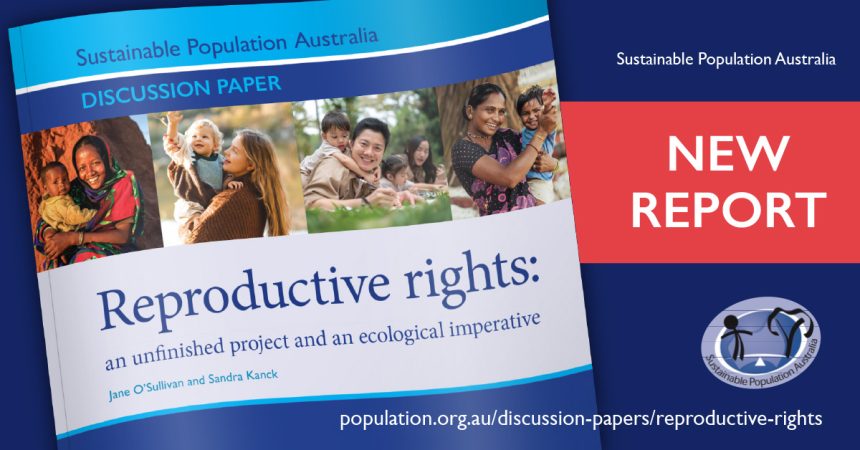
- The new report, Reproductive rights: an unfinished project and an ecological imperative, argues that without a renewed commitment to support family planning, world population will likely exceed the UN’s projection of 10.2 billion for later this century. This will put more pressure on food security, climate change mitigation and ecological sustainability.
- UN data shows that the number of women who have unmet need for modern contraception has increased from 236 million in the year 2000 to 260 million in 2025.
- The evidence shows that well-funded family planning programs are highly effective for achieving development outcomes in low-income countries.
- Australia has been steadily reducing its foreign aid, including the amount allocated to family planning programs. The SPA report calls for the Australian Federal Government to re-commit to generous funding for international family planning programs.
Authors of the report Reproductive rights: an unfinished project and an ecological imperative are available for further comment. Please contact [email protected] for any assistance in contacting authors.
Dr Jane O’Sullivan – lead author
Phone: 0427 420 743 Email: [email protected]
A recent video of Dr O’Sullivan may be seen HERE

Quotes attributable to Dr O’Sullivan:
“Roughly half of pregnancies are unintended, and more than half of unwanted pregnancies end in abortion.”
“The proportion of married women of child-bearing age who use some form of modern contraception is about 55% globally, but in low-income countries it can fall below 10%. The number of women with unmet needs for contraception is increasing.”
“Since the 1990s, international aid for family planning programs in low-income countries has diminished. This is despite evidence showing that making contraception available and promoting smaller families are powerful tools for reducing poverty and enabling economic development.”
“While the United Nations projects world population to peak later this century at around 10.2 billion (from the current 8.3 billion), this depends on all the remaining high-fertility countries experiencing a much more rapid fall in fertility than they have achieved so far.”
“The common claim, that a ‘birth dearth’ is about to precipitate population collapse, is ill-founded, ignoring the increasingly dominant influence of the rapidly growing, low-income countries. Most children born this century will be born in these countries.”
Ms Sandra Kanck – author
Phone: 0417 882 143 Email: [email protected]
Available for contact from 7.30am CST
A video of Ms Kanck may be seen HERE.
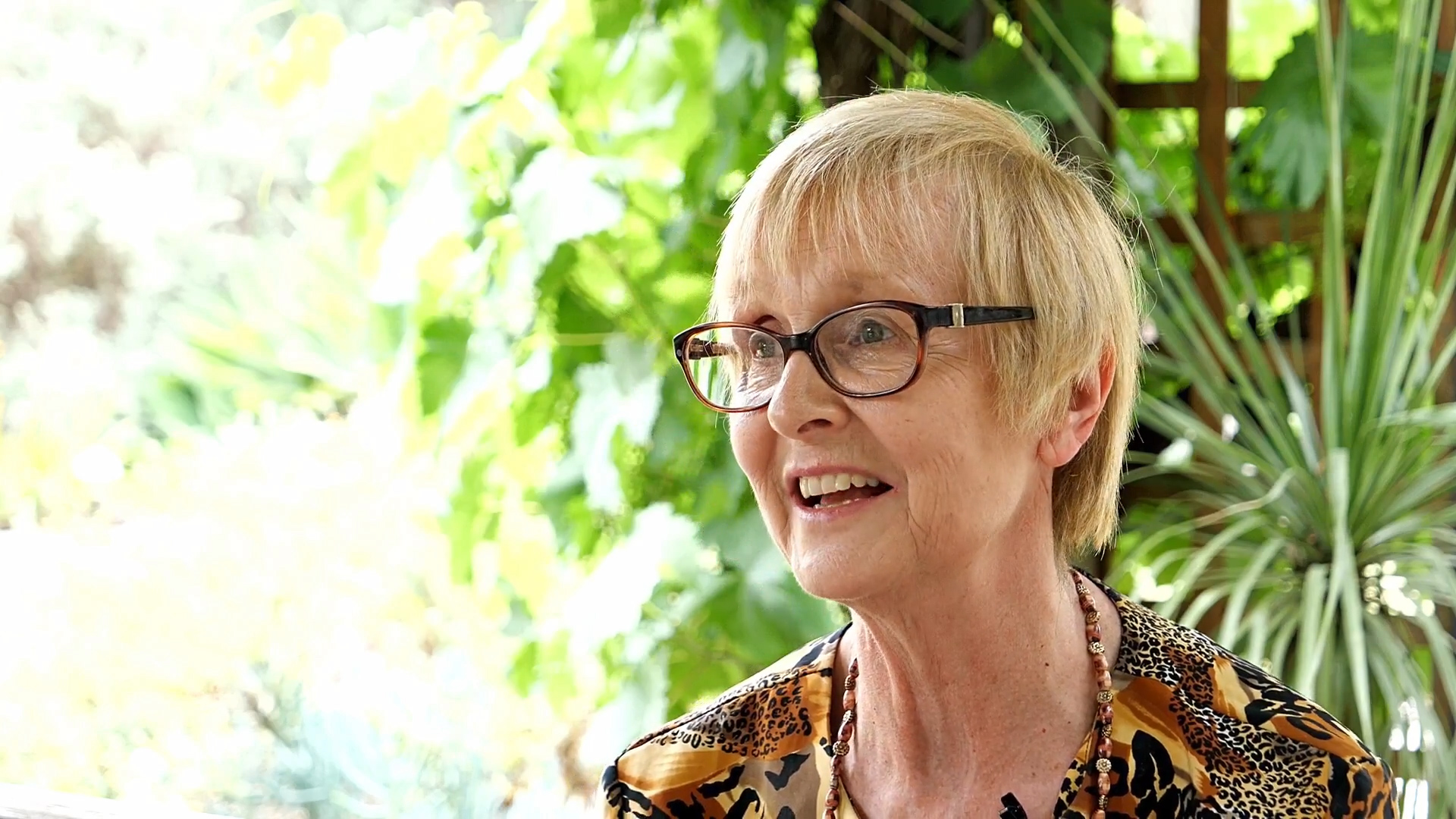
Quotes attributable to Ms Kanck:
“Those who say the best way to address population growth is greater education of girls, are not correct. While a very good thing in its own right, girls’ education is not as effective in reducing population growth as well-funded family planning programs.”
“In sub-Saharan Africa, where family planning efforts have been slow to emerge and relatively weak, contraceptive use is more influenced by family planning programs than by girls’ education.”
“The defunding of USAID during the Trump administration has further impacted high fertility countries, particularly in Africa. This, in addition to escalating global conflicts, disrupts health services and exposes women to greater risks of sexual violence.”
“This situation demands much greater generosity from other rich countries like Australia. Our aid budget is lower now than it was 20 years ago.”
The new report may be downloaded in full from the SPA website HERE.
Contact details:
Jane O'Sullivan: 0427 420 743
Sandra Kanck: 0417 882 143
Michael Bayliss: 0423 701 611