-
A research team led by Florey and Monash University has developed a 3D cell model that mimics myelin damage and repair in the human central nervous system in unprecedented detail.
-
Myelin is mistakenly attacked by the body’s immune system in multiple sclerosis (MS), leading to nerve damage.
-
The ‘mini brain’ cell model will help researchers better understand MS and test new treatments in near real time.
Embargo: Not to be published before 7pm AEST 1 October 2026
MS ‘mini brains’ offer new hope
Key points
-
A research team led by Florey and Monash University has developed a 3D cell model that mimics myelin damage and repair in the human central nervous system in unprecedented detail.
-
Myelin is mistakenly attacked by the body’s immune system in multiple sclerosis (MS), leading to nerve damage.
-
The ‘mini brain’ cell model will help researchers better understand MS and test new treatments in near real time.
Researchers have developed 3D ‘mini brains’ they hope will help speed up the search for much-needed drug treatments for multiple sclerosis (MS), an autoimmune condition affecting almost three million people worldwide.
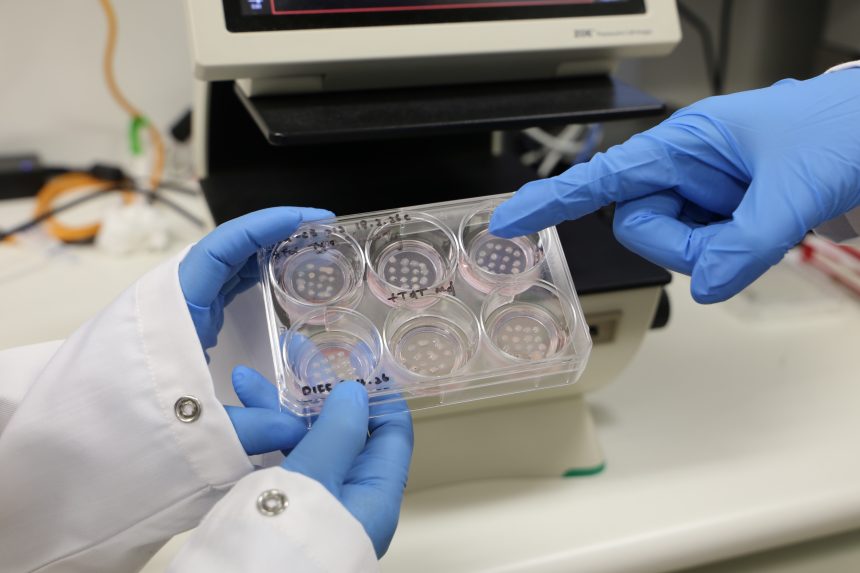
Led by The Florey Institute of Neuroscience and Mental Health and Monash University, scientists from Australia and New Zealand have used reprogrammed adult stem cells to engineer the human-like central nervous system cell model, which is the size of a grain of rice.
One of only a handful of MS organoids created globally, the ‘mini brains’ give researchers a highly detailed cellular view of myelin destruction (demyelination) and regeneration (remyelination) in human cells.
Myelin is a fatty sheath that covers and protects nerve fibres and allows messages, via electrical impulses, to travel quickly around the brain, spinal cord and the rest of the body. In MS, the immune system mistakenly attacks myelin, causing nerve damage, neurological symptoms and, over time, disability.
There are currently no therapies available that repair this damage. Existing MS medications are only able to treat symptoms and slow progression.
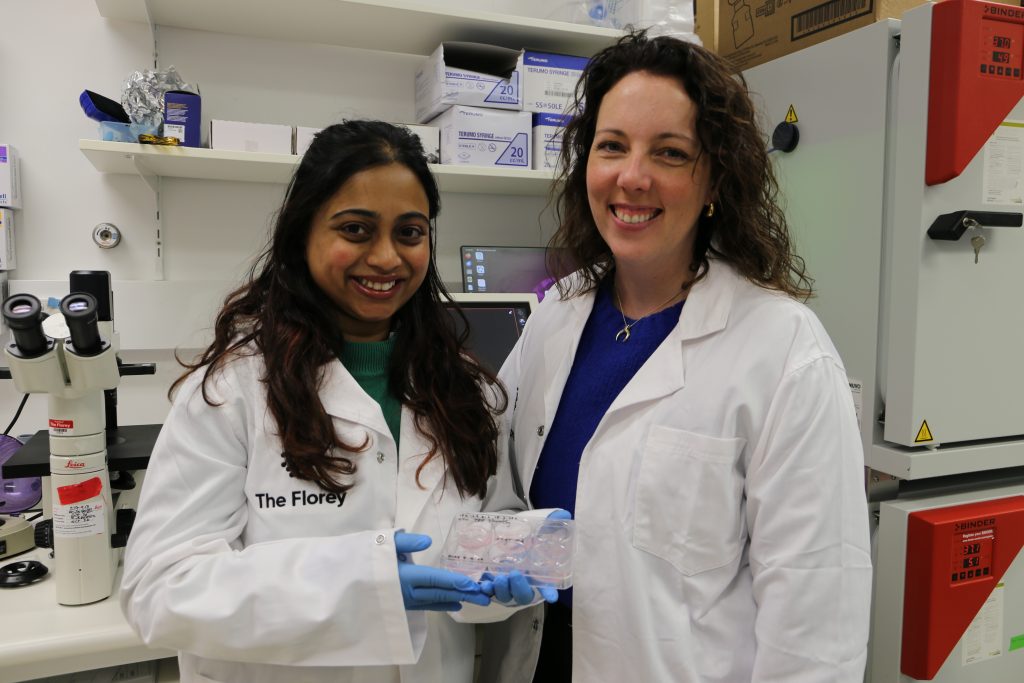
Associate Professor Samantha Barton, who heads the Myelin in Health and Disease Group at The Florey, said the cell model took more than six years to engineer and is a significant step forward in MS research.
“In science, we typically use rodents to model diseases for research, but drugs identified to work in these models of disease are rarely effective in people, so creating more human-relevant model systems is important,” Associate Professor Barton said.
“The relevance of our new system is significant. In addition to generating myelin, we have been able to introduce immune cells to trigger injury similar to MS. This gives us the unique opportunity to study the regenerative process of remyelination in the laboratory.
“This model can help researchers better understand what drives myelin damage and repair in MS and it also gives us a new platform to screen drugs that protect or restore myelin.
“The dream is to find new ways to slow or prevent MS progression - we hope our models could help us do that.”
The project involved experts from The Florey, University of Melbourne, University of Auckland, Monash University, WEHI and University of Canberra.
Their research has been published in the journal Nature Neuroscience.
First author and post-doctoral fellow at The Florey, Dr Shwathy Ramesan, said the cell model was a gamechanger because it will allow researchers to see drugs working in near-real time on human cells.
“We are extremely happy with our findings and believe we are closer than ever to creating the best possible platform for MS drug development with the aim of reversing the disease and giving quality health back to people living with MS,” Dr Ramesan said.
“After years of developing and refining this model, it’s exciting to see it provide a window into human myelin biology that wasn’t previously available. We hope it becomes a valuable tool not only for our team but for researchers studying MS around the world.”
Co-senior author Associate Professor David Gonsalvez from Monash University said this new technology enables researchers to explore potential therapeutics that may directly improve endogenous repair processes by human cells, leading to better treatments for diseases like MS.
“We are excited at the prospect of using our new system to identify therapeutics that can actually boost the limited ability we humans all possess to repair our electrical insulation in the central nervous system,” Associate Professor Gonsalvez said.
The project was supported by the CASS Foundation, the Rebecca L. Cooper Medical Research Foundation and a National Health and Medical Research Council Ideas grant.
-ends-
Notes to editor:
The Florey is an independent medical research institute devoted to tackling brain and mental health conditions. Our mission is to improve lives through research. We envisage a world where early detection and timely intervention mean these conditions are preventable or treatable, so that we can all live full and healthy lives.
We have teams investigating our research priorities: Dementia, Neurodegeneration and Immunology, Stroke and Critical Care, Epilepsy and Neurodevelopment, and Mental Health.
Find out more about us on our website: www.florey.edu.au
Monash University
Monash University is Australia’s largest university with more than 80,000 students. In almost 70 years since its foundation, it has developed a reputation for world-leading research, quality teaching, inspiring innovation and translating game-changing research into impactful commercial and meaningful outcomes. With four campuses in Australia and a global campus network covering Malaysia, China, India, Indonesia, and Italy, and the Boston Hub anchoring a footprint in the world’s leading biomedical cluster, Monash is Australia's most international university.
Media contact:
Anastasia Salamastrakis, Media and Communications Manager
[email protected] | 0456 666 271
About us:
The Florey
The Florey is an independent medical research institute devoted to tackling brain and mental health conditions. Our mission is to improve lives through research. We envisage a world where early detection and timely intervention mean these conditions are preventable or treatable, so that we can all live full and healthy lives.
We have teams investigating our research priorities: Dementia, Neurodegeneration and Immunology, Stroke and Critical Care, Epilepsy and Neurodevelopment, and Mental Health.
Find out more about us on our website: www.florey.edu.au
Monash University
Monash University is Australia’s largest university with more than 80,000 students. In almost 70 years since its foundation, it has developed a reputation for world-leading research, quality teaching, inspiring innovation and translating game-changing research into impactful commercial and meaningful outcomes. With four campuses in Australia and a global campus network covering Malaysia, China, India, Indonesia, and Italy, and the Boston Hub anchoring a footprint in the world’s leading biomedical cluster, Monash is Australia's most international university.
Contact details:
Media contact:
Anastasia Salamastrakis, Media and Communications Manager
[email protected] | 0456 666 271