In 1913, at a chemical works in Oppau, Germany, engineers switched on the first industrial plant to pull nitrogen from the air and turn it into ammonia. Carl Bosch and his team at BASF opened the first industrial plant, turning Haber's lab method into the Haber-Bosch process. The process made fertiliser cheap and is widely credited with helping feed around half the world's population.
More than a century on, the same molecule is being cast in a new role.
Ammonia is one nitrogen atom bound to three of hydrogen, and that hydrogen is the point. Hydrogen burns clean but is hard to move: it must be chilled to about minus 253°C to become liquid. Ammonia liquefies at around minus 33°C, and ports and ships worldwide already handle it. Think of it as a shipping container for hydrogen, or a fuel to burn directly in power stations and ship engines.
The catch is how it's made. Most ammonia today is "grey", made from natural gas with the carbon dioxide released. "Blue" ammonia uses the same process but captures that CO2 and stores it underground. "Green" ammonia uses renewable electricity to split water for its hydrogen.
Two forces are reshaping the ammonia market.
The first is decarbonisation. Europe's carbon border tax, Japan's plans to co-fire ammonia in coal plants and the International Maritime Organization's push to clean up shipping are all lifting demand. Commodity analyst Argus forecasts about 11 million tonnes a year of extra clean ammonia demand by 2031, with Northeast Asia making up 44 per cent.
The second is security. "The drivers of the Ammonia market today are Decarbonisation and Security of Supply," NH3 Clean Energy chairman Charles Whitfield told shareholders at the company's annual general meeting today. After conflicts in Ukraine and the Middle East, he said, "there is no 'going back to normal'; there is a new normal which is regionalised".
Western Australia has gas, room for heavy industry, deep-water ports and decades of experience shipping energy to North Asia. That suits buyers now seeking suppliers that are close, stable and trusted.
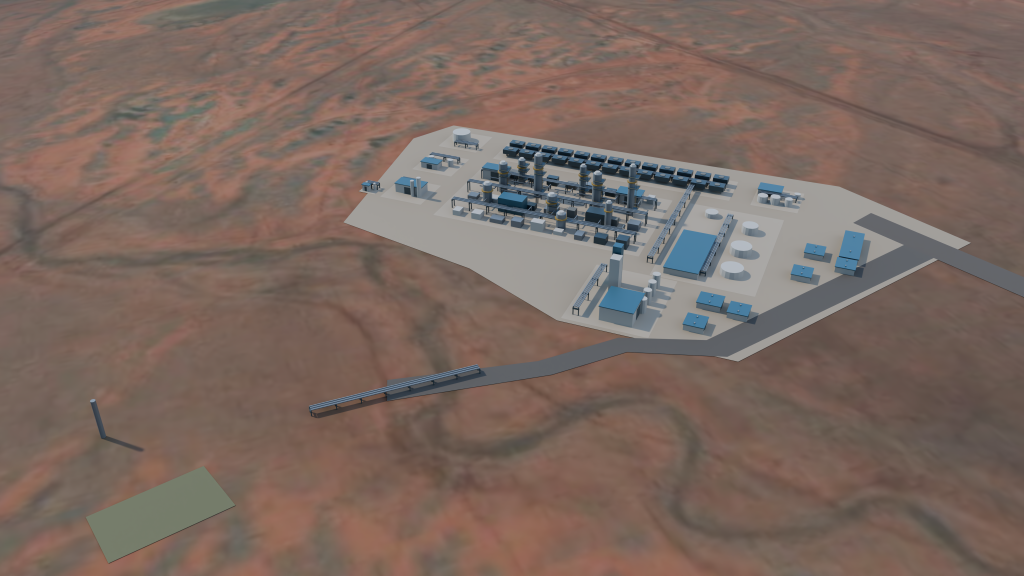
That is the thinking behind NH3 Clean Energy's WAH2 project in the Maitland Strategic Industrial Area, near Dampier. The company, which describes itself as one of the few independent blue ammonia developers in the world, is targeting the start of Phase 1 commercial operations in 2030, producing 650,000 tonnes a year for export through the Port of Dampier.
Linde Engineering is carrying out front-end engineering design. The project holds federal Major Project Status, has completed its environmental surveys and has signed a binding water supply agreement with Water Corporation. Japan's ITOCHU has signed a memorandum of understanding to develop ammonia ship refuelling in the Pilbara by 2030.
Gas, carbon storage, offtake and financing agreements are still being negotiated, and the project depends on securing them. Whitfield acknowledged that not all of this can yet be made public, but said "a considerable amount of work is underway."
Haber and Bosch's molecule fed a century of population growth. If projects like WAH2 come together, it may spend the next century carrying energy, from the red earth of the Pilbara to the ports and power stations of Asia.