Media Opportunity:
Live Interview of Australian national headquarters Imam, High Commissioners, foreign Ambassadors, ACT Legislative Assembly members, faith and community group leaders, local Ahmadi Muslims and guests.
Amid recent cancellations of Ramadan Iftar dinners in New South Wales and Victoria, this Ramadan, the Ahmadiyya Muslim Community ACT extends an open invitation to all political leaders, religious figures from diverse backgrounds and members of the public to join their Annual Interfaith Iftar Dinner, emphasising the importance of dialogue, mutual respect and tolerance. Close to 250 guests have confirmed their attendance with requests exceeding the number of seats available. Various diplomats, dignitaries, politicians and religious leaders have confirmed their attendance along with multiple not-for-profit organisations and State Emergency Services.
The initiative aims to bring people from all walks of life together, transcending religious and political differences, in a display of solidarity during the holy month of Ramadan.
"In times of difficulty, nurturing transparent communication is essential to construct bridges and uplift disadvantaged societies across the globe,” says Ahmadiyya National President and Grand Imam I. H. Kauser, who will be attending the ACT Iftar Dinner.
“Now is the time to unite individuals, societies, and nations under a shared platform, promoting peace, mutual respect, and global harmony. The Ahmadiyya Muslim Community has always played a key role in bringing together people from all walks of life and this Iftar dinner is another step in that direction."
Imam and President of the Ahmadiyya Muslim Community ACT, Ahmed Nadeem emphasised this theme. He said: "In the current global climate, it is more important than ever for everyone to come together and focus on our shared values. Building bridges requires dialogue and understanding and this Iftar dinner serves as a meaningful step towards that."
The event welcomes individuals with diverse perspectives to sit together, discuss and learn from one another. The Ahmadiyya Muslim Community ACT aims to nurture these connections, fostering a more inclusive and understanding society. This year’s Ahmadiyya Iftar Dinner is expected to attract more than 200 people representing various walks of life.
Join us on Saturday 6th April 2024 at the Hyatt Hotel for the Iftar Dinner and let's promote peace, tolerance and compassion.
Date: Saturday 6th April 2024
Time: 5:15pm
Address: Federation Ball Room, Hyatt Hotel - 120 Commonwealth Avenue, Yarralumla ACT 2600
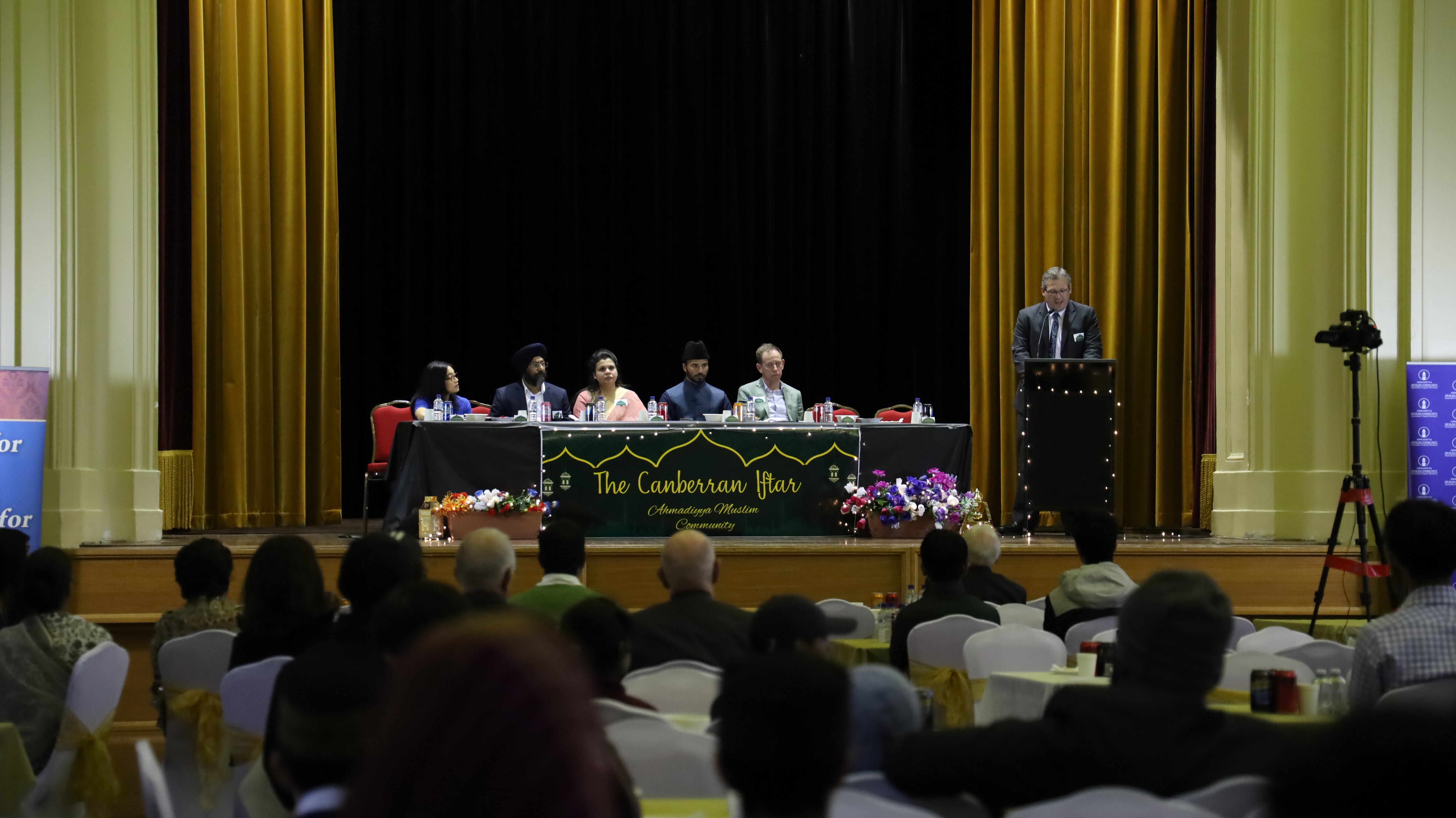
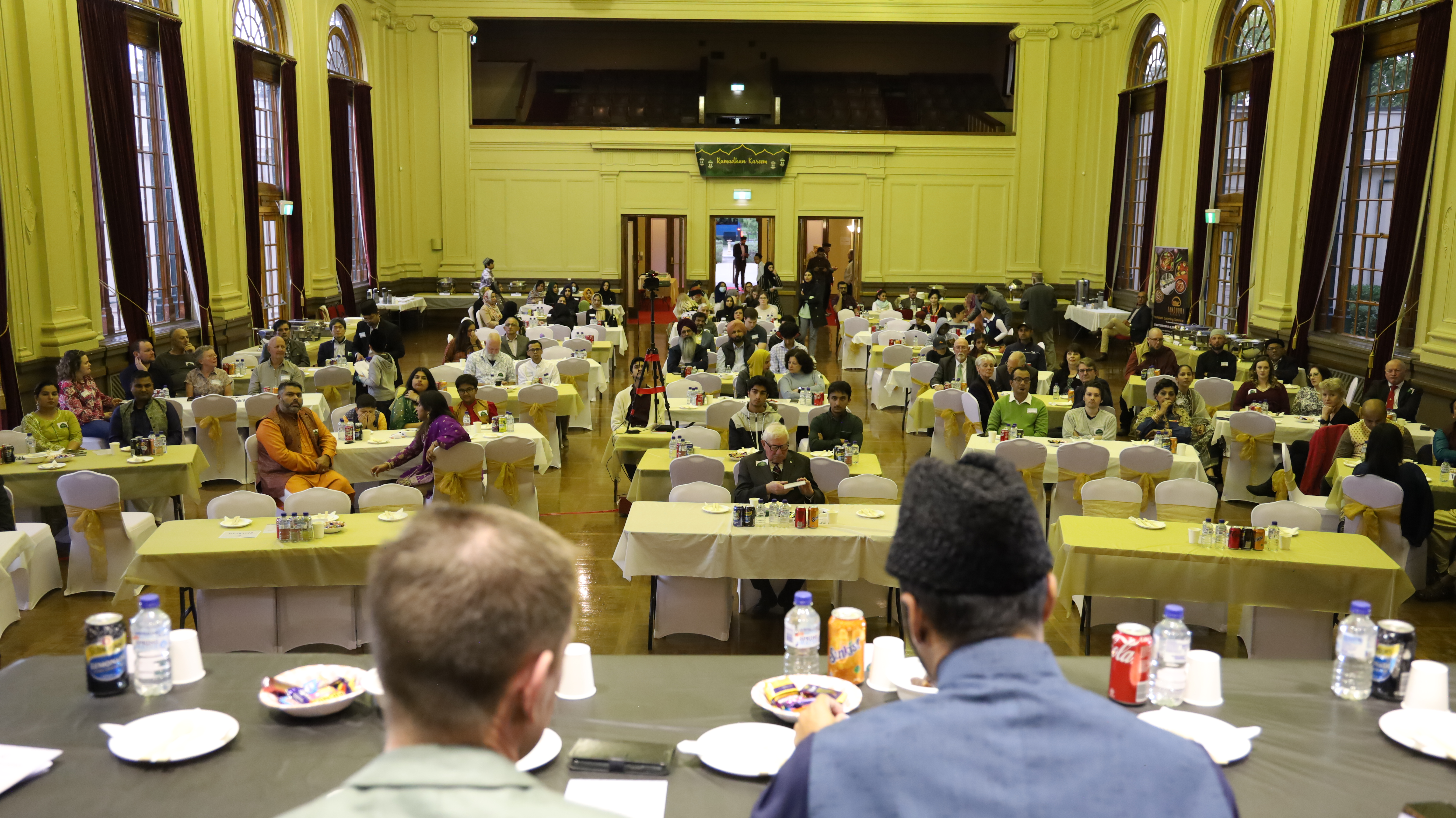
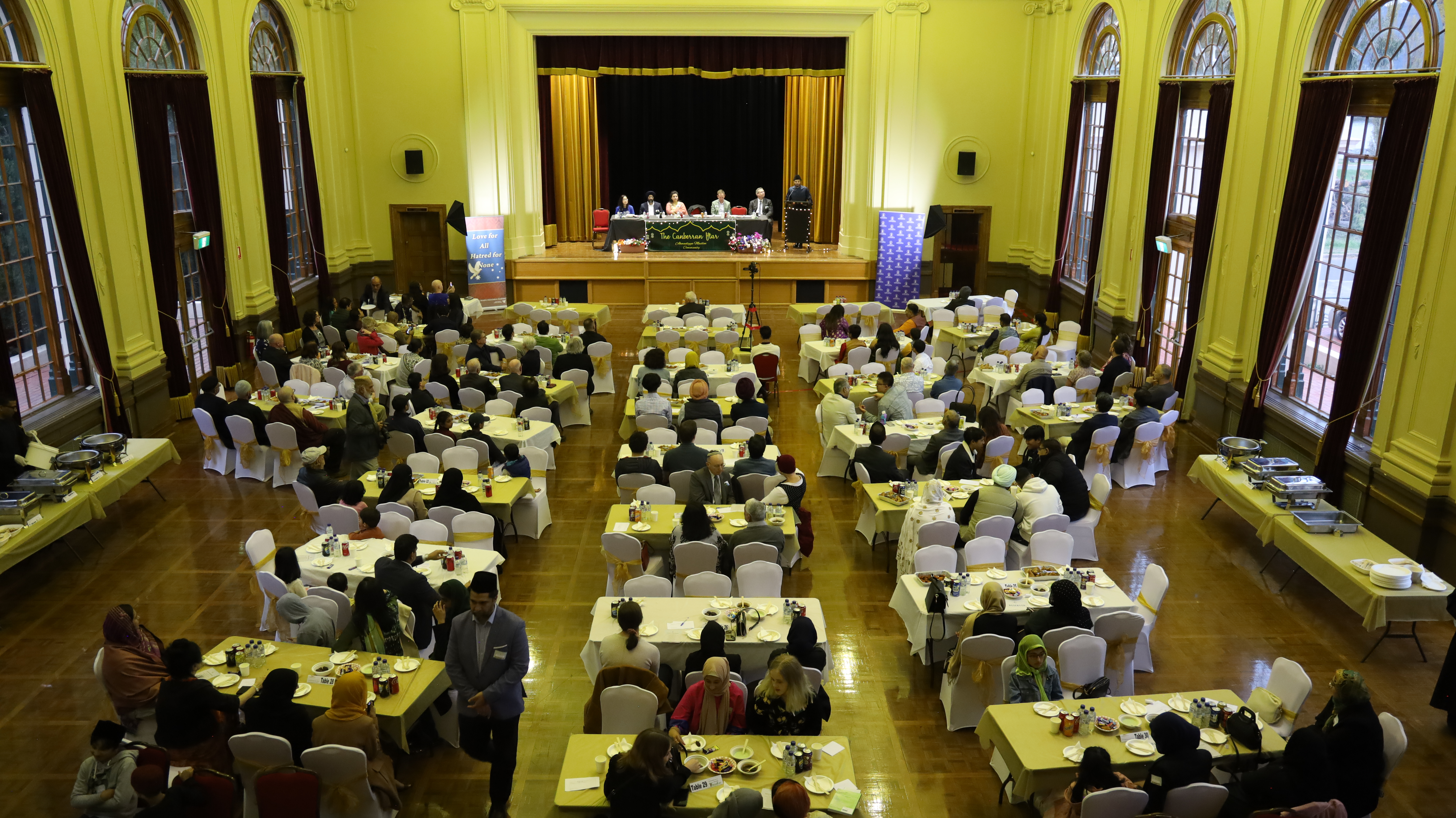
Highlights from last year’s Iftar Dinner at Albert Hall in 2023
About us:
The Ahmadiyya Muslim Community ACT is currently building a new mosque in Narrabundah for which the foundation stone was laid in 2021. Currently a prayer centre in Fyshwick serves as the hub for the local chapter of the International Ahmadiyya Muslim Community, established in 1889, by His Holiness, Hazrat Mirza Ghulam Ahmad, who claimed to be the Messiah of the age. The Ahmadiyya Muslim Community spans more than 200 countries and exceeds tens of millions in membership. Currently the fifth Ahmadiyya Caliph, His Holiness, Mirza Masroor Ahmad, leads the Ahmadiyya Muslim Community, advocating for peace and harmony across the globe. Distinguished for its endorsement of separation of religion and state, the Ahmadiyya Muslim Community stands apart in the Islamic world. Today, it remains steadfast in its commitment to advocating for universal human rights and safeguarding religious and other minority groups. Moreover, it champions the empowerment and education of women. Members of the community are renowned for their adherence to the law, educational pursuits and active engagement in societal issues, making them exemplary citizens within the global community. For more information, please visit our official website: www.Ahmadiyya.org.au
Contact details:
Sohaib Mohammed
M: 0480 760 102
E: [email protected]
Event contact:
Ahmed Munir
M: 0415 689 286
E: [email protected]