

News Hub
The latest breaking stories
Access up-to-date news and information on a wide range of press releases including business, finance, technology, healthcare, entertainment, and more.
Discover the most important & comprehensive stories delivered directly to you daily.

- Government NSW, Religion
- 11/07/2026
- 12:25
Christian’s demand NSW Government suspend taxpayer funding of nightclub mocking Christianity in a converted Sydney church
Key Facts: An Australian Christian brotherhood, The Prodigal Sons, is protesting the conversion of a 158-year-old Sydney church into an LGBTQIA+ nightlife venue at…
- Contains:
- Medical Health Aged Care
- 11/07/2026
- 11:31
Victorian GPs welcome Liberals and Nationals payroll tax relief election commitment
A commitment from the Victorian Liberals and Nationals to scrap payroll tax on GPs if elected, announced today by Jess Wilson MP, has been welcomed by the Royal Australian College of GPs (RACGP), The College also called on other parties to match the commitment to support access to general practice care. The news comes as RACGP Victoria also welcomes 167 new specialist GPs into the profession. RACGP Victoria Co-Deputy Chair Dr Aadhil Aziz called the news a “relief” for practices feeling the strain of the tax on top of rising business costs, with payroll tax making it increasingly difficult to…
- Medical Health Aged Care
- 11/07/2026
- 07:05
Victoria gains 167 new specialist GPs in ‘unprecedented’ year for GP training growth
Today, a ceremony in Melbourne has welcomed 167 new specialist GPs to full independent practice as Fellows of Australia’s leading GP training college, the Royal Australian College of GPs (RACGP). Fellowship of the RACGP (FRACGP) reflects a doctor’s qualification and expertise as a specialist GP, following at least 11 years of education, rigorous assessment, and in-practice clinical training in primary care. RACGP Victoria Co-Deputy Chair Dr Aadhil Aziz congratulated the new Fellows. “There’s no substitute for the quality care a specialist GP who knows their patients’ health, history, and personal circumstances can deliver,” he said. “No other medical or health…
- Contains:
- Community
- 11/07/2026
- 06:34
Schools Can’t Do It Alone. Swimming Education Needs Community Support
Key Facts: Research from Royal Life Saving Australia reveals that schools allocate just 7.5 hours per year to learn-to-swim programmes, with 31% of schools no longer offering such programmes at all, citing cost, staffing limitations, and lack of curriculum time as the primary barriers.Almost half of Australian Year 6 students are estimated to leave primary school without meeting the National Swimming Benchmark, highlighting a significant gap in children's water safety skills.Aquabliss Swim School, opening a new location in Willowdale to serve South West Sydney on 18 July, argues that swimming education should be a shared responsibility between schools, families, and…

- Mental Health, Women
- 11/07/2026
- 05:00
Media Diary Alert Olympic Legend Cate Campbell to take on Coastrek in support of Beyond Blue | Friday July 17 Sunshine Coast
MEDIA DIARY ALERT: COASTREK, SUNSHINE COAST, FRIDAY 17 JULY Images Here SUNSHINE COAST – On Friday 17 July, thousands of hikers will take to…
- Contains:
- Travel Tourism
- 11/07/2026
- 00:02
Hong Kong Named Exclusive Asian Host of Middle East’s Flagship Tech Expo “LEAP East” for the Next Three Years
Three of the World’s Top Tech Conferences Converge in Hong Kong100+ Large-Scale International MICE Events Staged in First Half of 2026Attracting High-End Business Travellers and Families to Stay Longer Hong Kong hosted LEAP East for the first time.HKTB has joined forces with the organiser of LEAP East tosecure Hong Kong as the exclusive Asian host city of theevent for the next three years. Dr Peter Lam, Chairman,Hong Kong Tourism Board (Left) and Annabelle Mander,Executive Vice President and Co-Creator of LEAP (Right).HONG KONG, July 10, 2026 (GLOBE NEWSWIRE) -- LEAP East, the Middle East’s flagship technology exhibition, made its Asian debut…
- Energy, Sport Recreation
- 11/07/2026
- 00:01
Media Alert: Portarlington Football Netball Club event today to launch new solar and battery system set to cut $12,500 off annual energy bill and protect community sport.
Saturday 11 July 2026 For immediate release A new full solar and battery installation will be launched today at the Portarlington Demons Football Netball Club to power the local community and protect community sport in the Bellarine region into the future. Event details: Date: Saturday 11 July 2026 Time: Senior Game from 2pm. FFC + RESINC address at half time of senior match (Approx 3:15pm) Location: Portarlington Football Netball Club,Portarlington Recreation Reserve, at 4-22 Sproat Street, Portarlington, Victoria, 3223. Opportunities for footage: Match day footage of local football games, former AFL players and local politicians will be in attendance and…
- Mental Health, Women
- 11/07/2026
- 00:01
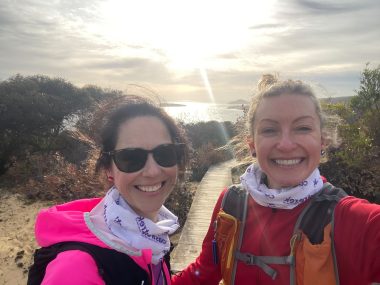
‘Nature Saved Me’: South Australian mum tackles 50km Coastrek after eight surgeries to give back to Beyond Blue
Coastrek in Fleurieu Peninsula – Registrations Close 26 July Media Assets here South Australian mum Georgie Millison says time in nature has played a…
- Contains:
- Business Finance
- 10/07/2026
- 23:47
Samos Energy Acquisition Corporation Announces Pricing of Initial Public Offering
NEW YORK--BUSINESS WIRE-- Samos Energy Acquisition Corporation (the “Company”) announced today the pricing of its initial public offering (“IPO”) of 20,000,000 units at a price of $10.00 per unit. The units will be listed on the New York Stock Exchange (the “NYSE”) and trade under the ticker symbol “SAMO.U” beginning on July 10, 2026. Each unit consists of one Class A ordinary share and one-half of one redeemable warrant, with each whole warrant entitling the holder thereof to purchase one of the Company’s Class A ordinary shares at an exercise price of $11.50 per share. Once the securities comprising the…
Media Outreach made fast, easy, simple.
Feature your press release on Medianet's News Hub every time you distribute with Medianet. Pay per release or save with a subscription.