Media release for World Food Day 16/10 and International Poverty Eradication Day 17/10
Sustainable Population Australia (SPA) says the first two Sustainable Development Goals (SDGs) of ‘No Poverty’ and ‘Zero Hunger’ – both by 2030 - cannot be achieved while world population continues an inexorable climb.
SPA national president Peter Strachan says 692 million people live in extreme poverty (living on less than $US2.15 a day) and 733 million people go hungry every night.
“While the world grows by well over 200,000 people a day,” says Mr Strachan, “the elimination of hunger and poverty moves further out of reach."
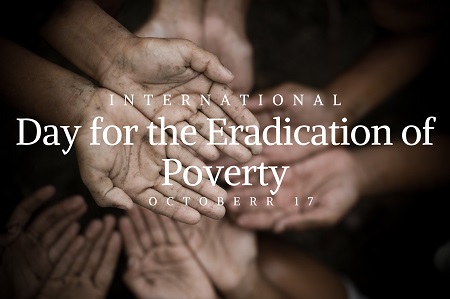
“According to the latest State of Food Security and Nutrition in the World (SOFI) report published in July 2024, the number of those suffering from remains stubbornly high over the past three years as global crises deepen. One in 11 people worldwide faced hunger in 2023, of which one in five is in Africa.
“The SOFI report says that ‘in the last ten years, the frequency and intensity of conflict, climate extremes and economic downturns has increased, undermining food security and nutrition around the world’.
“In those ten years, global population has grown from 7.3 to 8.2 billion.”
“Africa’s population is still exploding. Its current population growth rate of 2.34 per cent, would result in a doubling every 30 years. The percentage of the population facing hunger continues to rise and is now 20.4 per cent.
“Instead of South Asia having half the world’s hungry as is the case now, by 2030 Africa will have that dubious honour.”
Peter Strachan, SPA National President, is available for further comment: 0412 400 952

Mr Strachan says that conflict, often cited as a leading cause of poverty and hunger, rarely happens in isolation.
“Conflict often has its roots in the imbalance between the number of people and available resources - too many people competing for too few resources which then leads on to forced migration.
“Climate extremes, another driver of poverty and hunger, can also have its roots in too many people, in this case, too many people emitting more greenhouse gases than the atmosphere and oceans can absorb.
“We know what to do about curbing population growth: universal access to family planning, education for girls and equal rights for women.
“These are fundamental in addressing the seemingly intractable problems of poverty and hunger.”

Michael Bayliss, Communications Manager, available for comment 0423701611
Key Facts:
The first two Sustainable Development Goals of 'No Poverty' and 'Zero Hunger' by 2030 cannot be achievement when the global population grows by over 200,000 per day.
Population growth is a contributing factor to conflict, which for many parts of the world has increased in intensity in recent years.
Family planning, education and empowerment for women are all solutions that will mitigate global population growth.
Contact details:
Peter Strachan
SPA National President
[email protected]
0412400952
Michael Bayliss
Communications Manager
[email protected]
0423701611