

Gaps are emerging in the provision of local news across Australia, but embracing community driven content could be key to improving the viability of local news.
A new report from the University of Canberra (UC) and RMIT University, encompassing multiple studies, proposes recommendations that could turn the situation around.
Researchers surveyed audiences, analysed more than 3,000 news stories and interviewed more than 200 people from regional communities across the country.
Report lead author and Director of UC’s News and Media Research Centre, Professor Sora Park, said local news organisations risk becoming irrelevant if they don’t adapt to their audiences’ shifting news habits.
“The Australian regional audience profile is shifting,” said Park.
“Regional audiences want more hyperlocal news, human-interest stories and practical information like weather and local events.
“Local communities are finding ways to produce news themselves to fill information gaps relevant to their needs.
“If news organisations invest in local news topics and formats that resonate with audiences, they stand to better serve their communities.”
Audiences trust local news, but it needs to be relevant
Trust in local news remained higher than national or international media, especially when journalists had local knowledge and community ties.
“People trust local news because journalists have local knowledge and tell locally relevant stories,” Park said.
“This is usually because the journalists live in, understand and care about the communities they’re reporting on.”
While topics such as sport and crime dominate headlines, Park said telling more human interest stories would help re-engage audiences.
“Locals can read about crime and sport on social media but turn to media outlets to learn about issues that matter to them and their community,” she said.
“Boosting coverage of culture and community issues instead of relying on crime and sport would improve diversity and representation in news coverage.”
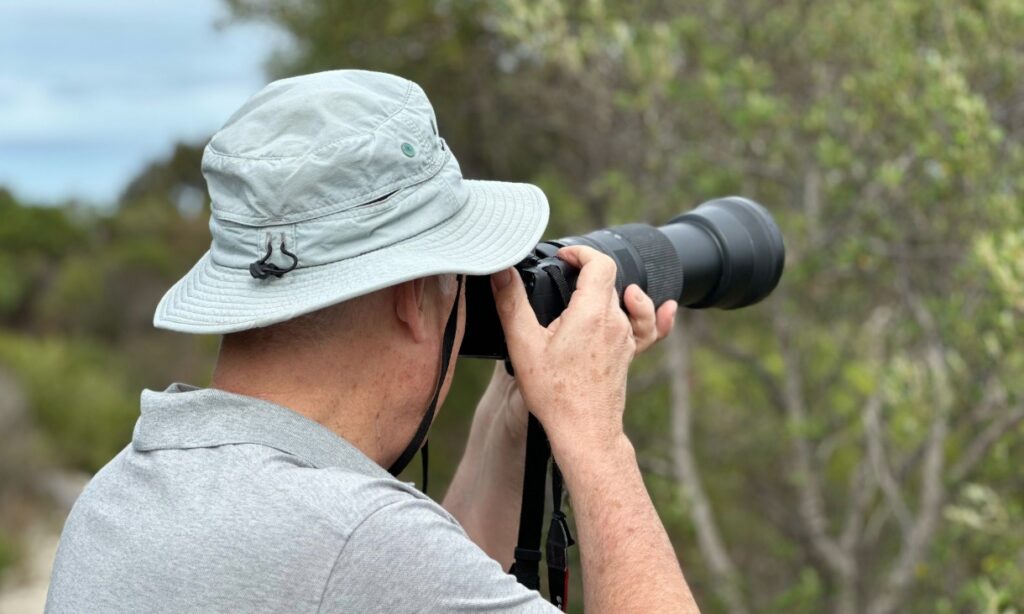
Report co-author Dr T.J. Thomson from RMIT University said visual storytelling is under used, missing opportunities for deeper audience engagement.
“Visuals attract attention, spark emotional connections and help audiences make sense of news,” Thomson said.
“Outlets should consider using more video, photo galleries, graphs and maps to help tell stories.
“When visuals are an afterthought, their full audience engagement potential isn’t realised.”
Previous research led by Thomson found viewers generally consider images with other people in them, particularly images with faces, as more engaging than those without.
Community driven content could be key
Tapping into existing online communities and local content creators could help improve the relevance and value of news to the community.
Report co-author and senior lecturer at UC Dr Jee Young Lee said broadening the authorship of local columns, running community reporting workshops and creating channels for tip-offs are ways to do this.
“In an increasingly visual environment and shrinking attention span, staying relevant is key,” she said.
“Outlets should explore ways and establish processes to involve their audience in the production and dissemination of news.”
Other recommendations proposed in the report included exploring potential photo sales as an additional revenue source; covering more events outside of the newsroom including forums, festivals and workshops; and streamlining ways in which audiences can share visuals.
The report probes the state of local news in the regions, exploring current offerings in the space, information deficits and how regional audiences navigate the current information environment.
Engaged Journalism in the Heartland: Understanding Regional News Audiences is published by the University of Canberra and RMIT University. DOI: https://doi.org/10.60836/djte-h654 (link will work from 28 August).
The research contributing to the report was supported by the Australian Government through the Australian Research Council. The views expressed herein are those of the authors and are not necessarily those of the Australian Government or the ARC.
Contact details:
For interviews:
Dr T.J. Thomson, study co-author – RMIT University, (03) 9925 1692 or [email protected].
University of Canberra researchers via media office – Reshma Jayesh, 0408 826 362 or [email protected].
Download an embargoed copy of the report and photos: https://spaces.hightail.com/space/xNnW1a8hNL
**EMBARGOED UNTIL 12.01AM AEST 28 AUGUST 2025**