

There are major opportunities to cut energy bills while supporting Australia’s clean energy transition.
Key takeaways:
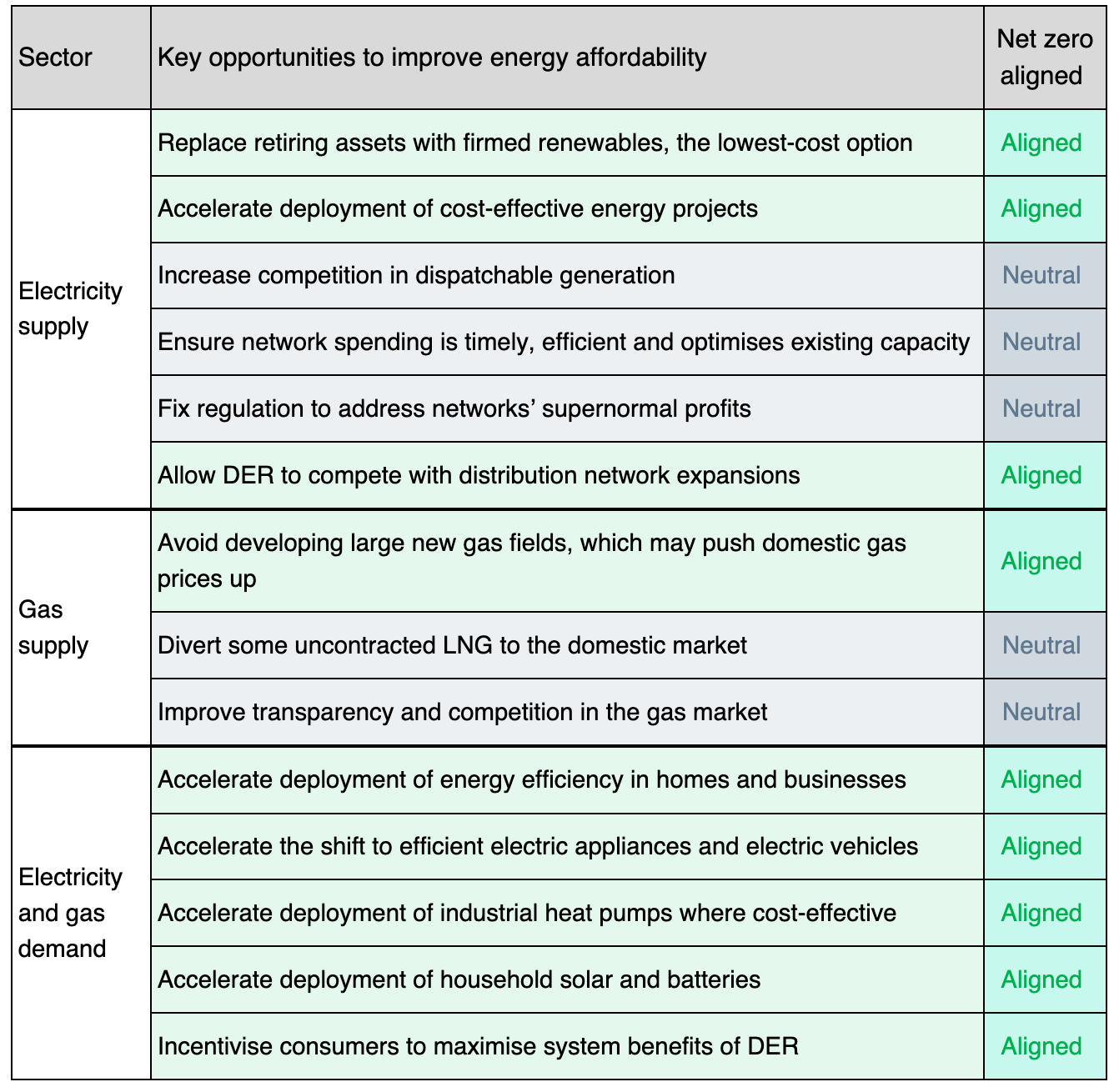
- All major pathways to improving energy affordability in electricity and gas either support Australia’s net zero pathway or are neutral to it.
- Significant new investment in electricity infrastructure is unavoidable, as ageing coal plants and networks retire – but renewables, transmission upgrades and storage are the lowest-cost option for new generation.
- Energy efficiency, electrification and distributed energy resources (DER) offer the largest savings for households, reducing net energy bills by up to 67%.
- Increasing competition and fixing inefficient network regulation and Australia’s broken gas market could deliver immediate and lasting cost relief – independent of climate policy debates.
Embargoed until 25 November (IEEFA Australia): Dispelling the notion that reducing emissions comes at the expense of Australian households and businesses, a new report has shown that all the major opportunities to improve energy affordability in electricity and gas also either support – or are independent to – the nation’s net zero ambitions.
Entitled Improving Energy Affordability Aligns with Net Zero, the briefing note from the Institute for Energy Economics and Financial Analysis (IEEFA) highlights the most effective measures to lower electricity and gas costs, both across the supply chain and by Australian energy users.
Amandine Denis-Ryan, CEO of IEEFA Australia and the report’s lead author, said: “The narrative that Australia must choose between lowering bills and cutting emissions is simply false. Our analysis shows that the cheapest energy future is also a clean one. By focusing on renewables, efficiency, electrification and fairer energy markets, Australia can lower household energy bills while accelerating progress toward net zero.”
“Renewables are not driving up electricity costs – ageing coal plants, high gas prices and inefficient markets are. There is a lot of room for improvement when it comes to energy affordability – but it is not about choosing a different electricity generation mix. It is about fixing inefficient energy markets and regulation, increasing competition, and acting on the demand side.”
Replacing declining supply is essential – choosing the lowest-cost options matters
Australia’s coal fleet is rapidly ageing, with most plants set to retire within the next decade. A large portion of network assets are similarly reaching end-of-life. IEEFA’s report finds that replacing these assets is unavoidable – but the choice of replacement technology has a profound impact on affordability.
“The evidence is clear: renewables backed by storage and transmission are the lowest-cost form of new electricity generation. Their cost is already on par with new coal and will be materially cheaper by 2030. Gas, meanwhile, has become increasingly uncompetitive as prices have surged,” Ms Denis-Ryan said.
The report highlights that cost overruns across large projects are common globally, regardless of technology. However, reducing delays in the deployment of new renewable generation, transmission and storage assets is critical to improving energy affordability and avoid over-reliance on expensive gas and risky coal plant extensions.
When it comes to gas supply, the low-cost fields that have historically supplied Australia are running out of gas. Moreover, large new gas fields come with high production and transport costs. According to IEEFA, the cheapest way to supply Australian gas consumers is instead to redirect small amounts of uncontracted LNG from exports to the domestic market.
“Making our markets and rules work better should also be a big priority. Fixing regulatory issues – such as systemic supernormal profits by electricity and gas networks – could deliver billions in consumer savings. Market concentration and lack of transparency in gas and electricity markets are also key drivers of high prices, and reforms to improve competition are essential,” Ms Denis-Ryan said.
Households and businesses hold the biggest savings potential
Demand-side measures – energy efficiency, electrification, flexible demand, solar and batteries – offer the largest bill-cutting opportunities:
Replacing inefficient heaters and hot water systems with modern electric alternatives could avoid $3.4 billion in unnecessary household costs every year.
Shifting to efficient electricity appliances and installing solar and battery systems can reduce net household bills by up to 67%, even after accounting for the upfront cost.
Rooftop solar, batteries, and smarter demand management could avoid billions in generation and network spending, reducing costs for all.
Industrial energy efficiency and electrification can offer major cost savings with very short payback periods yet remain largely untapped.
Net energy bill impact of shifting to efficient electric appliances, adding solar and a battery for an average Australian household, $ per annum
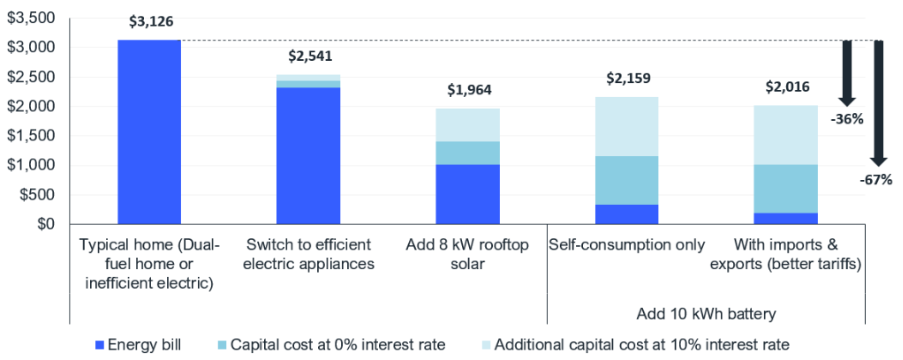
Source: IEEFA (weighted average of results across major capital cities, including government rebates).
Full list of energy affordability opportunities considered in the report:
Read the report: Improving Energy Affordability Aligns with Net Zero
Media contact: Amy Leiper [email protected] +61 (0) 414 643 446
Author contact: Amandine Denis-Ryan – [email protected]
About IEEFA:The Institute for Energy Economics and Financial Analysis (IEEFA) examines issues related to energy markets, trends, and policies. The Institute’s mission is to accelerate the transition to a diverse, sustainable and profitable energy economy. (ieefa.org)
Contact details:
Media contact: Amy Leiper [email protected] 0414 643 446
Author contact: Amandine Denis-Ryan – [email protected]

