It’s enabled hundreds of new medicines and treatments, improved agricultural productivity, helped build new industries, and provided deeper knowledge of our country – climate, minerals, fire and water risks. It’s created a living atlas that’s finding new species and warning of invaders. It’s boosted national security and sovereign capability, and much much more.
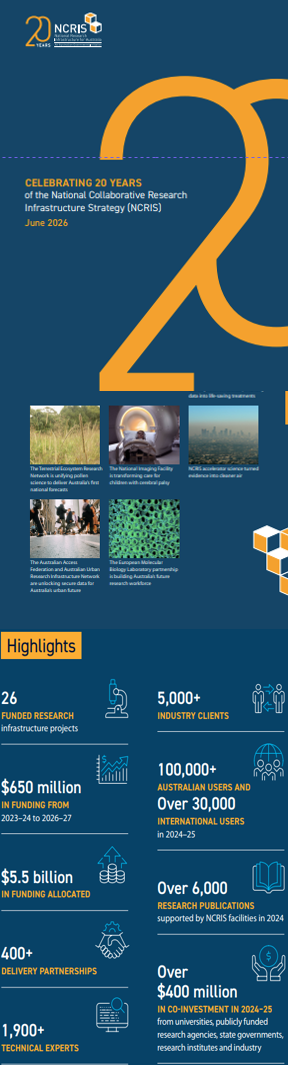
“Over the past twenty years the Australian Government has invested $5.5 billion in the National Collaborative Research Infrastructure Strategy, funding large, long-term, highly collaborative and national scale projects led by universities, government agencies and private companies,” says Dr Lisa Yen, an NCRIS facility director.
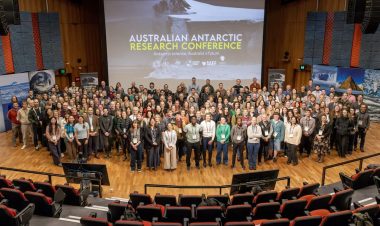
“Today, we’re in Canberra celebrating all that has been achieved through this investment, and exploring what the next decade might bring,” she says.
Some of the achievements that NCRIS has contributed to include:
- Early warning for hayfever sufferers through the Australian Pollen Network
- Sydney and Melbourne sewers monitored by optic fibres to avoid structural failures
- Safely opening ports to larger ships, and reducing dredging
- The Hunger Map, helping charities deliver food relief where it is most needed.
- Improved global nuclear security through testing for the International Atomic Energy Agency
- A bioprinter that uses live cells to print models of tumours, skin, brain, liver and breast tissue and many others, and is now sold in 26 countries
- A crab invasion discovered – Asian Shore Crabs were found in Victoria
- Rapid quarantine testing for viruses in high-risk crop imports
- Investigating the South Australian algal bloom and its ancestry, which was confirmed as local
- Longer lasting ship propellers for the Navy
- Uncovered the extent of endometriosis and supported a national action plan.
- Toothfish certification for Austral Fisheries enabled by ocean observations
- Creating a nuclear educated workforce to support medicine and defence
- A new technology for green hydrogen production, being manufactured at Port Kembla by Hysata
- Discovering 180 marine species new to science
- Over 6,000 research papers p.a.
NCRIS comprises 26 research infrastructure projects across Australia with 1,900 technical advisers supporting 130,000 users including 5,000 companies.
It has provided the machines that enabled quantum scientists to turn their ideas into devices by, for example, dropping a single atom in a diamond hole. It has given marine researchers access to buoys that monitor the oceans 24/7. It has made intense magnets available for medical imaging across Australia. A sky crane has enabled observation of life in the canopy of tropical rain forest. Leopard seals have explored under Antarctic ice, where humans can’t go.
NCRIS has trained thousands of people in how to work with the latest technologies. And it’s brought national collaboration, coordination and planning to deliver the best return on investment in science and technology.
Today, at the NCRIS@20 Symposium, delegates will hear what NCRIS projects are supporting today and what they will deliver next for Australia, including:
- A foot-and-mouth disease vaccine that will help protect $80 billion in agricultural exports
- Cotton grown with less water saving over $700 million by 2030
- Cradles to reduce stress for IVF embryos
- Centimetre-accurate positioning across the continent which will bring $365 million in benefits for agriculture, mining, construction
- Finding new underground mineral deposits without digging
- Needle-free vaccines
- And much more.
“We’ll explore what difference we can make for the future. What might we be celebrating in a decade at NCRIS@30?” says Lisa Yen. “By working collaboratively across disciplines and across the country, we will be able to make major contributions, for example, to:
- A mineral industry that is delivering the critical minerals we need for energy transition, mined and processed sustainably and safely in Australia, using green hydrogen and other renewable energy solutions
- A well-prepared One Health national response to emerging diseases in wildlife, livestock and humans, with rapid detection and analysis leading to vaccines within weeks
- Better planning and preparation for sea level rise through a program that will develop and share deep knowledge of Australia’s coast through comprehensive monitoring and analysis.”
“The collaborative foundation of NCRIS has fundamentally changed what is possible for Australian research. Shared, sustainable infrastructure gives researchers the tools they need to ask big questions and improve lives,” says Mrs Rosie Hicks, an NCRIS facility director and chair of the NCRIS@20 steering committee.
“No other nation coordinates research infrastructure in the unique way that Australia does. Support for NCRIS, sustained for twenty years right across Government, means that today Australian researchers can access the advanced networks and tools that enable real outcomes,” says Mrs Hicks.
The Australian Government has published a collection of NCRIS highlights and case studies including many mentioned here. It’s available online.
The NCRIS@20 Symposium brings together researchers, industry partners, policymakers and NCRIS facilities from across the country to reflect on two decades of impact and explore the future of nationally coordinated research infrastructure.
The NCRIS infrastructure projects are:
Australian Access Federation (AAF), Astronomy Australia Ltd (AAL), Atlas of Living Australia (ALA), AuScope, Australian Centre for Disease Preparedness (ACDP), Australian Community Climate and Earth System Simulator (ACCESS), Australian National Fabrication Facility (ANFF), Australian Plant Phenomics Network (APPN), Australian Research Data Commons (ARDC), Australian Urban Research Infrastructure Network (AURIN), Bioplatforms Australia (BPA), European Molecular Biology Laboratory (EMBL) Australia, Heavy Ion Accelerators (HIA), Integrated Marine Observing System (IMOS), Marine National Facility (MNF), Microscopy Australia (MicroAU), National Computational Infrastructure (NCI), National Deuteration Facility (NDF), National Imaging Facility (NIF), National Sea Simulator (SeaSim), Nuclear Science Facilities (NSF), Pawsey Supercomputing Centre (Pawsey), Phenomics Australia (PA), Population Health Research Network (PHRN), Southern Coastal Research Vessel Fleet (Coastal Vessels), Terrestrial Ecosystem Research Network (TERN), Therapeutic Innovation Australia (TIA).
Contact details:
Niall Byrne, 0417-131-977, [email protected]
Jacqui Tyack, 0422-999-088, [email protected]