NeuRA researchers are partnering with digital health company, WeGuide, to develop a mobility recovery biomarker that aims to personalise rehabilitation.
A $1.9 million grant from the Medical Research Future Fund’s national biotech incubator, CUREator+, will support WeGuide to develop an AI-powered platform to commoditise the development, validation and deployment of digital biomarkers. The first biomarker will be developed in partnership with NeuRA and UNSW Sydney, who will lead the clinical research and validation program, while WeGuide leads the technical platform development.
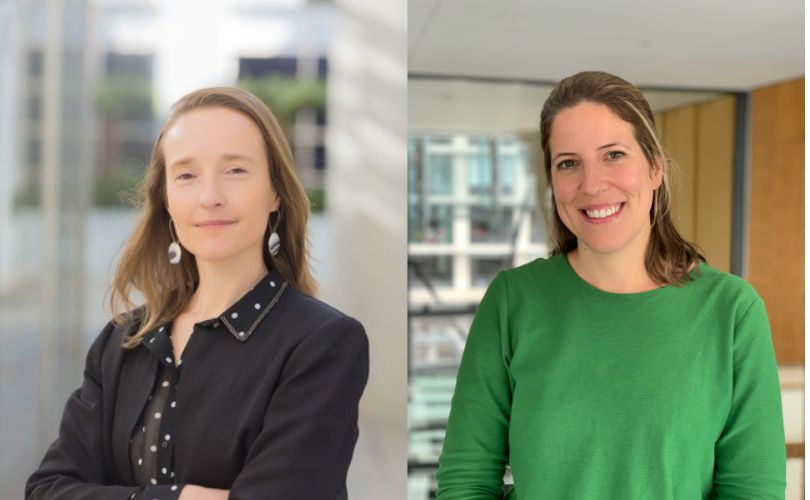
Associate Professor Kim van Schooten and Professor Kim Delbaere from NeuRA and UNSW Sydney will lead the research to develop a digital recovery biomarker, an objective measure based on data from smartwatches and patient surveys, that can track mobility recovery and help tailor rehabilitation to individual needs.
Professor Delbaere said the project has the potential to transform how recovery is monitored in rehabilitation settings.
“Currently, clinicians rely on occasional clinic-based assessments to monitor patient recovery,” she said.
“We want to use real-world movement data from wearable devices to create a personalised recovery biomarker. This could tell us whether someone is progressing well, plateauing or at risk of future mobility problems."
The team will recruit 200 people undergoing rehabilitation and collect continuous movement data from wrist-worn wearables, alongside patient-reported outcomes, such as fatigue, confidence and function. Results will be validated against the gold standard measures for mobility. Researchers want to demonstrate that the platform can produce clinically validated digital biomarkers that meet rigorous medical standards.
Associate Professor van Schooten said the goal is to create an objective, clinically meaningful measure of recovery.
“If we can accurately detect changes in mobility using everyday wearable devices, we can help clinicians adjust rehabilitation earlier and more precisely,” she said.
“This builds on our work in digital mobility biomarkers, extending it from risk prediction into recovery and personalised care. Instead of using the same rehabilitation pathway for everyone, we can use objective data to tailor intensity, timing and support based on each person’s recovery trajectory.”
The 18-month project "WeGuide Biomarkers: Platform for building, validating and commercialising Digital Health & Biomarkers” will also establish a scaleable technical framework to support the development of similar tools in other areas of medicine.
WeGuide CEO and Founder, Sanji Kanagalingam, said the funding will support an AI-powered platform to enable faster biomarker development, accelerating their mission to make precision medicine tools accessible globally.
“Talented researchers with brilliant ideas for precision medicine get stuck on technical infrastructure, regulatory complexity and months of manual algorithm development,” he said.
“Our platform standardises and automates biomarker development, moving it away from custom projects, similar to how cloud computing standardised software deployment.”
WeGuide Executive Director George Charalambous said the collaboration represents a new model for translating research into real world healthcare impact.
“This partnership brings together clinical excellence and scaleable digital infrastructure,” Mr Charalambous said.
“By embedding validation and regulatory readiness from the outset, we’re helping ensure promising research translates into practical tools that benefit patients.”
If successful, the mobility recovery indicator could support earlier intervention, more tailored rehabilitation programs, and improved long-term outcomes for people recovering from injury or stroke.
About us:
Neuroscience Research Australia (NeuRA) is an independent, not-for-profit research institute based in Sydney aiming to prevent, treat and cure brain and nervous system diseases, disorders and injuries through medical research. To learn more about NeuRA: www.neura.edu.au
Contact details:
Katana Smith
Senior Media and PR Advisor
[email protected]
0452 140 477