-
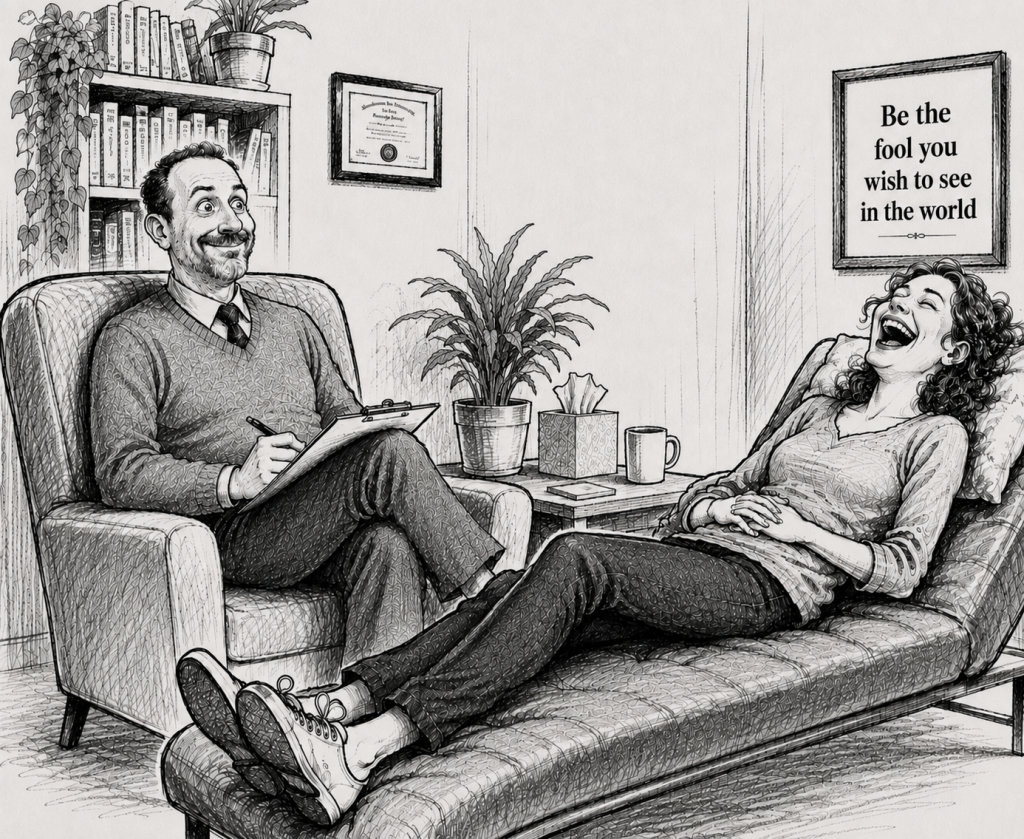
Trauma-informed care is well established, but there is growing interest in humour-informed care and the role humour can play in mental health and wellbeing.
-
Comedians have long used humour intentionally, while researchers continue to explore its therapeutic potential. Australian humour researcher Pete Crofts has spent more than 50 years studying the subject.
-
Thomas Langley, who holds a Diploma of Transpersonal Counselling, is working to bridge humour theory and therapeutic practice, drawing partly on his own experience of mental health recovery.
-
A free introductory workshop, Laughter as Medicine: Understanding Humour in Therapy, will explore humour-informed care through psychological, philosophical, biological and cultural lenses.
-
Through discussion, reflection and practical examples, participants will be introduced to key humour concepts, therapeutic applications and opportunities to share their own insights and experiences.
What if therapists were not just trauma-informed, but also humour-informed?
Most people in helping professions know the term trauma-informed care: a major step forward in how we address people who have experienced significant trauma. We think it's time this was complemented by a richer understanding of humour and its role in mental health.
We've all heard the 'laughter is the best medicine' platitude, usually being rolled out by a current affairs program previewing a fluff piece about a clown, a dog or a kangaroo in a fluoro onesie. Regardless, the inherent truth in the line is something humans tend to know instinctively, yet have little idea how to harness in a deliberate and meaningful way.
Fortunately, harnessing humour and using it effectively is something comedians have been doing for centuries. Our very own humour nuffy, Pete Crofts, whose work we're building on, has spent the last 50 years obsessed with a deeper understanding of humour amid a growing body of research worldwide on its clinical application.
"We want to build a bridge between humour theory and the therapy room. In reality it's more than theory, it's my own journey through mental health (and ill health) and how humour has been an active and fundamental force in recovery" says Thomas Langley, creative director of the recently remodelled Humourversity.
Next month I'm running a free workshop called Laughter as Medicine: Understanding Humour in Therapy. The first in a series exploring the concept of humour-informed care. I'm Thomas, originally a student of the Humourversity, now running its reincarnation. I hold a Diploma in Transpersonal Counselling, have worked professionally as a massage therapist, and have spent decades exploring the value of humour in healing and mental liberation.
"Thomas see humour as a massage for the mind and laughter as the evidence of ones body letting go"
The workshop is part open discussion, part humour-informed presentation. Participants will learn more about humour as a healing technology that draws on psychology, philosophy, biology, sociology and more.
We'll also share practical ideas about how humour can be used in different helping and healing environments. Participants are warmly invited to share their experience and thoughts in their field, with their input helping to shape consensus guidelines for humour-informed care.
It might even be funny.
About us:
Thomas is the creative director of the Humourversity, an institute for humour education and comedy training. He is responsible for reviving and reimaginging the organisation and it's body of work, after founder Pete Crofts physical retirement.
Contact details:
Thomas Langley
m: 0481 821 730
humourversity.au/workshops/laughter-as-medicine